SOLDES
Jusqu'à -70% sur une sélection d'articles*

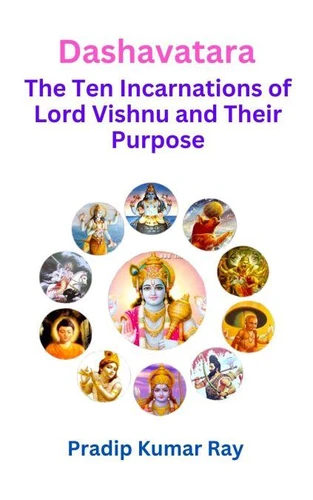
Dashavatara (The Ten Incarnations of Lord Vishnu and Their Purpose)
Par :Formats :
Disponible dans votre compte client Decitre ou Furet du Nord dès validation de votre commande. Le format ePub est :
- Compatible avec une lecture sur My Vivlio (smartphone, tablette, ordinateur)
- Compatible avec une lecture sur liseuses Vivlio
- Pour les liseuses autres que Vivlio, vous devez utiliser le logiciel Adobe Digital Edition. Non compatible avec la lecture sur les liseuses Kindle, Remarkable et Sony
 , qui est-ce ?
Notre partenaire de plateforme de lecture numérique où vous retrouverez l'ensemble de vos ebooks gratuitement
Pour en savoir plus sur nos ebooks, consultez notre aide en ligne ici
C'est si simple ! Lisez votre ebook avec l'app Vivlio sur votre tablette, mobile ou ordinateur :

- FormatePub
- ISBN8231025152
- EAN9798231025152
- Date de parution18/06/2025
- Protection num.pas de protection
- Infos supplémentairesepub
- ÉditeurWalzone Press
Résumé
The concept of divine intervention has been a cornerstone of human civilization, guiding societies through moral, ethical, and spiritual dilemmas. Among the various deities revered in Hinduism, Lord Vishnu holds a unique position as the Preserver of the Universe, manifesting Himself in different forms to restore cosmic balance. This book, Dashavatara: The Ten Incarnations of Lord Vishnu and Their Purpose, delves into the profound significance of these incarnations, unraveling their mythological, philosophical, and cultural relevance.
The Dashavatara-Matsya, Kurma, Varaha, Narasimha, Vamana, Parashurama, Rama, Krishna, Buddha, and Kalki-represent a divine progression that aligns with the evolving needs of time and humanity. These incarnations not only demonstrate the eternal battle between good and evil but also serve as metaphorical lessons that resonate with contemporary societal challenges. Through this book, I aim to explore each avatar in depth, drawing connections between their narratives and the timeless principles of dharma (righteousness), karma (action), and moksha (liberation).
Structured into multiple chapters, this book provides a comprehensive understanding of Hindu mythology, the role of Lord Vishnu, and the philosophical interpretations that underpin these divine manifestations. From historical and theological contexts to regional variations and artistic depictions, each chapter presents a multidimensional view of the Dashavatara. Additionally, the influence of these avatars on Indian culture, festivals, rituals, and even modern adaptations in literature and media has been examined to highlight their enduring legacy.
One of the key objectives of this work is to offer readers a broader perspective on the symbiotic relationship between mythology and human civilization. The comparative study of Vishnu's incarnations with global mythologies, as well as their relevance in modern society, seeks to bridge the ancient and the contemporary, making this exploration both scholarly and accessible. As a writer and researcher, I have sought to present this vast and profound subject in a manner that appeals to both enthusiasts of mythology and those seeking deeper spiritual insights.
Whether you are a devout follower, a student of religious studies, or simply an inquisitive reader, this book endeavors to provide clarity on the philosophical, theological, and cultural significance of Vishnu's divine avatars.
The Dashavatara-Matsya, Kurma, Varaha, Narasimha, Vamana, Parashurama, Rama, Krishna, Buddha, and Kalki-represent a divine progression that aligns with the evolving needs of time and humanity. These incarnations not only demonstrate the eternal battle between good and evil but also serve as metaphorical lessons that resonate with contemporary societal challenges. Through this book, I aim to explore each avatar in depth, drawing connections between their narratives and the timeless principles of dharma (righteousness), karma (action), and moksha (liberation).
Structured into multiple chapters, this book provides a comprehensive understanding of Hindu mythology, the role of Lord Vishnu, and the philosophical interpretations that underpin these divine manifestations. From historical and theological contexts to regional variations and artistic depictions, each chapter presents a multidimensional view of the Dashavatara. Additionally, the influence of these avatars on Indian culture, festivals, rituals, and even modern adaptations in literature and media has been examined to highlight their enduring legacy.
One of the key objectives of this work is to offer readers a broader perspective on the symbiotic relationship between mythology and human civilization. The comparative study of Vishnu's incarnations with global mythologies, as well as their relevance in modern society, seeks to bridge the ancient and the contemporary, making this exploration both scholarly and accessible. As a writer and researcher, I have sought to present this vast and profound subject in a manner that appeals to both enthusiasts of mythology and those seeking deeper spiritual insights.
Whether you are a devout follower, a student of religious studies, or simply an inquisitive reader, this book endeavors to provide clarity on the philosophical, theological, and cultural significance of Vishnu's divine avatars.
A propos de PRADIP KUMAR RAY
5,99 €
5,99 €
5,99 €

5,99 €


3,49 €

3,49 €

5,99 €



4,49 €