SOLDES
Jusqu'à -70% sur une sélection d'articles*

Nouveauté
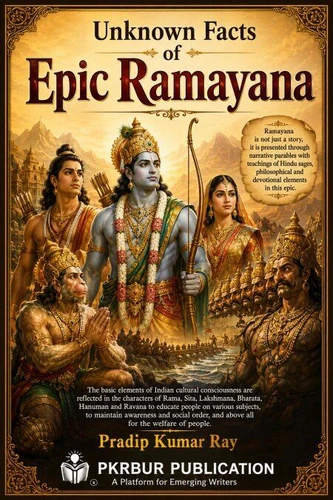
Unknown Facts of Epic Ramayana
Par :Formats :
Disponible dans votre compte client Decitre ou Furet du Nord dès validation de votre commande. Le format ePub est :
- Compatible avec une lecture sur My Vivlio (smartphone, tablette, ordinateur)
- Compatible avec une lecture sur liseuses Vivlio
- Pour les liseuses autres que Vivlio, vous devez utiliser le logiciel Adobe Digital Edition. Non compatible avec la lecture sur les liseuses Kindle, Remarkable et Sony
 , qui est-ce ?
Notre partenaire de plateforme de lecture numérique où vous retrouverez l'ensemble de vos ebooks gratuitement
Pour en savoir plus sur nos ebooks, consultez notre aide en ligne ici
C'est si simple ! Lisez votre ebook avec l'app Vivlio sur votre tablette, mobile ou ordinateur :

- FormatePub
- ISBN8235614673
- EAN9798235614673
- Date de parution17/05/2026
- Protection num.pas de protection
- Infos supplémentairesepub
- ÉditeurIoakim Ioakim
Résumé
Ramayana is one of the two major epics of India. In this poem, the ideals of human society are explained by describing the roles of the ideal servant, the ideal brother, the ideal wife and the ideal king in addition to describing the mutual duties of various relationships. Ramayana is also not just a story, it is presented through narrative parables with teachings of Hindu sages, philosophical and devotional elements in this epic.
The basic elements of Indian cultural consciousness are reflected in the characters of Rama, Sita, Lakshmana, Bharata, Hanuman and Ravana. However, with the presence of the demon-slaying hero from the jungle and various mythical creatures, the story quickly becomes fictional. However, from a historical point of view, Ramayana is considered to be an older book. The main source of the mythological story about Rama is the epic Ramayana written by Rishi Valmiki.
Besides, Vishnu Purana mentions Rama as the seventh avatar of Vishnu. Chapters 10 and 11 of the ninth skandha of the Bhagavata Purana describe the story of Rama. Besides, the story of Rama is also mentioned in Mahabharata. Indian civilization is at least thirty thousand years old. Vedas, Upanishads, Puranas, Smriti were written down in Devanagari language at least five thousand years ago, but these scriptures existed for thirty thousand years in the Sruti tradition.
By which not only our progress but also the welfare of the world and that is Dharma. Religion is not a set of beliefs, superstitions or superstitions. Dhritti (Be content with what you have and always be patient), 2. Forgiveness, 3. Dum (Self control i.e. controlling yourself from pride), 4. Asteya (abstain from immoral things i.e. cheating, hypocrisy, betrayal etc.), 5. Suchita (being physically and mentally pure and clean at all times), 6.
Indriya Nigraha (preventing the body's senses from greedy objects), 7. Dhi (drugs and other mind-destroying substances, vices, laziness and delusion etc. 8. Vidya (acquiring accurate knowledge of all matters), 9. Honesty (considering the substance as it is, speaking as it is and doing as it is), 10. Akrodha (giving up anger or anger and peace etc. qualities). Acceptance). These ten are the signs of religion.
Within the Ramayana poem, an attempt has been made to reveal the above features through various events and incidents.
The basic elements of Indian cultural consciousness are reflected in the characters of Rama, Sita, Lakshmana, Bharata, Hanuman and Ravana. However, with the presence of the demon-slaying hero from the jungle and various mythical creatures, the story quickly becomes fictional. However, from a historical point of view, Ramayana is considered to be an older book. The main source of the mythological story about Rama is the epic Ramayana written by Rishi Valmiki.
Besides, Vishnu Purana mentions Rama as the seventh avatar of Vishnu. Chapters 10 and 11 of the ninth skandha of the Bhagavata Purana describe the story of Rama. Besides, the story of Rama is also mentioned in Mahabharata. Indian civilization is at least thirty thousand years old. Vedas, Upanishads, Puranas, Smriti were written down in Devanagari language at least five thousand years ago, but these scriptures existed for thirty thousand years in the Sruti tradition.
By which not only our progress but also the welfare of the world and that is Dharma. Religion is not a set of beliefs, superstitions or superstitions. Dhritti (Be content with what you have and always be patient), 2. Forgiveness, 3. Dum (Self control i.e. controlling yourself from pride), 4. Asteya (abstain from immoral things i.e. cheating, hypocrisy, betrayal etc.), 5. Suchita (being physically and mentally pure and clean at all times), 6.
Indriya Nigraha (preventing the body's senses from greedy objects), 7. Dhi (drugs and other mind-destroying substances, vices, laziness and delusion etc. 8. Vidya (acquiring accurate knowledge of all matters), 9. Honesty (considering the substance as it is, speaking as it is and doing as it is), 10. Akrodha (giving up anger or anger and peace etc. qualities). Acceptance). These ten are the signs of religion.
Within the Ramayana poem, an attempt has been made to reveal the above features through various events and incidents.
A propos de PRADIP KUMAR RAY
5,99 €
5,99 €

5,99 €
3,49 €
3,49 €
5,99 €

4,49 €