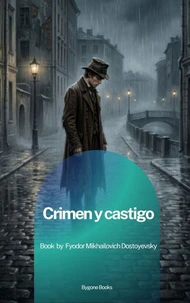
Rodion Raskolnikov has a theory: certain extraordinary men are permitted to cross moral lines that bind everyone else, if the crime serves a greater purpose. To test it, he murders a pawnbroker with an axe - and instead of freedom, finds himself trapped inside his own unraveling conscience. What follows is not a chase by police but a slow, suffocating pursuit by guilt itself, as Raskolnikov drifts through fever dreams, half-made confessions, and an increasingly desperate need to be caught.
Dostoyevsky invented the modern psychological thriller a century before the genre had a name, and Crime and Punishment remains its most ruthless example: a novel that gets inside a murderer's skull and refuses to let you leave. Few books have ever made guilt feel so physically unbearable - or so impossible to put down.
Rodion Raskolnikov has a theory: certain extraordinary men are permitted to cross moral lines that bind everyone else, if the crime serves a greater purpose. To test it, he murders a pawnbroker with an axe - and instead of freedom, finds himself trapped inside his own unraveling conscience. What follows is not a chase by police but a slow, suffocating pursuit by guilt itself, as Raskolnikov drifts through fever dreams, half-made confessions, and an increasingly desperate need to be caught.
Dostoyevsky invented the modern psychological thriller a century before the genre had a name, and Crime and Punishment remains its most ruthless example: a novel that gets inside a murderer's skull and refuses to let you leave. Few books have ever made guilt feel so physically unbearable - or so impossible to put down.

 , qui est-ce ?