
Highly motivated life-long learner, humanitarian, physician, bio-chemist, international public health expert, occupational health expert, business administration expert, business project management expert, researcher, writer, entrepreneur, innovative individual, growth strategist, life coach and human potential enabler with more than ten years of experience leading demanding health and business portfolios at organisational and national level in the public and private sectors of different countries.
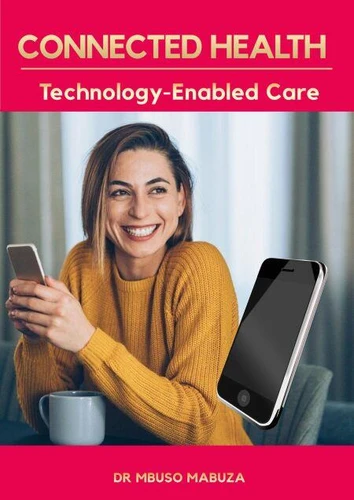
Connected Health: Technology-Enabled Care
Par :Formats :
Disponible dans votre compte client Decitre ou Furet du Nord dès validation de votre commande. Le format ePub est :
- Compatible avec une lecture sur My Vivlio (smartphone, tablette, ordinateur)
- Compatible avec une lecture sur liseuses Vivlio
- Pour les liseuses autres que Vivlio, vous devez utiliser le logiciel Adobe Digital Edition. Non compatible avec la lecture sur les liseuses Kindle, Remarkable et Sony
 , qui est-ce ?
Notre partenaire de plateforme de lecture numérique où vous retrouverez l'ensemble de vos ebooks gratuitement
Pour en savoir plus sur nos ebooks, consultez notre aide en ligne ici
C'est si simple ! Lisez votre ebook avec l'app Vivlio sur votre tablette, mobile ou ordinateur :

- FormatePub
- ISBN8215913598
- EAN9798215913598
- Date de parution15/07/2023
- Protection num.pas de protection
- Infos supplémentairesepub
- ÉditeurWMG Publishing
Résumé
Connected health also known as technology-enabled care (TEC) is the collective term for telecare, telehealth, telemedicine, mHealth, digital health and eHealth services. Connected health involves the convergence of health technology, digital media and mobile devices. It enables patients, carers and healthcare professionals (HCPs) to access data and information more easily and improve the quality and outcomes of both health and social care.
Smart systems and infrastructures rely on mobile and pervasive technologies to offer end-users with portable and context-sensitive services that range from social networking, mobile commerce, to smart and connected health care. Considering service-driven computing for smart systems, the future of smart healthcare is hyper-connected, highly pervasive, and personalised. Mobile and pervasive technologies for mobile health (mHealth) and ubiquitous health (uHealth) systems provide a wide range of wellness and fitness applications as well as clinical and medical systems.
Mobile health or mHealth is a component of e-health (electronic health), and a medical and public health practice supported by mobile technology such as mobile devices and medical apps. Mobile health is poised to play a larger role in engaging patients in self-care as smartphone ownership is rising globally. Mobile health is a promising venue for reaching youth in general and may be particularly important for educating and addressing sensitive topics.
Barriers such as privacy concerns and lack of integration into the electronic health record have limited the impact of apps, but mHealth has enormous potential to reshape healthcare delivery in the future. Telemedicine may be considered as a component of virtual healthcare, since it involves the diagnosing and treatment of a patient, remotely. However, telemedicine specifically refers to the medicinal aspect of healthcare, whereby the clinician could use live audio-visuals and instant real-time messages to diagnose and treat a patient, remotely.
Most people have unknowingly practised telemedicine when either seeking or giving medical advice over the telephone. Nowadays, the nomenclature of telemedicine is created newly as "u-Health" in which ubiquitous technology is using to connect provider and patients in ubiquity. Technological system of u-Health will be easily established by convergence among ubiquitous and biometric technology, and mobile telecommunication infrastructure.
However, the crucial point of the adoption and success of telemedicine in even ubiquity environments needs enough to tightly harmonise with the mainstream medicine. TEC is capable of providing cost-effective solutions at a time when the demands on health and social care services continue to increase due to many countries' (especially high-income countries) growing and ageing population, the rising cost of advanced medical treatments, and severely constrained health and social care budgets.
Indeed, wide scale adoption of TEC will be essential for sustaining the future health and social system. The major areas of technical challenges in implementing TEC call for a focus on areas in need of change. mHealth appears to be testing the ability of our governments to confront the profound changes that mobile health technologies create. It is expected that interoperable global mHealth can produce meaningful improvement in the health of populations worldwide.
Funding solutions are a necessary precursor to expanding mHealth and telemedicine to global delivery, and must be addressed in all planning, whether strategic or operational.
Smart systems and infrastructures rely on mobile and pervasive technologies to offer end-users with portable and context-sensitive services that range from social networking, mobile commerce, to smart and connected health care. Considering service-driven computing for smart systems, the future of smart healthcare is hyper-connected, highly pervasive, and personalised. Mobile and pervasive technologies for mobile health (mHealth) and ubiquitous health (uHealth) systems provide a wide range of wellness and fitness applications as well as clinical and medical systems.
Mobile health or mHealth is a component of e-health (electronic health), and a medical and public health practice supported by mobile technology such as mobile devices and medical apps. Mobile health is poised to play a larger role in engaging patients in self-care as smartphone ownership is rising globally. Mobile health is a promising venue for reaching youth in general and may be particularly important for educating and addressing sensitive topics.
Barriers such as privacy concerns and lack of integration into the electronic health record have limited the impact of apps, but mHealth has enormous potential to reshape healthcare delivery in the future. Telemedicine may be considered as a component of virtual healthcare, since it involves the diagnosing and treatment of a patient, remotely. However, telemedicine specifically refers to the medicinal aspect of healthcare, whereby the clinician could use live audio-visuals and instant real-time messages to diagnose and treat a patient, remotely.
Most people have unknowingly practised telemedicine when either seeking or giving medical advice over the telephone. Nowadays, the nomenclature of telemedicine is created newly as "u-Health" in which ubiquitous technology is using to connect provider and patients in ubiquity. Technological system of u-Health will be easily established by convergence among ubiquitous and biometric technology, and mobile telecommunication infrastructure.
However, the crucial point of the adoption and success of telemedicine in even ubiquity environments needs enough to tightly harmonise with the mainstream medicine. TEC is capable of providing cost-effective solutions at a time when the demands on health and social care services continue to increase due to many countries' (especially high-income countries) growing and ageing population, the rising cost of advanced medical treatments, and severely constrained health and social care budgets.
Indeed, wide scale adoption of TEC will be essential for sustaining the future health and social system. The major areas of technical challenges in implementing TEC call for a focus on areas in need of change. mHealth appears to be testing the ability of our governments to confront the profound changes that mobile health technologies create. It is expected that interoperable global mHealth can produce meaningful improvement in the health of populations worldwide.
Funding solutions are a necessary precursor to expanding mHealth and telemedicine to global delivery, and must be addressed in all planning, whether strategic or operational.
A propos de Mbuso Mabuza

8,49 €

8,49 €
Precision Medicine
E-book
8,49 €

8,49 €


8,49 €

8,49 €

8,49 €
8,49 €

8,49 €


Epidemiological Research
E-book
8,49 €

8,49 €

8,49 €

8,49 €