
Highly motivated life-long learner, humanitarian, physician, bio-chemist, international public health expert, occupational health expert, business administration expert, business project management expert, researcher, writer, entrepreneur, innovative individual, growth strategist, life coach and human potential enabler with more than ten years of experience leading demanding health and business portfolios at organisational and national level in the public and private sectors of different countries.
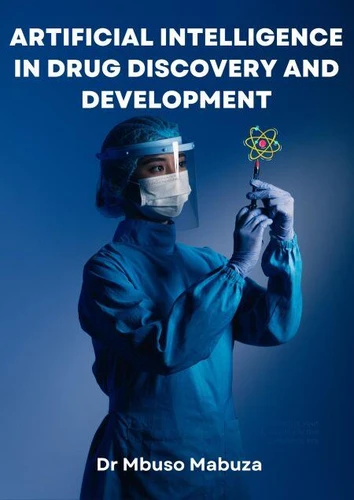
Artificial Intelligence In Drug Discovery And Development
Par :Formats :
Disponible dans votre compte client Decitre ou Furet du Nord dès validation de votre commande. Le format ePub est :
- Compatible avec une lecture sur My Vivlio (smartphone, tablette, ordinateur)
- Compatible avec une lecture sur liseuses Vivlio
- Pour les liseuses autres que Vivlio, vous devez utiliser le logiciel Adobe Digital Edition. Non compatible avec la lecture sur les liseuses Kindle, Remarkable et Sony
 , qui est-ce ?
Notre partenaire de plateforme de lecture numérique où vous retrouverez l'ensemble de vos ebooks gratuitement
Pour en savoir plus sur nos ebooks, consultez notre aide en ligne ici
C'est si simple ! Lisez votre ebook avec l'app Vivlio sur votre tablette, mobile ou ordinateur :

- FormatePub
- ISBN8223603863
- EAN9798223603863
- Date de parution31/05/2023
- Protection num.pas de protection
- Infos supplémentairesepub
- ÉditeurDraft2Digital
Résumé
Artificial Intelligence (AI) represents the simulation of human intelligence processes by computer systems, and in the 21st century, it has emerged as a transformative force in the healthcare and medical sectors. By leveraging machine learning-a key subset of AI-researchers and clinicians can extract vital insights from vast datasets, enabling more accurate predictions of health outcomes and significantly enhancing clinical decision-making.
One of the most revolutionary applications of AI is found within the biopharmaceutical value chain, specifically in the field of drug discovery and development. Traditionally, discovering new medications is an arduous, high-risk, and prohibitively expensive process, often spanning over a decade with high failure rates. AI addresses these challenges by analyzing complex biological data from genetics, proteomics, and other life sciences to identify promising drug candidates more efficiently.
The integration of AI into the drug discovery pipeline offers several critical advantages: Cost and Time Reduction: AI streamlines research and development, lowering the financial barriers to early-stage discovery. Enhanced Safety: By predicting potential risks and side effects before drugs reach human participants, AI helps avoid traumatic events during late-stage clinical trials. Innovation Growth: There has been a surge in AI-based startups focused on drug innovation, driven by the increasing availability of sophisticated algorithms and the rising adoption of cloud-based services.
Market Pressures: The impending patent expiration of various "blockbuster" drugs is pushing the industry to accelerate innovation through automated intelligence. Despite its immense potential, the field faces notable hurdles. The growth of the AI-driven healthcare market is currently restrained by a significant shortage of specialized workers, ambiguous regulatory guidelines for medical-grade software, and a lack of high-quality, standardized datasets.
Overcoming these barriers will be essential for AI to fully realize its role in ushering in a new era of precision medicine and pharmaceutical efficiency.
One of the most revolutionary applications of AI is found within the biopharmaceutical value chain, specifically in the field of drug discovery and development. Traditionally, discovering new medications is an arduous, high-risk, and prohibitively expensive process, often spanning over a decade with high failure rates. AI addresses these challenges by analyzing complex biological data from genetics, proteomics, and other life sciences to identify promising drug candidates more efficiently.
The integration of AI into the drug discovery pipeline offers several critical advantages: Cost and Time Reduction: AI streamlines research and development, lowering the financial barriers to early-stage discovery. Enhanced Safety: By predicting potential risks and side effects before drugs reach human participants, AI helps avoid traumatic events during late-stage clinical trials. Innovation Growth: There has been a surge in AI-based startups focused on drug innovation, driven by the increasing availability of sophisticated algorithms and the rising adoption of cloud-based services.
Market Pressures: The impending patent expiration of various "blockbuster" drugs is pushing the industry to accelerate innovation through automated intelligence. Despite its immense potential, the field faces notable hurdles. The growth of the AI-driven healthcare market is currently restrained by a significant shortage of specialized workers, ambiguous regulatory guidelines for medical-grade software, and a lack of high-quality, standardized datasets.
Overcoming these barriers will be essential for AI to fully realize its role in ushering in a new era of precision medicine and pharmaceutical efficiency.
A propos de Mbuso Mabuza
8,49 €

8,49 €

8,49 €
Precision Medicine
E-book
8,49 €

8,49 €
8,49 €

8,49 €

8,49 €
8,49 €

8,49 €
Epidemiological Research
E-book
8,49 €

8,49 €

8,49 €

8,49 €