Author
Nouveauté
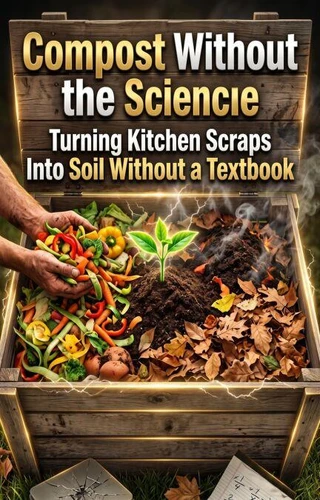
Compost Without the Science. Turning Kitchen Scraps Into Soil Without a Textbook
Par :Formats :
Disponible dans votre compte client Decitre ou Furet du Nord dès validation de votre commande. Le format ePub est :
- Compatible avec une lecture sur My Vivlio (smartphone, tablette, ordinateur)
- Compatible avec une lecture sur liseuses Vivlio
- Pour les liseuses autres que Vivlio, vous devez utiliser le logiciel Adobe Digital Edition. Non compatible avec la lecture sur les liseuses Kindle, Remarkable et Sony
 , qui est-ce ?
Notre partenaire de plateforme de lecture numérique où vous retrouverez l'ensemble de vos ebooks gratuitement
Pour en savoir plus sur nos ebooks, consultez notre aide en ligne ici
C'est si simple ! Lisez votre ebook avec l'app Vivlio sur votre tablette, mobile ou ordinateur :

- Nombre de pages146
- FormatePub
- ISBN978-3-565-59578-5
- EAN9783565595785
- Date de parution28/07/2026
- Protection num.pas de protection
- Taille891 Ko
- Infos supplémentairesepub
- ÉditeurEmphaloz Publishing House
Résumé
For millions of years, the forest floor has effortlessly turned its own waste into rich, dark soil. Yet today, the simple act of composting has been hijacked by a "dirt delusion, " convincing gardeners that success requires complex chemistry and expensive equipment.
This book investigates how industrial-scale agricultural formulas were mistakenly repackaged for the home garden, leading to a plague of smelly, failed projects.
It chronicles the rise of the textbook approach, from the myth of the precise carbon-to-nitrogen ratio to the flawed promise of sealed plastic tumblers. Through cautionary tales like that of Marcus, the chef who created a toxic sludge by following the rules, the author dismantles these scientific dogmas. The solution is revealed to be shockingly simple: a single, visual rule based on volume, not weight or molecular charts.
This guide returns the process to the earth, advocating for simple wire bins and a partnership with natural biology. By the final chapter, the reader will understand how to turn kitchen scraps into black gold with nothing more than a bucket and a basic understanding of physical space.
It chronicles the rise of the textbook approach, from the myth of the precise carbon-to-nitrogen ratio to the flawed promise of sealed plastic tumblers. Through cautionary tales like that of Marcus, the chef who created a toxic sludge by following the rules, the author dismantles these scientific dogmas. The solution is revealed to be shockingly simple: a single, visual rule based on volume, not weight or molecular charts.
This guide returns the process to the earth, advocating for simple wire bins and a partnership with natural biology. By the final chapter, the reader will understand how to turn kitchen scraps into black gold with nothing more than a bucket and a basic understanding of physical space.