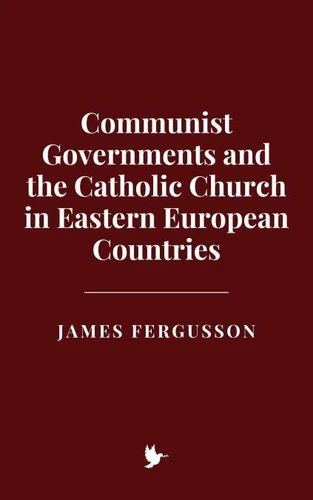
This book explores the complex and often tumultuous relationship between the Catholic Church and the communist regimes of Eastern Europe during the 20th century. From the rise of totalitarianism after World War II to the eventual fall of communism in the late 1980s and early 1990s, the Catholic Church in Eastern Europe faced unparalleled challenges as it navigated oppressive state policies aimed at eradicating religious influence.
Through a combination of spiritual resistance, underground networks, and moral advocacy, the Church played a central role in preserving national identity and fostering resistance against ideological oppression. The narrative spans key countries including Poland, Hungary, Czechoslovakia, Romania, Albania, and East Germany, offering an in-depth analysis of how the Catholic Church interacted with communist regimes that sought to suppress religious freedom and autonomy.
It examines the leadership of figures such as Cardinal Stefan Wyszynski in Poland, Cardinal József Mindszenty in Hungary, and Archbishop Josef Beran in Czechoslovakia, highlighting their roles as symbols of resistance to communist oppression. The Vatican's diplomatic strategies during this period, especially under Popes Pius XII and John Paul II, are explored for their influence on the Church's survival and eventual revitalization in the post-communist era.
The book also delves into the post-communist challenges and opportunities faced by the Catholic Church as Eastern Europe transitioned from totalitarian rule to democracy. In the new millennium, the Church grappled with secularization, social change, and the shift to pluralistic societies, yet it continued to play a vital role in shaping national identities, providing moral leadership, and advocating for human rights and dignity.
Through the lens of Catholicism's role in the region's political, cultural, and religious transformation, this book provides a comprehensive examination of the Church's enduring influence in Eastern Europe and its legacy in the modern world.
This book explores the complex and often tumultuous relationship between the Catholic Church and the communist regimes of Eastern Europe during the 20th century. From the rise of totalitarianism after World War II to the eventual fall of communism in the late 1980s and early 1990s, the Catholic Church in Eastern Europe faced unparalleled challenges as it navigated oppressive state policies aimed at eradicating religious influence.
Through a combination of spiritual resistance, underground networks, and moral advocacy, the Church played a central role in preserving national identity and fostering resistance against ideological oppression. The narrative spans key countries including Poland, Hungary, Czechoslovakia, Romania, Albania, and East Germany, offering an in-depth analysis of how the Catholic Church interacted with communist regimes that sought to suppress religious freedom and autonomy.
It examines the leadership of figures such as Cardinal Stefan Wyszynski in Poland, Cardinal József Mindszenty in Hungary, and Archbishop Josef Beran in Czechoslovakia, highlighting their roles as symbols of resistance to communist oppression. The Vatican's diplomatic strategies during this period, especially under Popes Pius XII and John Paul II, are explored for their influence on the Church's survival and eventual revitalization in the post-communist era.
The book also delves into the post-communist challenges and opportunities faced by the Catholic Church as Eastern Europe transitioned from totalitarian rule to democracy. In the new millennium, the Church grappled with secularization, social change, and the shift to pluralistic societies, yet it continued to play a vital role in shaping national identities, providing moral leadership, and advocating for human rights and dignity.
Through the lens of Catholicism's role in the region's political, cultural, and religious transformation, this book provides a comprehensive examination of the Church's enduring influence in Eastern Europe and its legacy in the modern world.

 , qui est-ce ?