In eastern Congo, a journalist named Djaffar films rows of standardized body bags - the international community can't agree on how to stop the killing, but it has agreed on how to package the dead. In Nigeria, lithium deposits worth billions sit beneath land where Christian and Muslim communities have lived, fought, and died for generations. An American administration sees an opportunity: manufacture a persecution narrative, justify intervention, secure the resources, and call it humanitarianism.
In Washington, a young reporter named Marcus Adeyemi at the Washington Post starts pulling at threads. The genocide the State Department describes is real - but it's not the genocide that's actually happening. The victims are in the wrong places. The distances don't add up. Port Harcourt to Maiduguri is over a thousand kilometers. The story America is telling requires geography that doesn't exist.
In Lagos, Pastor Solomon Abiola has built his ministry on American funding, American partnership, American approval. When he discovers that his church network is being used to amplify a false narrative - one that serves Washington's resource interests while real people die uncounted - he faces a choice that will cost him everything he's built. The machinery is vast. Tariff wars. Military base agreements.
Diamond trade routes. Congressional hearings where carefully coached witnesses tell carefully constructed stories. A coalition of nations assembled not to stop atrocities but to secure access. And underneath it all, a question as old as foreign policy itself: whose interests are actually being served?Commercial Friendship is a political thriller about the transactional nature of alliances between nations - and what happens when the bill comes due.
It follows journalists, diplomats, soldiers, and pastors caught in a system that turns human suffering into strategic leverage. A system where friendship is a commodity, genocide is a talking point, and the distance between what America says and what America does is measured not in kilometers but in bodies. Marcus loses his newspaper when they kill his story. He publishes on Substack - twenty million views.
Then a book: twelve hundred names of people who died in a war that America used as justification for intervention but never actually tried to stop. Twelve hundred people who mattered to someone, even if they didn't matter to the State Department. This is Book 4 in the Red White & Blue Land series. Like its predecessors, the novel draws its architecture from reality - the lithium deposits, the ICJ case, the tariff mechanisms, the military configurations are all real.
The story is invented. The patterns are not.
In eastern Congo, a journalist named Djaffar films rows of standardized body bags - the international community can't agree on how to stop the killing, but it has agreed on how to package the dead. In Nigeria, lithium deposits worth billions sit beneath land where Christian and Muslim communities have lived, fought, and died for generations. An American administration sees an opportunity: manufacture a persecution narrative, justify intervention, secure the resources, and call it humanitarianism.
In Washington, a young reporter named Marcus Adeyemi at the Washington Post starts pulling at threads. The genocide the State Department describes is real - but it's not the genocide that's actually happening. The victims are in the wrong places. The distances don't add up. Port Harcourt to Maiduguri is over a thousand kilometers. The story America is telling requires geography that doesn't exist.
In Lagos, Pastor Solomon Abiola has built his ministry on American funding, American partnership, American approval. When he discovers that his church network is being used to amplify a false narrative - one that serves Washington's resource interests while real people die uncounted - he faces a choice that will cost him everything he's built. The machinery is vast. Tariff wars. Military base agreements.
Diamond trade routes. Congressional hearings where carefully coached witnesses tell carefully constructed stories. A coalition of nations assembled not to stop atrocities but to secure access. And underneath it all, a question as old as foreign policy itself: whose interests are actually being served?Commercial Friendship is a political thriller about the transactional nature of alliances between nations - and what happens when the bill comes due.
It follows journalists, diplomats, soldiers, and pastors caught in a system that turns human suffering into strategic leverage. A system where friendship is a commodity, genocide is a talking point, and the distance between what America says and what America does is measured not in kilometers but in bodies. Marcus loses his newspaper when they kill his story. He publishes on Substack - twenty million views.
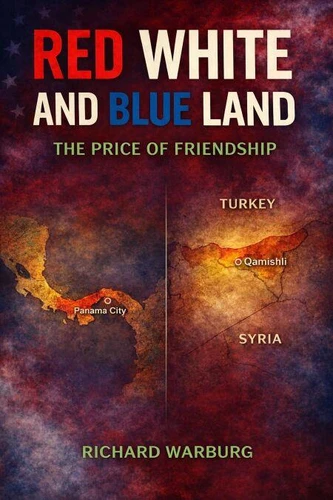
Then a book: twelve hundred names of people who died in a war that America used as justification for intervention but never actually tried to stop. Twelve hundred people who mattered to someone, even if they didn't matter to the State Department. This is Book 4 in the Red White & Blue Land series. Like its predecessors, the novel draws its architecture from reality - the lithium deposits, the ICJ case, the tariff mechanisms, the military configurations are all real.
The story is invented. The patterns are not.


 , qui est-ce ?