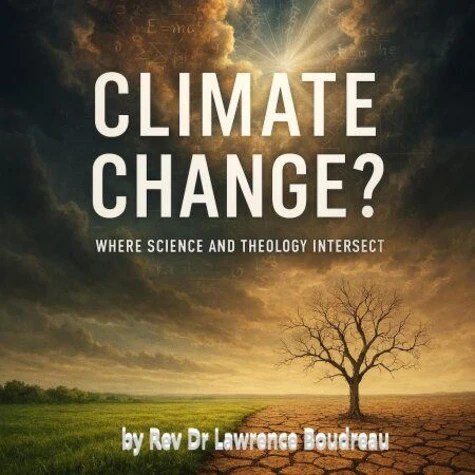
"Climate Change?" by Larry Boudreau is a sweeping, thoughtful exploration of the intersection between science and theology, particularly as they relate to humanity's understanding of natural phenomena and our role within the created order. Key Themes and Structure: Dialogue Between Science and Faith: The book opens by acknowledging the perceived conflict between scientific discovery and ancient scripture, but argues for a richer, more nuanced appreciation of both.
Boudreau traces the history of how natural events-like floods, storms, and earthquakes-were once interpreted as direct acts of God, and how this view gradually shifted with the rise of empirical observation and scientific reasoning. Ancient Worldviews: Early chapters delve into how ancient societies saw the cosmos as a divine canvas, with natural disasters interpreted as messages or judgments from the gods.
Biblical narratives such as the Flood, the destruction of Sodom and Gomorrah, and the plagues of Egypt are examined as foundational stories that shaped humanity's understanding of disaster and divine agency. The Rise of Scientific Inquiry: The book chronicles the gradual transition from theological explanations to naturalistic ones, highlighting the contributions of Greek philosophers, medieval scholars, and the scientific revolution.
Figures like Copernicus, Galileo, and Newton are discussed as pivotal in shifting the worldview from "acts of God" to "laws of nature." Reformation and Natural Theology: Boudreau explores how the Protestant Reformation and the rise of natural theology reframed divine action-not as constant intervention, but as the establishment of a rational, ordered universe. The concept of the "Great Chain of Being" and the clockwork universe are presented as ways faith communities reconciled God's sovereignty with scientific discovery.
Cataloging Calamity: The Enlightenment's emphasis on reason and empiricism led to the systematic study of natural disasters. Earthquakes, volcanoes, and storms were increasingly understood as products of physical processes, not divine wrath. The book details the emergence of seismology, volcanology, and meteorology, and how these sciences demystified many catastrophic events. Modern Perspectives-Acts of God Revisited: In the modern era, the phrase "act of God" persists in legal and insurance contexts, but its meaning has shifted.
Boudreau discusses how contemporary theology has moved away from seeing disasters as direct divine punishment, focusing instead on God's presence with those who suffer and the call to compassion, resilience, and environmental stewardship. Humanity as a Geological Force: The book addresses the Anthropocene-the era in which human activity has become a dominant force shaping the planet. Climate change, pollution, and biodiversity loss are presented as "man-made acts of God, " raising profound ethical and theological questions about stewardship, responsibility, and the limits of human power.
Integrating Science and Faith: Boudreau advocates for a unified understanding that embraces both scientific knowledge and spiritual wisdom. He argues that science and faith, when in dialogue, can offer a more holistic approach to meaning, ethics, and action in the face of global challenges like climate change. Humility and Hope: The closing chapters use the metaphor of "the ant and the mountain" to illustrate the need for humility in the face of nature's power and the limits of human control.
The book ends with a call for intellectual humility, hope, and a commitment to responsible action-urging readers to become stewards of both knowledge and creation.
"Climate Change?" by Larry Boudreau is a sweeping, thoughtful exploration of the intersection between science and theology, particularly as they relate to humanity's understanding of natural phenomena and our role within the created order. Key Themes and Structure: Dialogue Between Science and Faith: The book opens by acknowledging the perceived conflict between scientific discovery and ancient scripture, but argues for a richer, more nuanced appreciation of both.
Boudreau traces the history of how natural events-like floods, storms, and earthquakes-were once interpreted as direct acts of God, and how this view gradually shifted with the rise of empirical observation and scientific reasoning. Ancient Worldviews: Early chapters delve into how ancient societies saw the cosmos as a divine canvas, with natural disasters interpreted as messages or judgments from the gods.
Biblical narratives such as the Flood, the destruction of Sodom and Gomorrah, and the plagues of Egypt are examined as foundational stories that shaped humanity's understanding of disaster and divine agency. The Rise of Scientific Inquiry: The book chronicles the gradual transition from theological explanations to naturalistic ones, highlighting the contributions of Greek philosophers, medieval scholars, and the scientific revolution.
Figures like Copernicus, Galileo, and Newton are discussed as pivotal in shifting the worldview from "acts of God" to "laws of nature." Reformation and Natural Theology: Boudreau explores how the Protestant Reformation and the rise of natural theology reframed divine action-not as constant intervention, but as the establishment of a rational, ordered universe. The concept of the "Great Chain of Being" and the clockwork universe are presented as ways faith communities reconciled God's sovereignty with scientific discovery.
Cataloging Calamity: The Enlightenment's emphasis on reason and empiricism led to the systematic study of natural disasters. Earthquakes, volcanoes, and storms were increasingly understood as products of physical processes, not divine wrath. The book details the emergence of seismology, volcanology, and meteorology, and how these sciences demystified many catastrophic events. Modern Perspectives-Acts of God Revisited: In the modern era, the phrase "act of God" persists in legal and insurance contexts, but its meaning has shifted.
Boudreau discusses how contemporary theology has moved away from seeing disasters as direct divine punishment, focusing instead on God's presence with those who suffer and the call to compassion, resilience, and environmental stewardship. Humanity as a Geological Force: The book addresses the Anthropocene-the era in which human activity has become a dominant force shaping the planet. Climate change, pollution, and biodiversity loss are presented as "man-made acts of God, " raising profound ethical and theological questions about stewardship, responsibility, and the limits of human power.
Integrating Science and Faith: Boudreau advocates for a unified understanding that embraces both scientific knowledge and spiritual wisdom. He argues that science and faith, when in dialogue, can offer a more holistic approach to meaning, ethics, and action in the face of global challenges like climate change. Humility and Hope: The closing chapters use the metaphor of "the ant and the mountain" to illustrate the need for humility in the face of nature's power and the limits of human control.
The book ends with a call for intellectual humility, hope, and a commitment to responsible action-urging readers to become stewards of both knowledge and creation.

 , qui est-ce ?