
THOMAS LUX holds the Bourne Chair in Poetry and is the director of the McEver Visiting Writers Program at Georgia Institute of Technology. He has been awarded three NEA grants and the Kingsley Tufts Award and is a former Guggenheim Fellow. He lives in Atlanta.
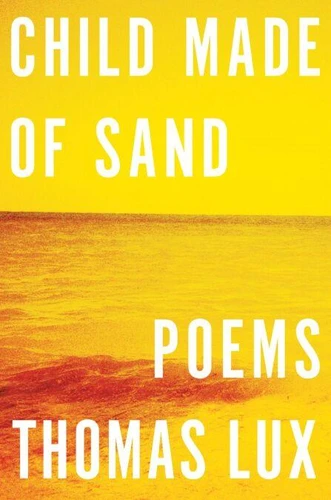
Child Made Of Sand. Poems
Par :Formats :
Disponible dans votre compte client Decitre ou Furet du Nord dès validation de votre commande. Le format ePub protégé est :
- Compatible avec une lecture sur My Vivlio (smartphone, tablette, ordinateur)
- Compatible avec une lecture sur liseuses Vivlio
- Pour les liseuses autres que Vivlio, vous devez utiliser le logiciel Adobe Digital Edition. Non compatible avec la lecture sur les liseuses Kindle, Remarkable et Sony
- Non compatible avec un achat hors France métropolitaine
 , qui est-ce ?
Notre partenaire de plateforme de lecture numérique où vous retrouverez l'ensemble de vos ebooks gratuitement
Pour en savoir plus sur nos ebooks, consultez notre aide en ligne ici
C'est si simple ! Lisez votre ebook avec l'app Vivlio sur votre tablette, mobile ou ordinateur :

- Nombre de pages96
- FormatePub
- ISBN978-0-547-58101-9
- EAN9780547581019
- Date de parution27/11/2012
- Protection num.Adobe DRM
- Infos supplémentairesepub
- ÉditeurEcco
Résumé
Reader's familiar with Thomas Lux's quick-witted images ("Language without simile is like a lung/ without air") and his rambunctious, Cirque-Du-Soleil-like imagination ("The Under-Appreciated Pontooniers") will find in his new collection, Child Made of Sand, not only the signature funny, provocative, and poignant super-surrealism that has made him, along with Charles Simic, James Tate, and Dean Young, one of America's most inventive and humane poets, but they will also find in a surprising series of homages, elegies, rants, and autobiographical poems a new register of language in which time and mortality echo and reverberate in quieter notes.
In "West Shining Tree, " we can hear this shift in register when he asks: "I'll head dead West and ask of all I see:/ Which is the way, the long or the short way, / to the West Shining Tree?" Surrealist Poetry: Dive into a Cirque-Du-Soleil-like imagination where dray horses get hugs from Nietzsche, pontooniers are underappreciated artists, and rattlesnakes form frozen balls. Philosophical Poetry: Lux wrestles with truth, empathy, and the "dense thing-ness" of nouns, placing him in conversation with contemporaries like Charles Simic and James Tate.
Poems about Mortality: A new, quieter register emerges in elegies and meditations that confront death, memory, and legacy with startling clarity and without sentimentality. Autobiographical Poems: From memories of his father (nicknamed "Rabbit") to a self-deprecating "Outline for My Memoir, " these poems ground the surreal in the deeply personal and humane.
In "West Shining Tree, " we can hear this shift in register when he asks: "I'll head dead West and ask of all I see:/ Which is the way, the long or the short way, / to the West Shining Tree?" Surrealist Poetry: Dive into a Cirque-Du-Soleil-like imagination where dray horses get hugs from Nietzsche, pontooniers are underappreciated artists, and rattlesnakes form frozen balls. Philosophical Poetry: Lux wrestles with truth, empathy, and the "dense thing-ness" of nouns, placing him in conversation with contemporaries like Charles Simic and James Tate.
Poems about Mortality: A new, quieter register emerges in elegies and meditations that confront death, memory, and legacy with startling clarity and without sentimentality. Autobiographical Poems: From memories of his father (nicknamed "Rabbit") to a self-deprecating "Outline for My Memoir, " these poems ground the surreal in the deeply personal and humane.
A propos de Thomas Lux
Half Promised Land
E-book
7,99 €
Split Horizon
E-book
8,99 €
To The Left Of Time
E-book
9,99 €
God Particles. Poems
E-book
15,99 €
The Cradle Place. Poems
E-book
8,99 €
9,99 €