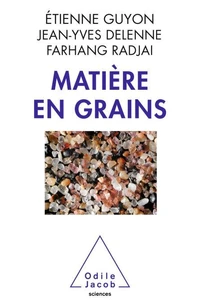
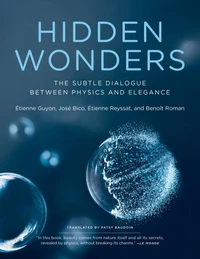
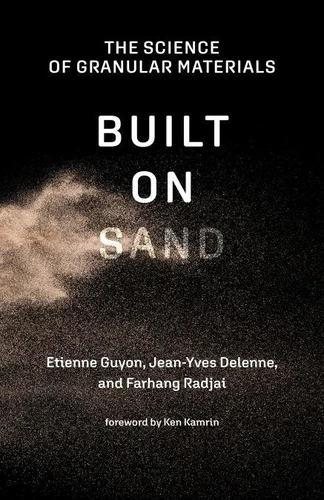
Explaining the science contained in a simple assembly of grains-the most abundant form of matter present on Earth. Granular media-composed of vast amounts of grains, consolidated or not-constitute the most abundant form of solid matter on Earth. Granular materials assemble in disordered configurations scientists often liken to a bag of marbles. Made of macroscopic particles rather than molecules, they defy the standard scheme of classification in terms of solid, liquid, and gas.
Granular materials provide a model relevant to various domains of research, including engineering, physics, and biology. William Blake famously wished "To See a World in a Grain of Sand"; in this book, pioneering researchers in granular matter explain the science hidden behind simple grains, shedding light on collective behavior in disordered settings in general. The authors begin by describing the single grain with its different origins, shapes, and sizes, then examine grains in piled or stacked form.
They explain the packing fraction of granular media, a crucial issue that bears on the properties displayed in practical applications; explore small-scale deformations in piles of disordered grains, with particular attention to friction; and present theories of various modes of disorder. Along the way, they discuss such concepts as force chains, arching effects, wet grains, sticky contacts, and inertial effects.
Drawing on recent numerical simulations as well as classical concepts developed in physics and mechanics, the book offers an accessible introduction to a rapidly developing field.
Explaining the science contained in a simple assembly of grains-the most abundant form of matter present on Earth. Granular media-composed of vast amounts of grains, consolidated or not-constitute the most abundant form of solid matter on Earth. Granular materials assemble in disordered configurations scientists often liken to a bag of marbles. Made of macroscopic particles rather than molecules, they defy the standard scheme of classification in terms of solid, liquid, and gas.
Granular materials provide a model relevant to various domains of research, including engineering, physics, and biology. William Blake famously wished "To See a World in a Grain of Sand"; in this book, pioneering researchers in granular matter explain the science hidden behind simple grains, shedding light on collective behavior in disordered settings in general. The authors begin by describing the single grain with its different origins, shapes, and sizes, then examine grains in piled or stacked form.
They explain the packing fraction of granular media, a crucial issue that bears on the properties displayed in practical applications; explore small-scale deformations in piles of disordered grains, with particular attention to friction; and present theories of various modes of disorder. Along the way, they discuss such concepts as force chains, arching effects, wet grains, sticky contacts, and inertial effects.
Drawing on recent numerical simulations as well as classical concepts developed in physics and mechanics, the book offers an accessible introduction to a rapidly developing field.

 , qui est-ce ?