Nouveauté
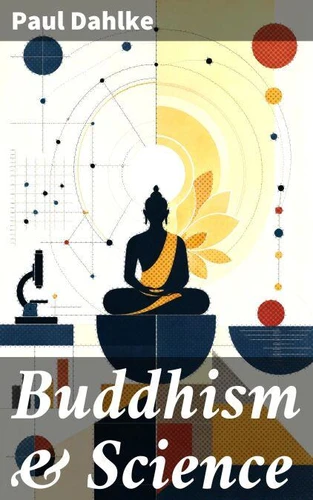
Buddhism & Science
Par : ,Formats :
Disponible dans votre compte client Decitre ou Furet du Nord dès validation de votre commande. Le format ePub est :
- Compatible avec une lecture sur My Vivlio (smartphone, tablette, ordinateur)
- Compatible avec une lecture sur liseuses Vivlio
- Pour les liseuses autres que Vivlio, vous devez utiliser le logiciel Adobe Digital Edition. Non compatible avec la lecture sur les liseuses Kindle, Remarkable et Sony
 , qui est-ce ?
Notre partenaire de plateforme de lecture numérique où vous retrouverez l'ensemble de vos ebooks gratuitement
Pour en savoir plus sur nos ebooks, consultez notre aide en ligne ici
C'est si simple ! Lisez votre ebook avec l'app Vivlio sur votre tablette, mobile ou ordinateur :

- Nombre de pages180
- FormatePub
- ISBN859-65--4791372-6
- EAN8596547913726
- Date de parution29/06/2026
- Protection num.Digital Watermarking
- Taille841 Ko
- Infos supplémentairesepub
- ÉditeurGOOD PRESS
Résumé
In Buddhism & Science, Paul Dahlke investigates the relation between Buddhist thought and modern scientific inquiry, presenting Buddhism not as dogma but as a disciplined, experiential method of understanding mind, causality, and the structure of reality. Written in a lucid, argumentative prose characteristic of early twentieth-century comparative religious scholarship, the book situates Buddhist doctrine within contemporary debates on psychology, empiricism, and rationalism.
Dahlke emphasizes Buddhism's analytical treatment of perception, suffering, and ethical action, framing it as a tradition remarkably compatible with scientific habits of observation and verification. Dahlke, a German physician and one of the most important early European interpreters of Buddhism, approached the tradition through both intellectual rigor and personal conviction. His medical training and sustained engagement with Pali Buddhism helped shape a reading of the Buddha's teaching that stressed precision, causation, and practical insight over metaphysical speculation.
This background makes the book especially revealing as a document of cross-cultural interpretation in an age deeply concerned with reconciling religion and science. This book is highly recommended for readers interested in Buddhist modernism, the history of ideas, and the encounter between Asian religious traditions and Western scientific thought. It remains a stimulating and historically significant study.
Dahlke emphasizes Buddhism's analytical treatment of perception, suffering, and ethical action, framing it as a tradition remarkably compatible with scientific habits of observation and verification. Dahlke, a German physician and one of the most important early European interpreters of Buddhism, approached the tradition through both intellectual rigor and personal conviction. His medical training and sustained engagement with Pali Buddhism helped shape a reading of the Buddha's teaching that stressed precision, causation, and practical insight over metaphysical speculation.
This background makes the book especially revealing as a document of cross-cultural interpretation in an age deeply concerned with reconciling religion and science. This book is highly recommended for readers interested in Buddhist modernism, the history of ideas, and the encounter between Asian religious traditions and Western scientific thought. It remains a stimulating and historically significant study.