- Accueil /
- Paul Dahlke
Paul Dahlke

Dernière sortie
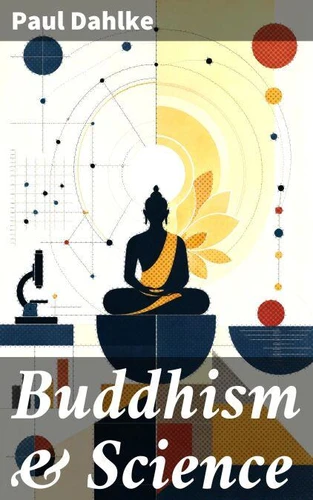
Buddhism & Science
In Buddhism & Science, Paul Dahlke investigates the relation between Buddhist thought and modern scientific inquiry, presenting Buddhism not as dogma but as a disciplined, experiential method of understanding mind, causality, and the structure of reality. Written in a lucid, argumentative prose characteristic of early twentieth-century comparative religious scholarship, the book situates Buddhist doctrine within contemporary debates on psychology, empiricism, and rationalism.
Dahlke emphasizes Buddhism's analytical treatment of perception, suffering, and ethical action, framing it as a tradition remarkably compatible with scientific habits of observation and verification. Dahlke, a German physician and one of the most important early European interpreters of Buddhism, approached the tradition through both intellectual rigor and personal conviction. His medical training and sustained engagement with Pali Buddhism helped shape a reading of the Buddha's teaching that stressed precision, causation, and practical insight over metaphysical speculation.
This background makes the book especially revealing as a document of cross-cultural interpretation in an age deeply concerned with reconciling religion and science. This book is highly recommended for readers interested in Buddhist modernism, the history of ideas, and the encounter between Asian religious traditions and Western scientific thought. It remains a stimulating and historically significant study.
Dahlke emphasizes Buddhism's analytical treatment of perception, suffering, and ethical action, framing it as a tradition remarkably compatible with scientific habits of observation and verification. Dahlke, a German physician and one of the most important early European interpreters of Buddhism, approached the tradition through both intellectual rigor and personal conviction. His medical training and sustained engagement with Pali Buddhism helped shape a reading of the Buddha's teaching that stressed precision, causation, and practical insight over metaphysical speculation.
This background makes the book especially revealing as a document of cross-cultural interpretation in an age deeply concerned with reconciling religion and science. This book is highly recommended for readers interested in Buddhist modernism, the history of ideas, and the encounter between Asian religious traditions and Western scientific thought. It remains a stimulating and historically significant study.
In Buddhism & Science, Paul Dahlke investigates the relation between Buddhist thought and modern scientific inquiry, presenting Buddhism not as dogma but as a disciplined, experiential method of understanding mind, causality, and the structure of reality. Written in a lucid, argumentative prose characteristic of early twentieth-century comparative religious scholarship, the book situates Buddhist doctrine within contemporary debates on psychology, empiricism, and rationalism.
Dahlke emphasizes Buddhism's analytical treatment of perception, suffering, and ethical action, framing it as a tradition remarkably compatible with scientific habits of observation and verification. Dahlke, a German physician and one of the most important early European interpreters of Buddhism, approached the tradition through both intellectual rigor and personal conviction. His medical training and sustained engagement with Pali Buddhism helped shape a reading of the Buddha's teaching that stressed precision, causation, and practical insight over metaphysical speculation.
This background makes the book especially revealing as a document of cross-cultural interpretation in an age deeply concerned with reconciling religion and science. This book is highly recommended for readers interested in Buddhist modernism, the history of ideas, and the encounter between Asian religious traditions and Western scientific thought. It remains a stimulating and historically significant study.

Dahlke emphasizes Buddhism's analytical treatment of perception, suffering, and ethical action, framing it as a tradition remarkably compatible with scientific habits of observation and verification. Dahlke, a German physician and one of the most important early European interpreters of Buddhism, approached the tradition through both intellectual rigor and personal conviction. His medical training and sustained engagement with Pali Buddhism helped shape a reading of the Buddha's teaching that stressed precision, causation, and practical insight over metaphysical speculation.
This background makes the book especially revealing as a document of cross-cultural interpretation in an age deeply concerned with reconciling religion and science. This book is highly recommended for readers interested in Buddhist modernism, the history of ideas, and the encounter between Asian religious traditions and Western scientific thought. It remains a stimulating and historically significant study.
Les livres de Paul Dahlke

0,49 €

Aus dem Reiche des Buddha. Sieben Kurzgeschichten für mehr Gelassenheit und Achtsamkeit
Paul Dahlke, mehrbuch Verlag
E-book
1,99 €
