SOLDES
Jusqu'à -70% sur une sélection d'articles*

Nouveauté
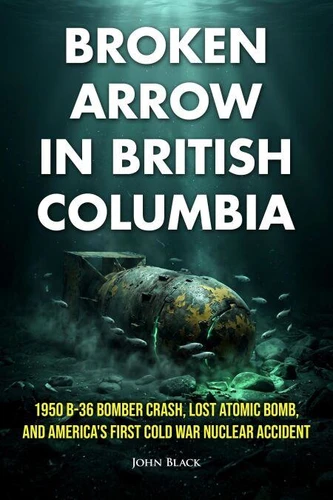
Broken Arrow in British Columbia - 1950 B-36 Bomber Crash, Lost Atomic Bomb, and America's First Cold War Nuclear Accident. Near-Missed, #3
Par :Formats :
Disponible dans votre compte client Decitre ou Furet du Nord dès validation de votre commande. Le format ePub est :
- Compatible avec une lecture sur My Vivlio (smartphone, tablette, ordinateur)
- Compatible avec une lecture sur liseuses Vivlio
- Pour les liseuses autres que Vivlio, vous devez utiliser le logiciel Adobe Digital Edition. Non compatible avec la lecture sur les liseuses Kindle, Remarkable et Sony
 , qui est-ce ?
Notre partenaire de plateforme de lecture numérique où vous retrouverez l'ensemble de vos ebooks gratuitement
Pour en savoir plus sur nos ebooks, consultez notre aide en ligne ici
C'est si simple ! Lisez votre ebook avec l'app Vivlio sur votre tablette, mobile ou ordinateur :

- FormatePub
- ISBN8235320680
- EAN9798235320680
- Date de parution26/06/2026
- Protection num.pas de protection
- Infos supplémentairesepub
- ÉditeurIoakim Ioakim
Résumé
Cold War history buried the truth for thirty-one years. On a freezing February night in 1950, a massive Convair B-36 Peacemaker bomber staggered across the dark sky over Canada's Pacific coast, crippled by icing, fire, and failing engines. Somewhere over the cold waters of the Pacific, its crew made a decision that would remain classified for decades. They jettisoned a nuclear weapon into the sea below and then fought to keep the dying aircraft in the air long enough for the crew to survive.
Broken Arrow in British Columbia tells the complete story of that night and everything that followed. You will stand in the cockpit of the failing bomber as ice builds on the wings and engines flame out one by one. You will sit in the wheelhouse of a lone fishing boat as a blinding flash lights the horizon over Hecate Strait and a low concussive sound rolls across the dark water. You will follow search teams into the brutal coastal mountains and descend with recovery divers into the cold depths of the Pacific as they try to understand what was lost and where it came from.
This Cold War nuclear history is built from declassified documents, military records, and firsthand accounts. It reconstructs the 1950 British Columbia B-36 crash with scene-level detail and traces the nuclear weapon from its loading at a US Air Force base to its resting place on the ocean floor. It shows how governments on both sides of the border shaped the public story for decades, why the presence of an armed or partially armed nuclear device was minimized or denied, and what was truly known about the explosive and radioactive hazard sitting on the seafloor off Canada's Pacific coast.
The Pacific Grave places this single mission inside the full sweep of Cold War nuclear deterrence. Strategic bombers flew routine training flights over remote regions of Alaska, Canada, and the North Pacific carrying live or near-complete nuclear weapons as a matter of policy. The broken arrow incidents that resulted from those flights became a hidden arithmetic of the nuclear age, classified and filed and quietly forgotten by the people responsible for them.
This book recovers one of those incidents in full. At the center of the story is the Pacific itself. The book brings to life the fog-bound channels of the Inside Passage, the bitter February seas of Hecate Strait, and the quiet coastal fishing communities that lived for decades above a weapon they never knew existed. It measures the environmental stakes of a five-ton device left unrecovered on the ocean floor, asks what it means for a community to carry an invisible hazard born of a distant strategic war, and follows the small number of researchers and veterans who spent years trying to get the full story into the public record.
Readers who are drawn to Cold War history, nuclear weapons history, military aviation, or narrative nonfiction that reads at the pace of a thriller will find this book deeply researched and relentlessly grounded in documented events. It does not treat the lost bomb as a footnote or a curiosity. It follows the weapon from the loading bay to the seafloor and accounts for every decision made along the way.
This book is structured for Kindle readers in tight, propulsive chapters that move between the men in the air, the witnesses on the water, the searchers on the ground, and the officials in the offices where the cover began. Each chapter advances both the story and the historical record. If you are looking for a Cold War nuclear history that reads like narrative fiction but is grounded in the documented past, this is the book you have been waiting for.
Broken Arrow in British Columbia tells the complete story of that night and everything that followed. You will stand in the cockpit of the failing bomber as ice builds on the wings and engines flame out one by one. You will sit in the wheelhouse of a lone fishing boat as a blinding flash lights the horizon over Hecate Strait and a low concussive sound rolls across the dark water. You will follow search teams into the brutal coastal mountains and descend with recovery divers into the cold depths of the Pacific as they try to understand what was lost and where it came from.
This Cold War nuclear history is built from declassified documents, military records, and firsthand accounts. It reconstructs the 1950 British Columbia B-36 crash with scene-level detail and traces the nuclear weapon from its loading at a US Air Force base to its resting place on the ocean floor. It shows how governments on both sides of the border shaped the public story for decades, why the presence of an armed or partially armed nuclear device was minimized or denied, and what was truly known about the explosive and radioactive hazard sitting on the seafloor off Canada's Pacific coast.
The Pacific Grave places this single mission inside the full sweep of Cold War nuclear deterrence. Strategic bombers flew routine training flights over remote regions of Alaska, Canada, and the North Pacific carrying live or near-complete nuclear weapons as a matter of policy. The broken arrow incidents that resulted from those flights became a hidden arithmetic of the nuclear age, classified and filed and quietly forgotten by the people responsible for them.
This book recovers one of those incidents in full. At the center of the story is the Pacific itself. The book brings to life the fog-bound channels of the Inside Passage, the bitter February seas of Hecate Strait, and the quiet coastal fishing communities that lived for decades above a weapon they never knew existed. It measures the environmental stakes of a five-ton device left unrecovered on the ocean floor, asks what it means for a community to carry an invisible hazard born of a distant strategic war, and follows the small number of researchers and veterans who spent years trying to get the full story into the public record.
Readers who are drawn to Cold War history, nuclear weapons history, military aviation, or narrative nonfiction that reads at the pace of a thriller will find this book deeply researched and relentlessly grounded in documented events. It does not treat the lost bomb as a footnote or a curiosity. It follows the weapon from the loading bay to the seafloor and accounts for every decision made along the way.
This book is structured for Kindle readers in tight, propulsive chapters that move between the men in the air, the witnesses on the water, the searchers on the ground, and the officials in the offices where the cover began. Each chapter advances both the story and the historical record. If you are looking for a Cold War nuclear history that reads like narrative fiction but is grounded in the documented past, this is the book you have been waiting for.
A propos de John Black



2,99 €