OFFRE LISEUSES
Une liseuse achetée = une housse offerte* jusqu'au 21 juin
- Accueil /
- John Black
John Black

Dernière sortie
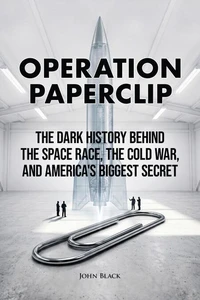
Operation Paperclip - The Dark History Behind the Space Race, the Cold War, and America's Biggest Secret
Operation Paperclip (Operation Overcast) is a classified American program that turned Nazi war criminals into national heroes, and buried the evidence for forty years. In April 1945, American soldiers liberated the concentration camps and found thousands of corpses. In the same weeks, other Americans were moving through the ruins of the Third Reich with a different mission. They were not looking for survivors.
They were looking for scientists. More than 25, 000 people died inside a mountain in central Germany building the V-2 rocket. They slept underground in tunnels carved from limestone, breathed rock dust, and were hanged from production cranes when they resisted. The men who supervised this operation were brought to Texas within months of Germany's surrender, installed in government laboratories, and protected by immigration records that had been deliberately falsified to hide their SS ranks, their Nazi Party memberships, and their connections to what a Nuremberg tribunal was simultaneously calling crimes against humanity.
The program was called Operation Paperclip. It ran from 1945 to 1959. It brought more than 1, 600 German scientists to America. It changed the course of the Cold War, the Space Race, and American military history. It was built on a fraud so systematic and so carefully protected that it would take forty years, a freedom of information revolution, and the work of one journalist and one Justice Department investigator to bring it fully into the light.
This book is the definitive narrative account of how this happened. Written with the pacing of a spy thriller and the investigative depth of the best nonfiction, it is the book that goes further than any previous account of this subject, exposing not just what was done, but why it was done, how it was sustained, and what it means that it was never honestly reckoned with. Follow Wernher von Braun from his boyhood obsession with the stars, through his SS rank, his fifteen documented visits to the underground factory where his rockets were assembled by dying prisoners, his careful surrender to American forces in 1945, and his masterful decade-long reinvention as the smiling, church-going face of American space exploration.
Follow Arthur Rudolph, who signed the August 1944 memo requesting more concentration camp prisoners from Buchenwald, who managed the production line at the facility where thousands died, and who later became the program manager of the Saturn V, the rocket that carried Neil Armstrong to the moon. Follow Hubertus Strughold, who attended the 1942 conference where lethal experiments on prisoners were presented, and who coined the term "space medicine" in 1948 while his colleagues received death sentences at Nuremberg.
Follow the American officials who falsified government records, outmaneuvered the FBI, overrode the State Department, and deliberately structured the entire program to avoid presidential oversight. Follow the lone lawyer who said no and was destroyed for it. Follow the journalist who opened the files in the 1980s and found the evidence of one of the largest organized frauds in American government history.
This book asks the question that America has never fully answered: what does a nation become when it buries its conscience to win? The answer runs from the tunnels at Nordhausen to the celebrations at Cape Canaveral. It runs from the Nuremberg prosecutors arguing that crimes against humanity would be punished regardless of who committed them, to the Pentagon simultaneously employing the men whose colleagues were in the dock.
It runs from 1945 to the CIA black sites of the 21st century, connected by institutional precedents that the program set and no subsequent administration ever dismantled. It is the full story, told with the force it deserves, drawn from the declassified files that the program's architects spent decades trying to keep hidden.
They were looking for scientists. More than 25, 000 people died inside a mountain in central Germany building the V-2 rocket. They slept underground in tunnels carved from limestone, breathed rock dust, and were hanged from production cranes when they resisted. The men who supervised this operation were brought to Texas within months of Germany's surrender, installed in government laboratories, and protected by immigration records that had been deliberately falsified to hide their SS ranks, their Nazi Party memberships, and their connections to what a Nuremberg tribunal was simultaneously calling crimes against humanity.
The program was called Operation Paperclip. It ran from 1945 to 1959. It brought more than 1, 600 German scientists to America. It changed the course of the Cold War, the Space Race, and American military history. It was built on a fraud so systematic and so carefully protected that it would take forty years, a freedom of information revolution, and the work of one journalist and one Justice Department investigator to bring it fully into the light.
This book is the definitive narrative account of how this happened. Written with the pacing of a spy thriller and the investigative depth of the best nonfiction, it is the book that goes further than any previous account of this subject, exposing not just what was done, but why it was done, how it was sustained, and what it means that it was never honestly reckoned with. Follow Wernher von Braun from his boyhood obsession with the stars, through his SS rank, his fifteen documented visits to the underground factory where his rockets were assembled by dying prisoners, his careful surrender to American forces in 1945, and his masterful decade-long reinvention as the smiling, church-going face of American space exploration.
Follow Arthur Rudolph, who signed the August 1944 memo requesting more concentration camp prisoners from Buchenwald, who managed the production line at the facility where thousands died, and who later became the program manager of the Saturn V, the rocket that carried Neil Armstrong to the moon. Follow Hubertus Strughold, who attended the 1942 conference where lethal experiments on prisoners were presented, and who coined the term "space medicine" in 1948 while his colleagues received death sentences at Nuremberg.
Follow the American officials who falsified government records, outmaneuvered the FBI, overrode the State Department, and deliberately structured the entire program to avoid presidential oversight. Follow the lone lawyer who said no and was destroyed for it. Follow the journalist who opened the files in the 1980s and found the evidence of one of the largest organized frauds in American government history.
This book asks the question that America has never fully answered: what does a nation become when it buries its conscience to win? The answer runs from the tunnels at Nordhausen to the celebrations at Cape Canaveral. It runs from the Nuremberg prosecutors arguing that crimes against humanity would be punished regardless of who committed them, to the Pentagon simultaneously employing the men whose colleagues were in the dock.
It runs from 1945 to the CIA black sites of the 21st century, connected by institutional precedents that the program set and no subsequent administration ever dismantled. It is the full story, told with the force it deserves, drawn from the declassified files that the program's architects spent decades trying to keep hidden.
Operation Paperclip (Operation Overcast) is a classified American program that turned Nazi war criminals into national heroes, and buried the evidence for forty years. In April 1945, American soldiers liberated the concentration camps and found thousands of corpses. In the same weeks, other Americans were moving through the ruins of the Third Reich with a different mission. They were not looking for survivors.
They were looking for scientists. More than 25, 000 people died inside a mountain in central Germany building the V-2 rocket. They slept underground in tunnels carved from limestone, breathed rock dust, and were hanged from production cranes when they resisted. The men who supervised this operation were brought to Texas within months of Germany's surrender, installed in government laboratories, and protected by immigration records that had been deliberately falsified to hide their SS ranks, their Nazi Party memberships, and their connections to what a Nuremberg tribunal was simultaneously calling crimes against humanity.
The program was called Operation Paperclip. It ran from 1945 to 1959. It brought more than 1, 600 German scientists to America. It changed the course of the Cold War, the Space Race, and American military history. It was built on a fraud so systematic and so carefully protected that it would take forty years, a freedom of information revolution, and the work of one journalist and one Justice Department investigator to bring it fully into the light.
This book is the definitive narrative account of how this happened. Written with the pacing of a spy thriller and the investigative depth of the best nonfiction, it is the book that goes further than any previous account of this subject, exposing not just what was done, but why it was done, how it was sustained, and what it means that it was never honestly reckoned with. Follow Wernher von Braun from his boyhood obsession with the stars, through his SS rank, his fifteen documented visits to the underground factory where his rockets were assembled by dying prisoners, his careful surrender to American forces in 1945, and his masterful decade-long reinvention as the smiling, church-going face of American space exploration.
Follow Arthur Rudolph, who signed the August 1944 memo requesting more concentration camp prisoners from Buchenwald, who managed the production line at the facility where thousands died, and who later became the program manager of the Saturn V, the rocket that carried Neil Armstrong to the moon. Follow Hubertus Strughold, who attended the 1942 conference where lethal experiments on prisoners were presented, and who coined the term "space medicine" in 1948 while his colleagues received death sentences at Nuremberg.
Follow the American officials who falsified government records, outmaneuvered the FBI, overrode the State Department, and deliberately structured the entire program to avoid presidential oversight. Follow the lone lawyer who said no and was destroyed for it. Follow the journalist who opened the files in the 1980s and found the evidence of one of the largest organized frauds in American government history.
This book asks the question that America has never fully answered: what does a nation become when it buries its conscience to win? The answer runs from the tunnels at Nordhausen to the celebrations at Cape Canaveral. It runs from the Nuremberg prosecutors arguing that crimes against humanity would be punished regardless of who committed them, to the Pentagon simultaneously employing the men whose colleagues were in the dock.
It runs from 1945 to the CIA black sites of the 21st century, connected by institutional precedents that the program set and no subsequent administration ever dismantled. It is the full story, told with the force it deserves, drawn from the declassified files that the program's architects spent decades trying to keep hidden.
They were looking for scientists. More than 25, 000 people died inside a mountain in central Germany building the V-2 rocket. They slept underground in tunnels carved from limestone, breathed rock dust, and were hanged from production cranes when they resisted. The men who supervised this operation were brought to Texas within months of Germany's surrender, installed in government laboratories, and protected by immigration records that had been deliberately falsified to hide their SS ranks, their Nazi Party memberships, and their connections to what a Nuremberg tribunal was simultaneously calling crimes against humanity.
The program was called Operation Paperclip. It ran from 1945 to 1959. It brought more than 1, 600 German scientists to America. It changed the course of the Cold War, the Space Race, and American military history. It was built on a fraud so systematic and so carefully protected that it would take forty years, a freedom of information revolution, and the work of one journalist and one Justice Department investigator to bring it fully into the light.
This book is the definitive narrative account of how this happened. Written with the pacing of a spy thriller and the investigative depth of the best nonfiction, it is the book that goes further than any previous account of this subject, exposing not just what was done, but why it was done, how it was sustained, and what it means that it was never honestly reckoned with. Follow Wernher von Braun from his boyhood obsession with the stars, through his SS rank, his fifteen documented visits to the underground factory where his rockets were assembled by dying prisoners, his careful surrender to American forces in 1945, and his masterful decade-long reinvention as the smiling, church-going face of American space exploration.
Follow Arthur Rudolph, who signed the August 1944 memo requesting more concentration camp prisoners from Buchenwald, who managed the production line at the facility where thousands died, and who later became the program manager of the Saturn V, the rocket that carried Neil Armstrong to the moon. Follow Hubertus Strughold, who attended the 1942 conference where lethal experiments on prisoners were presented, and who coined the term "space medicine" in 1948 while his colleagues received death sentences at Nuremberg.
Follow the American officials who falsified government records, outmaneuvered the FBI, overrode the State Department, and deliberately structured the entire program to avoid presidential oversight. Follow the lone lawyer who said no and was destroyed for it. Follow the journalist who opened the files in the 1980s and found the evidence of one of the largest organized frauds in American government history.
This book asks the question that America has never fully answered: what does a nation become when it buries its conscience to win? The answer runs from the tunnels at Nordhausen to the celebrations at Cape Canaveral. It runs from the Nuremberg prosecutors arguing that crimes against humanity would be punished regardless of who committed them, to the Pentagon simultaneously employing the men whose colleagues were in the dock.
It runs from 1945 to the CIA black sites of the 21st century, connected by institutional precedents that the program set and no subsequent administration ever dismantled. It is the full story, told with the force it deserves, drawn from the declassified files that the program's architects spent decades trying to keep hidden.
Les livres de John Black
Nouveauté

Nouveauté

Operation Eagle Claw (Desert One) - The failed US hostage rescue mission in Iran. Rescue Ops, #1
Anton C., John Black
E-book
3,99 €

Lectures on Dramatic Art and Literature. Enriched edition.
August Wilhelm von Schlegel, John Black, Sophia Farnsworth
E-book
0,99 €

Lectures on Dramatic Art and Literature. Enriched edition. Exploring the Evolution of Dramatic Works and Literary Themes
August Wilhelm von Schlegel, John Black, Ethan Carlisle
E-book
0,49 €

2,99 €