
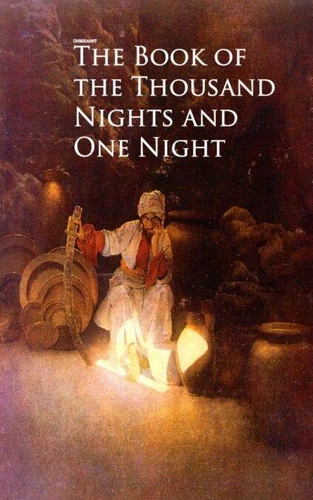
Book of the Thousand Nights and One Night. Volume I - III
Par :Formats :
Disponible dans votre compte client Decitre ou Furet du Nord dès validation de votre commande. Le format ePub est :
- Compatible avec une lecture sur My Vivlio (smartphone, tablette, ordinateur)
- Compatible avec une lecture sur liseuses Vivlio
- Pour les liseuses autres que Vivlio, vous devez utiliser le logiciel Adobe Digital Edition. Non compatible avec la lecture sur les liseuses Kindle, Remarkable et Sony
 , qui est-ce ?
Notre partenaire de plateforme de lecture numérique où vous retrouverez l'ensemble de vos ebooks gratuitement
Pour en savoir plus sur nos ebooks, consultez notre aide en ligne ici
C'est si simple ! Lisez votre ebook avec l'app Vivlio sur votre tablette, mobile ou ordinateur :

- Nombre de pages500
- FormatePub
- ISBN978-3-7364-0875-3
- EAN9783736408753
- Date de parution22/08/2016
- Protection num.Digital Watermarking
- Taille1 Mo
- Infos supplémentairesepub
- ÉditeurAndhof
Résumé
One Thousand and One Nights is a collection of Middle Eastern and South Asian stories and folk tales compiled in Arabic during the Islamic Golden Age. It is often known in English as the Arabian Nights, from the first English language edition, which rendered the title as The Arabian Nights' Entertainment. The work was collected over many centuries by various authors, translators, and scholars across West, Central, and South Asia and North Africa.
The tales themselves trace their roots back to ancient and medieval Arabic, Persian, Mesopotamian, Indian, Jewish and Egyptian folklore and literature. In particular, many tales were originally folk stories from the Caliphate era, while others, especially the frame story, are most probably drawn from the Pahlavi Persian work Hazar Afsan which in turn relied partly on Indian elements.
The tales themselves trace their roots back to ancient and medieval Arabic, Persian, Mesopotamian, Indian, Jewish and Egyptian folklore and literature. In particular, many tales were originally folk stories from the Caliphate era, while others, especially the frame story, are most probably drawn from the Pahlavi Persian work Hazar Afsan which in turn relied partly on Indian elements.
A propos de Unbekannt



2,49 €

2,99 €
Der Archipel in Flammen
E-book
1,99 €

4,49 €

Gudrun
E-book
3,99 €

Sigfrid und Kriemhild
E-book
4,49 €

Tannhäuser
E-book
3,99 €

Die Schlacht vor Raben
E-book
3,99 €

Parzival
E-book
3,49 €

Walther und Hildegund
E-book
4,49 €
Lohengrin
E-book
4,49 €

Wieland der Schmied
E-book
3,99 €

Dietrich von Bern
E-book
3,99 €

1,99 €

0,49 €
0,49 €