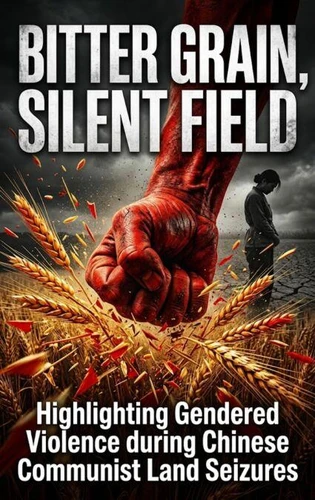
Bitter Grain, Silent Field. Highlighting Gendered Violence during Chinese Communist Land Seizures
Par :Formats :
Disponible dans votre compte client Decitre ou Furet du Nord dès validation de votre commande. Le format ePub est :
- Compatible avec une lecture sur My Vivlio (smartphone, tablette, ordinateur)
- Compatible avec une lecture sur liseuses Vivlio
- Pour les liseuses autres que Vivlio, vous devez utiliser le logiciel Adobe Digital Edition. Non compatible avec la lecture sur les liseuses Kindle, Remarkable et Sony
 , qui est-ce ?
Notre partenaire de plateforme de lecture numérique où vous retrouverez l'ensemble de vos ebooks gratuitement
Pour en savoir plus sur nos ebooks, consultez notre aide en ligne ici
C'est si simple ! Lisez votre ebook avec l'app Vivlio sur votre tablette, mobile ou ordinateur :

- Nombre de pages199
- FormatePub
- ISBN978-3-565-40944-0
- EAN9783565409440
- Date de parution14/04/2026
- Protection num.pas de protection
- Taille2 Mo
- Infos supplémentairesepub
- ÉditeurEmphaloz Publishing House
Résumé
The Chinese Communist Party's land reform campaigns of 1945-1952 were among the most sweeping social transformations of the twentieth century - redistributing land from an estimated hundreds of thousands of landlords to hundreds of millions of peasants, and dismantling in less than a decade a feudal agrarian structure that had governed Chinese rural life for two thousand years. Women were declared central to this revolution.
They were mobilized, organized, encouraged to "speak bitterness" in public struggle sessions, and promised - for the first time in Chinese history - an equal share of land in their own names. The reality, as this book documents, was far more fractured. Bitter Grain, Silent Field is a work of historical drama that places women at the center of the land reform story - not as the liberated beneficiaries of Party propaganda, but as human beings navigating a revolution that offered them new rights with one hand while subjecting them to new forms of violence with the other.
Its protagonist is a peasant woman in Hebei province, mobilized in 1947 as a village activist - one of the women whom Deng Yingchao had identified as "great mobilizers when they speak bitterness". She participates in the struggle sessions. She accuses. She receives her land title. And then she witnesses what the Party's own cadres do after the meetings end.
They were mobilized, organized, encouraged to "speak bitterness" in public struggle sessions, and promised - for the first time in Chinese history - an equal share of land in their own names. The reality, as this book documents, was far more fractured. Bitter Grain, Silent Field is a work of historical drama that places women at the center of the land reform story - not as the liberated beneficiaries of Party propaganda, but as human beings navigating a revolution that offered them new rights with one hand while subjecting them to new forms of violence with the other.
Its protagonist is a peasant woman in Hebei province, mobilized in 1947 as a village activist - one of the women whom Deng Yingchao had identified as "great mobilizers when they speak bitterness". She participates in the struggle sessions. She accuses. She receives her land title. And then she witnesses what the Party's own cadres do after the meetings end.