SOLDES
Jusqu'à -70% sur une sélection d'articles*

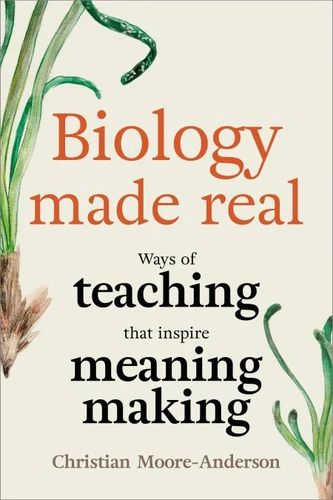
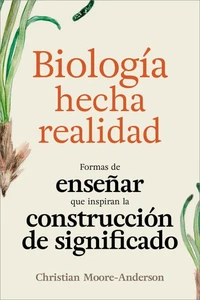
Biology Made Real: Ways of Teaching That Inspire Meaning-Making
Par :Formats :
Disponible dans votre compte client Decitre ou Furet du Nord dès validation de votre commande. Le format ePub est :
- Compatible avec une lecture sur My Vivlio (smartphone, tablette, ordinateur)
- Compatible avec une lecture sur liseuses Vivlio
- Pour les liseuses autres que Vivlio, vous devez utiliser le logiciel Adobe Digital Edition. Non compatible avec la lecture sur les liseuses Kindle, Remarkable et Sony
 , qui est-ce ?
Notre partenaire de plateforme de lecture numérique où vous retrouverez l'ensemble de vos ebooks gratuitement
Pour en savoir plus sur nos ebooks, consultez notre aide en ligne ici
C'est si simple ! Lisez votre ebook avec l'app Vivlio sur votre tablette, mobile ou ordinateur :

- FormatePub
- ISBN8215315521
- EAN9798215315521
- Date de parution05/04/2023
- Protection num.pas de protection
- Infos supplémentairesepub
- ÉditeurWMG Publishing
Résumé
"This outstanding book... deserves to be very widely read. I hope it makes a major contribution to how school biology is taught." -Dr Michael J. Reiss, Professor of Science Education, University of LondonFrom the author of Difference Maker, Biology Made Real explores what makes school biology meaningful for students. Pulling from many scholarly sources-including the philosophy, history, and education of biology, plus personal classroom experience-you'll find a way of seeing biology teaching and how I've enacted it.
What's inside: ?A vision for an integrated and meaningful biology education.?A framework for teaching for meaning-making.?Concepts that help create a unified narrative across different topics.?A taxonomy of understanding can be shared with students and used to assess work. Chapter 1 combines many threads to explore what holds meaning for secondary biology students. Chapters 2 & 3 introduce the variation theory of learning to show how useful it is in the secondary biology classroom, with many examples.
Chapter 4 presents a lesson planning framework for enhancing meaning-making in biology lessons. Chapter 5 discusses two concepts that can unify all the topics of a curriculum.?I. Seeing biology through a thermodynamic systems lens and?II. Seeing biology through an ecological-evolutionary lens via the concept of life strategies. Chapter 6 introduces a taxonomy of understanding biology that can be shared with students and used to assess their answers.
Chapter 7 explores the how and why of embedding the taxonomy into biology curricula. I give examples of how I use it and examples of my students' answers. Chapter 8 concludes by considering the complexity of our subject and the classroom.
What's inside: ?A vision for an integrated and meaningful biology education.?A framework for teaching for meaning-making.?Concepts that help create a unified narrative across different topics.?A taxonomy of understanding can be shared with students and used to assess work. Chapter 1 combines many threads to explore what holds meaning for secondary biology students. Chapters 2 & 3 introduce the variation theory of learning to show how useful it is in the secondary biology classroom, with many examples.
Chapter 4 presents a lesson planning framework for enhancing meaning-making in biology lessons. Chapter 5 discusses two concepts that can unify all the topics of a curriculum.?I. Seeing biology through a thermodynamic systems lens and?II. Seeing biology through an ecological-evolutionary lens via the concept of life strategies. Chapter 6 introduces a taxonomy of understanding biology that can be shared with students and used to assess their answers.
Chapter 7 explores the how and why of embedding the taxonomy into biology curricula. I give examples of how I use it and examples of my students' answers. Chapter 8 concludes by considering the complexity of our subject and the classroom.