SOLDES
Jusqu'à -70% sur une sélection d'articles*

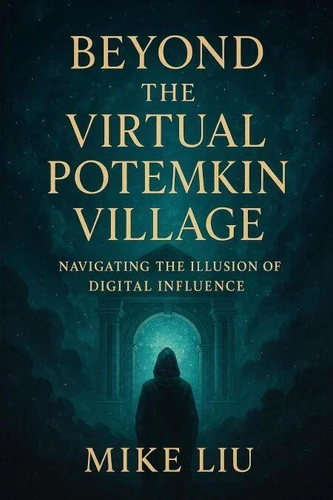
Beyond the Virtual Potemkin Village: Navigating the Illusion of Digital Influence
Par :Formats :
Disponible dans votre compte client Decitre ou Furet du Nord dès validation de votre commande. Le format ePub est :
- Compatible avec une lecture sur My Vivlio (smartphone, tablette, ordinateur)
- Compatible avec une lecture sur liseuses Vivlio
- Pour les liseuses autres que Vivlio, vous devez utiliser le logiciel Adobe Digital Edition. Non compatible avec la lecture sur les liseuses Kindle, Remarkable et Sony
 , qui est-ce ?
Notre partenaire de plateforme de lecture numérique où vous retrouverez l'ensemble de vos ebooks gratuitement
Pour en savoir plus sur nos ebooks, consultez notre aide en ligne ici
C'est si simple ! Lisez votre ebook avec l'app Vivlio sur votre tablette, mobile ou ordinateur :

- FormatePub
- ISBN978-626-92898-0-6
- EAN9786269289806
- Date de parution04/12/2025
- Protection num.pas de protection
- Infos supplémentairesepub
- ÉditeurMike's Strategic Communication
Résumé
In the digital age, power and success are no longer solely determined by personal relationships, expertise, or genuine accomplishments. Instead, they are often measured by artificial metrics, such as followers, likes, and shares, amplified by AI-driven tools. These metrics create a distorted image of reality, much like the Potemkin villages of the 18th century, designed to deceive visitors into believing a land was prosperous when, in truth, it was merely a facade.
In Beyond the Virtual Potemkin Village: Navigating the Illusion of Digital Influence, Mike Liu examines how artificial intelligence is reshaping leadership and governance, while simultaneously distorting the dynamics of power. Through compelling case studies, real-world examples, and historical comparisons, this book uncovers the dangers of relying on digital metrics as the sole measure of success and leadership.
As AI tools increasingly enable the artificial inflation of digital presence, leaders-across business, government, and other sectors-are becoming vulnerable to the "Virtual Potemkin Village." This illusion can mislead decision-making, distort priorities, and fuel power struggles that ultimately undermine effective leadership. Drawing on stories of visionary leaders, like Steve Jobs, who navigated internal power struggles and reinvented corporate culture, the book explores the tension between personal innovation and the toxic politics that often dominate leadership in both business and government.
It also examines groundbreaking experiments, such as Albania's AI-driven minister, highlighting the complexities and potential of AI in governance. While AI offers transformative opportunities for leadership and decision-making, it also carries profound risks. Liu urges leaders to look beyond artificial metrics and focus on authentic engagement, integrity, and data-driven decision-making. By exploring these challenges and opportunities, Beyond the Virtual Potemkin Village provides a roadmap for leaders to navigate the digital age with authenticity, real impact, and meaningful engagement.
In Beyond the Virtual Potemkin Village: Navigating the Illusion of Digital Influence, Mike Liu examines how artificial intelligence is reshaping leadership and governance, while simultaneously distorting the dynamics of power. Through compelling case studies, real-world examples, and historical comparisons, this book uncovers the dangers of relying on digital metrics as the sole measure of success and leadership.
As AI tools increasingly enable the artificial inflation of digital presence, leaders-across business, government, and other sectors-are becoming vulnerable to the "Virtual Potemkin Village." This illusion can mislead decision-making, distort priorities, and fuel power struggles that ultimately undermine effective leadership. Drawing on stories of visionary leaders, like Steve Jobs, who navigated internal power struggles and reinvented corporate culture, the book explores the tension between personal innovation and the toxic politics that often dominate leadership in both business and government.
It also examines groundbreaking experiments, such as Albania's AI-driven minister, highlighting the complexities and potential of AI in governance. While AI offers transformative opportunities for leadership and decision-making, it also carries profound risks. Liu urges leaders to look beyond artificial metrics and focus on authentic engagement, integrity, and data-driven decision-making. By exploring these challenges and opportunities, Beyond the Virtual Potemkin Village provides a roadmap for leaders to navigate the digital age with authenticity, real impact, and meaningful engagement.