SOLDES
Jusqu'à -70% sur une sélection d'articles*

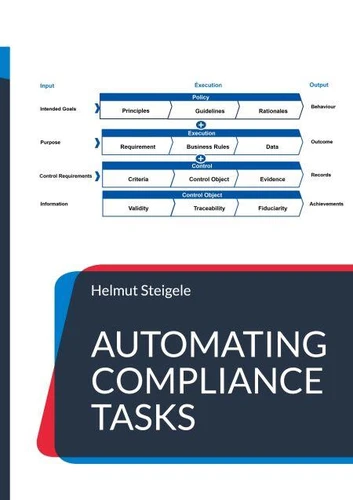
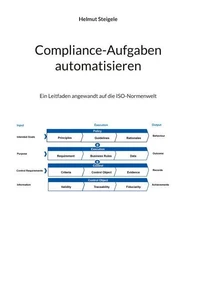
Automating Compliance Tasks. A Guide applied to the World of ISO Standards
Par :Formats :
Disponible dans votre compte client Decitre ou Furet du Nord dès validation de votre commande. Le format ePub est :
- Compatible avec une lecture sur My Vivlio (smartphone, tablette, ordinateur)
- Compatible avec une lecture sur liseuses Vivlio
- Pour les liseuses autres que Vivlio, vous devez utiliser le logiciel Adobe Digital Edition. Non compatible avec la lecture sur les liseuses Kindle, Remarkable et Sony
 , qui est-ce ?
Notre partenaire de plateforme de lecture numérique où vous retrouverez l'ensemble de vos ebooks gratuitement
Pour en savoir plus sur nos ebooks, consultez notre aide en ligne ici
C'est si simple ! Lisez votre ebook avec l'app Vivlio sur votre tablette, mobile ou ordinateur :

- Nombre de pages100
- FormatePub
- ISBN978-3-7693-8222-8
- EAN9783769382228
- Date de parution11/08/2025
- Protection num.Digital Watermarking
- Taille1 Mo
- Infos supplémentairesepub
- ÉditeurBoD - Books on Demand
Résumé
This guide offers a practical framework for understanding, implementing, and automating compliance tasks in the context of ISO standards and modern management systems. The author, Dr. Helmut Steigele, argues that in a world shaped by unpredictability, increasing regulation, and digital transformation, trust is a key corporate asset, one that must be systematically built and proven.
Compliance is presented not merely as rule following but as a method of demonstrating diligence, foresight, and reliability to internal and external stakeholders.
ISO standards (e.g., 9001, 27001, 14000, 20000) offer structured ways to systematise this trust via documented management systems. The book emphasizes that effective management systems are not bureaucratic burdens but tools for structured, adaptive leadership. They support decision-making, align teams, and create transparency, especially when coupled with automation and digital technologies like document management systems, robotic process automation (RPA), and agentic AI. A staged approach is recommended for implementation, starting with understanding purpose and scope, defining goals, assigning responsibilities, selecting resources, and operationalising processes.
Emphasis is placed on involving stakeholders, managing resistance to change, and using behavioural models (like Kübler-Ross, Kotter, and Lewin) to guide successful transformation. Ultimately, automating GRC (Governance, Risk & Compliance) tasks is not just about reducing manual effort. It is about institutionalising resilience, speeding up detection of risks, enabling early intervention, and preserving trust capital in volatile, uncertain environments
ISO standards (e.g., 9001, 27001, 14000, 20000) offer structured ways to systematise this trust via documented management systems. The book emphasizes that effective management systems are not bureaucratic burdens but tools for structured, adaptive leadership. They support decision-making, align teams, and create transparency, especially when coupled with automation and digital technologies like document management systems, robotic process automation (RPA), and agentic AI. A staged approach is recommended for implementation, starting with understanding purpose and scope, defining goals, assigning responsibilities, selecting resources, and operationalising processes.
Emphasis is placed on involving stakeholders, managing resistance to change, and using behavioural models (like Kübler-Ross, Kotter, and Lewin) to guide successful transformation. Ultimately, automating GRC (Governance, Risk & Compliance) tasks is not just about reducing manual effort. It is about institutionalising resilience, speeding up detection of risks, enabling early intervention, and preserving trust capital in volatile, uncertain environments