SOLDES
Jusqu'à -70% sur une sélection d'articles*

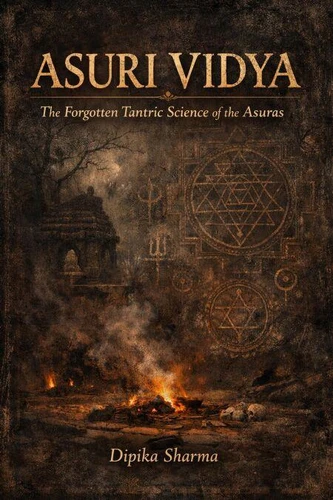
Asuri Vidya: The Forgotten Tantric Science of the Asuras
Par :Formats :
Disponible dans votre compte client Decitre ou Furet du Nord dès validation de votre commande. Le format ePub est :
- Compatible avec une lecture sur My Vivlio (smartphone, tablette, ordinateur)
- Compatible avec une lecture sur liseuses Vivlio
- Pour les liseuses autres que Vivlio, vous devez utiliser le logiciel Adobe Digital Edition. Non compatible avec la lecture sur les liseuses Kindle, Remarkable et Sony
 , qui est-ce ?
Notre partenaire de plateforme de lecture numérique où vous retrouverez l'ensemble de vos ebooks gratuitement
Pour en savoir plus sur nos ebooks, consultez notre aide en ligne ici
C'est si simple ! Lisez votre ebook avec l'app Vivlio sur votre tablette, mobile ou ordinateur :

- FormatePub
- ISBN8233371820
- EAN9798233371820
- Date de parution08/01/2026
- Protection num.pas de protection
- Infos supplémentairesepub
- ÉditeurLinda Balsamo
Résumé
Asuri Vidya: The Forgotten Tantric Science of the Asuras is a deep, scholarly, and revealing exploration of one of the most misunderstood and deliberately obscured streams of ancient Indian spiritual knowledge. Moving beyond popular myths that portray Asuras merely as demonic forces, this book uncovers a far older and more complex reality, one in which Asuras were powerful custodians of primal energies, material transformation, and esoteric wisdom.
Drawing from rare manuscripts, oral traditions, folk practices, and comparative tantric studies, the book presents Asuri Vidya as a sophisticated spiritual science rooted in the engagement with shadow, power, and the raw forces of existence. Unlike mainstream spiritual paths that emphasize transcendence, purity, and renunciation, Asuri Vidya focuses on integration, working consciously with fear, desire, destruction, and creation as sacred tools of transformation.
The book traces the historical evolution of Asuri knowledge from its Vedic origins through its gradual demonization in post-Vedic and Puranic literature, revealing how political, social, and theological shifts reshaped spiritual narratives. It examines the role of Asuras in early cosmology, their association with life force (asu), and their eventual marginalization as orthodoxy solidified control over spiritual authority.
A significant portion of the work is dedicated to tantric frameworks, including mantra, yantra, ritual timing, sacred geography, and the symbolism of cremation grounds, darkness, and liminal spaces. These are presented not as sensational elements, but as carefully structured systems designed to confront impermanence, ego, and illusion directly. The book also explores regional variations of Asuri practices across Bengal, Odisha, Central India, and the South, highlighting their survival through folk traditions, healer lineages, and secret transmissions.
Written with academic rigor yet accessible language, Asuri Vidya balances historical analysis with philosophical depth. It does not promote reckless practice or sensational occultism; instead, it offers contextual understanding, ethical caution, and respect for traditions that were preserved under persecution and silence. This book is intended for serious readers, scholars, researchers, spiritual practitioners, and seekers, who wish to understand the darker, deeper dimensions of Tantra without fear or prejudice.
Asuri Vidya ultimately invites the reader to reconsider the boundaries between light and shadow, sacred and forbidden, revealing that true transformation often begins where conventional spirituality refuses to look.
Drawing from rare manuscripts, oral traditions, folk practices, and comparative tantric studies, the book presents Asuri Vidya as a sophisticated spiritual science rooted in the engagement with shadow, power, and the raw forces of existence. Unlike mainstream spiritual paths that emphasize transcendence, purity, and renunciation, Asuri Vidya focuses on integration, working consciously with fear, desire, destruction, and creation as sacred tools of transformation.
The book traces the historical evolution of Asuri knowledge from its Vedic origins through its gradual demonization in post-Vedic and Puranic literature, revealing how political, social, and theological shifts reshaped spiritual narratives. It examines the role of Asuras in early cosmology, their association with life force (asu), and their eventual marginalization as orthodoxy solidified control over spiritual authority.
A significant portion of the work is dedicated to tantric frameworks, including mantra, yantra, ritual timing, sacred geography, and the symbolism of cremation grounds, darkness, and liminal spaces. These are presented not as sensational elements, but as carefully structured systems designed to confront impermanence, ego, and illusion directly. The book also explores regional variations of Asuri practices across Bengal, Odisha, Central India, and the South, highlighting their survival through folk traditions, healer lineages, and secret transmissions.
Written with academic rigor yet accessible language, Asuri Vidya balances historical analysis with philosophical depth. It does not promote reckless practice or sensational occultism; instead, it offers contextual understanding, ethical caution, and respect for traditions that were preserved under persecution and silence. This book is intended for serious readers, scholars, researchers, spiritual practitioners, and seekers, who wish to understand the darker, deeper dimensions of Tantra without fear or prejudice.
Asuri Vidya ultimately invites the reader to reconsider the boundaries between light and shadow, sacred and forbidden, revealing that true transformation often begins where conventional spirituality refuses to look.
A propos de DIPIKA SHARMA

15,99 €

Voice of the Veda
E-book
17,49 €

The Ghata Revealed
E-book
15,49 €
Song Before Time
E-book
17,49 €

The Ecology of Ayurveda
E-book
18,49 €

The Divine Biology
E-book
8,49 €

14,99 €

14,99 €


17,49 €

17,49 €

17,49 €
17,49 €

17,49 €
17,49 €

17,49 €