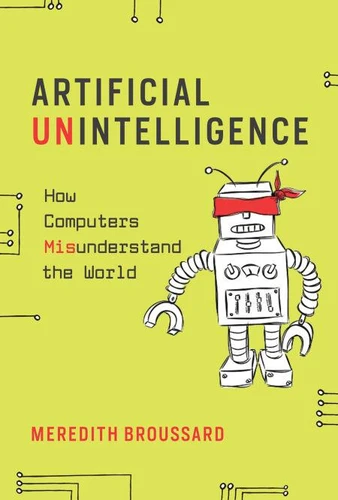
Artificial Unintelligence. How Computers Misunderstand the World
Par :Formats :
Disponible dans votre compte client Decitre ou Furet du Nord dès validation de votre commande. Le format ePub protégé est :
- Compatible avec une lecture sur My Vivlio (smartphone, tablette, ordinateur)
- Compatible avec une lecture sur liseuses Vivlio
- Pour les liseuses autres que Vivlio, vous devez utiliser le logiciel Adobe Digital Edition. Non compatible avec la lecture sur les liseuses Kindle, Remarkable et Sony
- Non compatible avec un achat hors France métropolitaine
 , qui est-ce ?
Notre partenaire de plateforme de lecture numérique où vous retrouverez l'ensemble de vos ebooks gratuitement
Pour en savoir plus sur nos ebooks, consultez notre aide en ligne ici
C'est si simple ! Lisez votre ebook avec l'app Vivlio sur votre tablette, mobile ou ordinateur :

- Nombre de pages248
- FormatePub
- ISBN978-0-262-34674-0
- EAN9780262346740
- Date de parution27/04/2018
- Protection num.Adobe DRM
- Taille2 Mo
- Infos supplémentairesepub
- ÉditeurThe MIT Press
Résumé
A software developer's misadventures in computer programming, machine learning, and artificial intelligence reveal why we should never assume technology always gets it right. In Artificial Unintelligence, Meredith Broussard argues that our collective enthusiasm for applying computer technology to every aspect of life has resulted in a tremendous amount of poorly designed systems. We are so eager to do everything digitally-hiring, driving, paying bills, even choosing romantic partners-that we have stopped demanding that our technology actually work.
Broussard, a software developer and journalist, reminds us that there are fundamental limits to what we can (and should) do with technology. With this book, she offers a guide to understanding the inner workings and outer limits of technology-and issues a warning that we should never assume that computers always get things right. Making a case against technochauvinism-the belief that technology is always the solution-Broussard argues that it's just not true that social problems would inevitably retreat before a digitally enabled Utopia.
To prove her point, she undertakes a series of adventures in computer programming. She goes for an alarming ride in a driverless car, concluding "the cyborg future is not coming any time soon"; uses artificial intelligence to investigate why students can't pass standardized tests; deploys machine learning to predict which passengers survived the Titanic disaster; and attempts to repair the U. S. campaign finance system by building AI software.
If we understand the limits of what we can do with technology, Broussard tells us, we can make better choices about what we should do with it to make the world better for everyone.
Broussard, a software developer and journalist, reminds us that there are fundamental limits to what we can (and should) do with technology. With this book, she offers a guide to understanding the inner workings and outer limits of technology-and issues a warning that we should never assume that computers always get things right. Making a case against technochauvinism-the belief that technology is always the solution-Broussard argues that it's just not true that social problems would inevitably retreat before a digitally enabled Utopia.
To prove her point, she undertakes a series of adventures in computer programming. She goes for an alarming ride in a driverless car, concluding "the cyborg future is not coming any time soon"; uses artificial intelligence to investigate why students can't pass standardized tests; deploys machine learning to predict which passengers survived the Titanic disaster; and attempts to repair the U. S. campaign finance system by building AI software.
If we understand the limits of what we can do with technology, Broussard tells us, we can make better choices about what we should do with it to make the world better for everyone.