Artificial General Intelligence
Par :Formats :
Disponible dans votre compte client Decitre ou Furet du Nord dès validation de votre commande. Le format ePub protégé est :
- Compatible avec une lecture sur My Vivlio (smartphone, tablette, ordinateur)
- Compatible avec une lecture sur liseuses Vivlio
- Pour les liseuses autres que Vivlio, vous devez utiliser le logiciel Adobe Digital Edition. Non compatible avec la lecture sur les liseuses Kindle, Remarkable et Sony
- Non compatible avec un achat hors France métropolitaine
 , qui est-ce ?
Notre partenaire de plateforme de lecture numérique où vous retrouverez l'ensemble de vos ebooks gratuitement
Pour en savoir plus sur nos ebooks, consultez notre aide en ligne ici
C'est si simple ! Lisez votre ebook avec l'app Vivlio sur votre tablette, mobile ou ordinateur :

- Nombre de pages240
- FormatePub
- ISBN978-0-262-38014-0
- EAN9780262380140
- Date de parution24/09/2024
- Protection num.Adobe DRM
- Taille251 Ko
- Infos supplémentairesepub
- ÉditeurThe MIT Press
Résumé
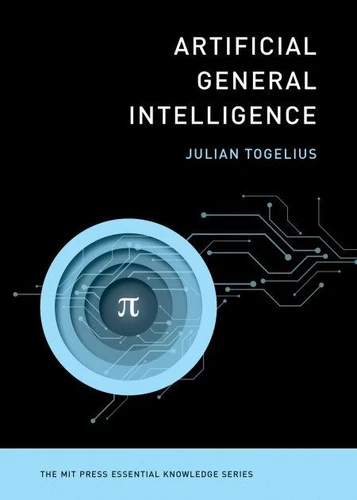
How to make AI capable of general intelligence, and what such technology would mean for society. Artificial intelligence surrounds us. More and more of the systems and services you interact with every day are based on AI technology. Although some very recent AI systems are generalists to a degree, most AI is narrowly specific; that is, it can only do a single thing, in a single context. For example, your spellchecker can't do mathematics, and the world's best chess-playing program can't play Tetris.
Human intelligence is different. We can solve a variety of tasks, including those we have not seen before. In Artificial General Intelligence, Julian Togelius explores technical approaches to developing more general artificial intelligence and asks what general AI would mean for human civilization. Togelius starts by giving examples of narrow AI that have superhuman performance in some way. Interestingly, there have been AI systems that are superhuman in some sense for more than half a century.
He then discusses what it would mean to have general intelligence, by looking at definitions from psychology, ethology, and computer science. Next, he explores the two main families of technical approaches to developing more general artificial intelligence: foundation models through self-supervised learning, and open-ended learning in virtual environments. The final chapters of the book investigate potential artificial general intelligence beyond the strictly technical aspects.
The questions discussed here investigate whether such general AI would be conscious, whether it would pose a risk to humanity, and how it might alter society.
Human intelligence is different. We can solve a variety of tasks, including those we have not seen before. In Artificial General Intelligence, Julian Togelius explores technical approaches to developing more general artificial intelligence and asks what general AI would mean for human civilization. Togelius starts by giving examples of narrow AI that have superhuman performance in some way. Interestingly, there have been AI systems that are superhuman in some sense for more than half a century.
He then discusses what it would mean to have general intelligence, by looking at definitions from psychology, ethology, and computer science. Next, he explores the two main families of technical approaches to developing more general artificial intelligence: foundation models through self-supervised learning, and open-ended learning in virtual environments. The final chapters of the book investigate potential artificial general intelligence beyond the strictly technical aspects.
The questions discussed here investigate whether such general AI would be conscious, whether it would pose a risk to humanity, and how it might alter society.