Art and Society: A Sociological Perspective On Creativity. Arts, Humanities, and Social Sciences, #1
Par :Formats :
Disponible dans votre compte client Decitre ou Furet du Nord dès validation de votre commande. Le format ePub protégé est :
- Compatible avec une lecture sur My Vivlio (smartphone, tablette, ordinateur)
- Compatible avec une lecture sur liseuses Vivlio
- Pour les liseuses autres que Vivlio, vous devez utiliser le logiciel Adobe Digital Edition. Non compatible avec la lecture sur les liseuses Kindle, Remarkable et Sony
- Non compatible avec un achat hors France métropolitaine
 , qui est-ce ?
Notre partenaire de plateforme de lecture numérique où vous retrouverez l'ensemble de vos ebooks gratuitement
Pour en savoir plus sur nos ebooks, consultez notre aide en ligne ici
C'est si simple ! Lisez votre ebook avec l'app Vivlio sur votre tablette, mobile ou ordinateur :

- FormatePub
- ISBN8230674702
- EAN9798230674702
- Date de parution05/01/2025
- Protection num.Adobe DRM
- Infos supplémentairesepub
- ÉditeurIndependently Published
Résumé
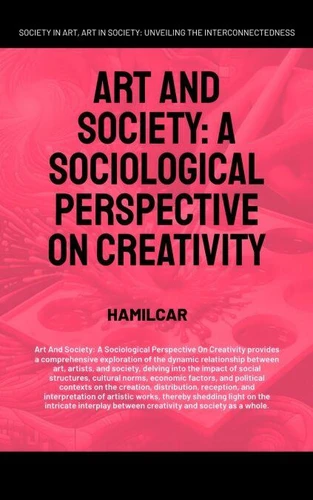
This book unravels the threads of social hierarchies, cultural traditions, economic currents, and political undercurrents that pulse through the veins of artistic creation, dissemination, interpretation, and reception. The sociology of art is an interdisciplinary field that examines the dynamic relationship between art, artists, and society. It analyses how social structures, cultural norms, economic forces, and political contexts shape the creation, distribution, consumption, and interpretation of artistic products.
This discipline aims to understand art both as a human creative product and as a social phenomenon deeply rooted in the cultural life of communities. At its core, the sociology of art examines the institutions and processes that shape artistic expression. Artists are not isolated creators; their work is influenced by the societal conditions prevailing during their time. For example, periods of social upheaval, such as revolutions or wars, often generate art that reflects themes of resistance, identity, or resilience.
Similarly, the advent of new technologies and media has revolutionised artistic production, thereby enabling fresh modes of expression and wider dissemination of works. The sociology of art thus underscores the interplay between art and society by exploring these dynamics. One major concern in this area is how social stratification and inequality affect access to the arts. Artistic production and consumption are frequently determined by factors such as class, gender, ethnicity, or education level.
Art patronage has historically been linked to the wealthy, who commission works that mirror their tastes and values. However, in the modern era, popular culture and democratized access to artistic platforms have challenged traditional hierarchies. The sociology of art is concerned with how these shifts have blurred the boundaries between "high" art and "low" or popular art, questioning whether these categorizations are valid.
Another area of concern is the role of art as social critique and cultural resistance. Artistic works are often a medium through which marginalised groups articulate their experiences and aspirations. Creative expressions such as literature, theatre, music, and visual art have historically been powerful tools for challenging dominant ideologies and advocating for social change. For instance, the Harlem Renaissance in America and the Surrealist movement in Europe illustrate how art can reflect and respond to broader societal transformations.
The sociology of art also focuses on the institutional frameworks that shape the art world. Museums, galleries, theatres, and publishing houses all act as gatekeepers, deciding what is worthy of public attention while excluding others from it. The neutrality of these institutions is questionable; market forces, cultural policies, and dominant social values influence them. This raises issues regarding the commercialization of art and the conflict between artistic independence and market requirements.
Furthermore, the sociology of art explores how audiences relate to art. Reception studies examine how different social groups interpret and appreciate works of art, often revealing the cultural prejudices and tastes that underlie such responses. This aspect of the discipline emphasises the mutual relationship between artworks and society, wherein viewers consume them and participate in their meaning-making process.
By analysing the social contexts within which art is made, distributed, and consumed, this book offers insights into how aesthetic objects contribute to shaping or are shaped by wider cultural, economic, and political milieus. The sociology of art demonstrates that there is a profound link between art and human existence, whether through historical movements, institutional practices, or contemporary trends.
This discipline aims to understand art both as a human creative product and as a social phenomenon deeply rooted in the cultural life of communities. At its core, the sociology of art examines the institutions and processes that shape artistic expression. Artists are not isolated creators; their work is influenced by the societal conditions prevailing during their time. For example, periods of social upheaval, such as revolutions or wars, often generate art that reflects themes of resistance, identity, or resilience.
Similarly, the advent of new technologies and media has revolutionised artistic production, thereby enabling fresh modes of expression and wider dissemination of works. The sociology of art thus underscores the interplay between art and society by exploring these dynamics. One major concern in this area is how social stratification and inequality affect access to the arts. Artistic production and consumption are frequently determined by factors such as class, gender, ethnicity, or education level.
Art patronage has historically been linked to the wealthy, who commission works that mirror their tastes and values. However, in the modern era, popular culture and democratized access to artistic platforms have challenged traditional hierarchies. The sociology of art is concerned with how these shifts have blurred the boundaries between "high" art and "low" or popular art, questioning whether these categorizations are valid.
Another area of concern is the role of art as social critique and cultural resistance. Artistic works are often a medium through which marginalised groups articulate their experiences and aspirations. Creative expressions such as literature, theatre, music, and visual art have historically been powerful tools for challenging dominant ideologies and advocating for social change. For instance, the Harlem Renaissance in America and the Surrealist movement in Europe illustrate how art can reflect and respond to broader societal transformations.
The sociology of art also focuses on the institutional frameworks that shape the art world. Museums, galleries, theatres, and publishing houses all act as gatekeepers, deciding what is worthy of public attention while excluding others from it. The neutrality of these institutions is questionable; market forces, cultural policies, and dominant social values influence them. This raises issues regarding the commercialization of art and the conflict between artistic independence and market requirements.
Furthermore, the sociology of art explores how audiences relate to art. Reception studies examine how different social groups interpret and appreciate works of art, often revealing the cultural prejudices and tastes that underlie such responses. This aspect of the discipline emphasises the mutual relationship between artworks and society, wherein viewers consume them and participate in their meaning-making process.
By analysing the social contexts within which art is made, distributed, and consumed, this book offers insights into how aesthetic objects contribute to shaping or are shaped by wider cultural, economic, and political milieus. The sociology of art demonstrates that there is a profound link between art and human existence, whether through historical movements, institutional practices, or contemporary trends.