
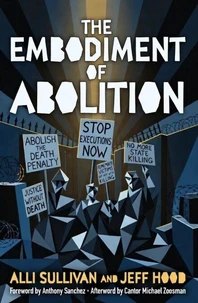
The Rev. Dr. Jeff Hood is a theologian and spiritual advisor to death row inmates nationwide. He has accompanied over a dozen men to their executions and was the first spiritual advisor to be present for a nitrogen hypoxia execution. Rev. Hood has been profiled widely, including in the Rolling Stone documentary The Spiritual Advisor. He is the Founder of the Execution Intervention Project.
Nouveauté
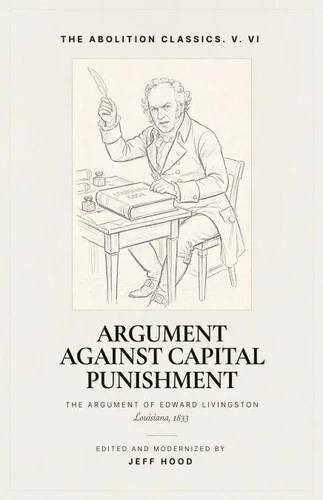
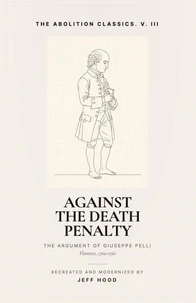
Argument Against Capital Punishment. THE ABOLITION CLASSICS, #6
Par : ,Formats :
Disponible dans votre compte client Decitre ou Furet du Nord dès validation de votre commande. Le format ePub est :
- Compatible avec une lecture sur My Vivlio (smartphone, tablette, ordinateur)
- Compatible avec une lecture sur liseuses Vivlio
- Pour les liseuses autres que Vivlio, vous devez utiliser le logiciel Adobe Digital Edition. Non compatible avec la lecture sur les liseuses Kindle, Remarkable et Sony
 , qui est-ce ?
Notre partenaire de plateforme de lecture numérique où vous retrouverez l'ensemble de vos ebooks gratuitement
Pour en savoir plus sur nos ebooks, consultez notre aide en ligne ici
C'est si simple ! Lisez votre ebook avec l'app Vivlio sur votre tablette, mobile ou ordinateur :

- FormatePub
- ISBN8235155640
- EAN9798235155640
- Date de parution22/08/2026
- Protection num.pas de protection
- Infos supplémentairesepub
- ÉditeurIoakim Ioakim
Résumé
In 1833, Edward Livingston handed the Louisiana legislature a complete criminal code with no death penalty in it. He was a former mayor of New York, a future Secretary of State under Andrew Jackson, and the most respected legal mind in the country. Jeremy Bentham built a correspondence around him. Victor Hugo counted him among the men of the age who had deserved most and best of mankind. The legislature never enacted the code.
Buried in its introduction is the argument reprinted here. Livingston starts further back than anyone had: not with whether executions work, but with whether the state ever received the right to kill at all. His answer is that the right exists only where nothing else will preserve life, that in any society able to build a prison that condition is never met, and that a state killing without necessity is not exercising a right but only a power.
From there he takes apart deterrence with the historical record, and closes with the argument no defender of the gallows has answered in two centuries: the machinery convicts the wrong people, it does so most often to the poor and friendless, and death is the one sentence that cannot be undone. This edition modernizes the prose of the 1843 New York pamphlet, with Livingston's argument, examples, and conclusions intact.
The pamphlet's testimonials from clergy and statesmen are appended. The edition does not protect him. A front-matter reckoning states plainly that Livingston owned human beings, that Louisiana hanged the enslaved for revolt, and that he passed over it in silence, and argues for the text anyway.
Buried in its introduction is the argument reprinted here. Livingston starts further back than anyone had: not with whether executions work, but with whether the state ever received the right to kill at all. His answer is that the right exists only where nothing else will preserve life, that in any society able to build a prison that condition is never met, and that a state killing without necessity is not exercising a right but only a power.
From there he takes apart deterrence with the historical record, and closes with the argument no defender of the gallows has answered in two centuries: the machinery convicts the wrong people, it does so most often to the poor and friendless, and death is the one sentence that cannot be undone. This edition modernizes the prose of the 1843 New York pamphlet, with Livingston's argument, examples, and conclusions intact.
The pamphlet's testimonials from clergy and statesmen are appended. The edition does not protect him. A front-matter reckoning states plainly that Livingston owned human beings, that Louisiana hanged the enslaved for revolt, and that he passed over it in silence, and argues for the text anyway.
A propos de Jeff Hood


5,49 €
5,49 €