SOLDES
Jusqu'à -70% sur une sélection d'articles*

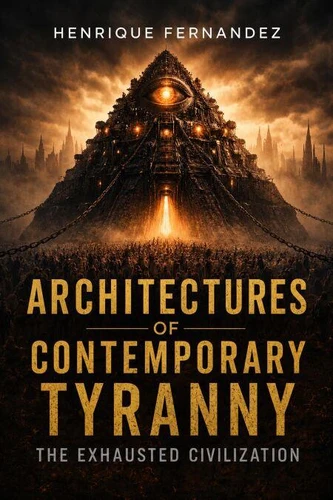
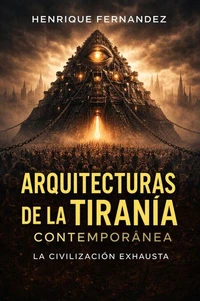
Architectures of Contemporary Tyranny: The Exhausted Civilization. Civilização do Limite, #6
Par :Formats :
Disponible dans votre compte client Decitre ou Furet du Nord dès validation de votre commande. Le format ePub est :
- Compatible avec une lecture sur My Vivlio (smartphone, tablette, ordinateur)
- Compatible avec une lecture sur liseuses Vivlio
- Pour les liseuses autres que Vivlio, vous devez utiliser le logiciel Adobe Digital Edition. Non compatible avec la lecture sur les liseuses Kindle, Remarkable et Sony
 , qui est-ce ?
Notre partenaire de plateforme de lecture numérique où vous retrouverez l'ensemble de vos ebooks gratuitement
Pour en savoir plus sur nos ebooks, consultez notre aide en ligne ici
C'est si simple ! Lisez votre ebook avec l'app Vivlio sur votre tablette, mobile ou ordinateur :

- FormatePub
- ISBN8235501454
- EAN9798235501454
- Date de parution05/05/2026
- Protection num.pas de protection
- Infos supplémentairesepub
- ÉditeurIoakim Ioakim
Résumé
Architectures of Contemporary Tyranny - The Exhausted Civilization is not a book about the specific excesses of our time. It is an investigation into how power has come to be designed. Through short, interconnected essays, Henrique Fernandez analyzes the invisible structures that underpin contemporary tyranny: the sacralization of the State and the market, the capture of ethics, the engineering of inequality, the algorithmic management of work, the normalization of exhaustion, the planned obsolescence of the human, and the silent emptying of democracy.
Starting from a historical reading-from the Roman Empire to current forms of technological domination-the book shows that power does not disappear: it updates itself. It exchanges brute force for architecture, decrees for algorithms, explicit repression for the management of fatigue and scarcity. Here, exhaustion is not treated as a side effect, but as a technology of government. The citizen emerges as an adjustment variable, the future as a postponed promise, and social life as a permanent field of administration, control, and wear and tear.
The manifestos that conclude the work offer neither comfort nor easy solutions. They function as a logical consequence of the journey: after understanding the mechanisms of tyranny, the limit ceases to be a moral abstraction and becomes a civilizational requirement. This is a book for readers who reject simple explanations, distrust comforting discourses, and understand that thinking critically today is, above all, an act of resistance.
Starting from a historical reading-from the Roman Empire to current forms of technological domination-the book shows that power does not disappear: it updates itself. It exchanges brute force for architecture, decrees for algorithms, explicit repression for the management of fatigue and scarcity. Here, exhaustion is not treated as a side effect, but as a technology of government. The citizen emerges as an adjustment variable, the future as a postponed promise, and social life as a permanent field of administration, control, and wear and tear.
The manifestos that conclude the work offer neither comfort nor easy solutions. They function as a logical consequence of the journey: after understanding the mechanisms of tyranny, the limit ceases to be a moral abstraction and becomes a civilizational requirement. This is a book for readers who reject simple explanations, distrust comforting discourses, and understand that thinking critically today is, above all, an act of resistance.