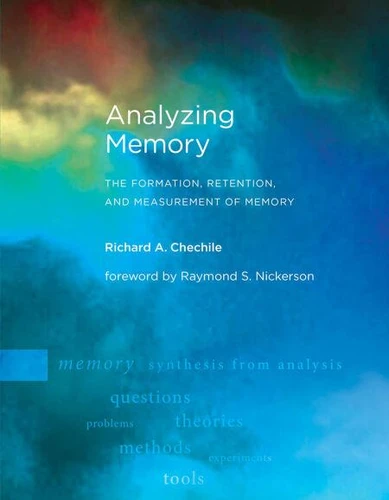
Analyzing Memory. The Formation, Retention, and Measurement of Memory
Par :Formats :
Disponible dans votre compte client Decitre ou Furet du Nord dès validation de votre commande. Le format ePub protégé est :
- Compatible avec une lecture sur My Vivlio (smartphone, tablette, ordinateur)
- Compatible avec une lecture sur liseuses Vivlio
- Pour les liseuses autres que Vivlio, vous devez utiliser le logiciel Adobe Digital Edition. Non compatible avec la lecture sur les liseuses Kindle, Remarkable et Sony
- Non compatible avec un achat hors France métropolitaine
 , qui est-ce ?
Notre partenaire de plateforme de lecture numérique où vous retrouverez l'ensemble de vos ebooks gratuitement
Pour en savoir plus sur nos ebooks, consultez notre aide en ligne ici
C'est si simple ! Lisez votre ebook avec l'app Vivlio sur votre tablette, mobile ou ordinateur :

- Nombre de pages632
- FormatePub
- ISBN978-0-262-34799-0
- EAN9780262347990
- Date de parution30/10/2018
- Protection num.Adobe DRM
- Taille15 Mo
- Infos supplémentairesepub
- ÉditeurThe MIT Press
Résumé
An accessible synthesis of memory research that discusses the creation of memory representations, the processes of storage and retrieval, and the effectiveness of encoding information. The field of memory research is subdivided into many separate and non-overlapping topic areas that often employ specialized tools and models. This book offers an accessible synthesis of memory research that explores how memory works, how it is organized, and how it changes dynamically.
Written by an expert in the field, it can be used by undergraduate and graduate students of psychology and as a reference by researchers who want to fill in gaps in their knowledge. The book focuses on three general topics that cover a vast amount of research in the field: how a memory representation is created, how the cognitive processes of storage and retrieval can be studied and measured, and the process of encoding information and its varying degrees of effectiveness.
Specific subjects addressed include habituation and sensitization, and the neurobiological changes that underlie them; evidence for a cognitive component underlying Pavlovian conditioning; biological constraints on a cognitive model of memory; an information-processing framework for memory; misconceptions about memory, including the static memory myth and the permanent memory myth; model-based measurement of storage and retrieval processes; a critique of the concept of memory strength; the distinction between implicit and explicit memory; and learning and repetition.
Although the writing is accessible to the nonspecialist, the density of information is high. The text avoids jargon, and a glossary defines key terms. The notes expand on technical details and point to interesting related ideas.
Written by an expert in the field, it can be used by undergraduate and graduate students of psychology and as a reference by researchers who want to fill in gaps in their knowledge. The book focuses on three general topics that cover a vast amount of research in the field: how a memory representation is created, how the cognitive processes of storage and retrieval can be studied and measured, and the process of encoding information and its varying degrees of effectiveness.
Specific subjects addressed include habituation and sensitization, and the neurobiological changes that underlie them; evidence for a cognitive component underlying Pavlovian conditioning; biological constraints on a cognitive model of memory; an information-processing framework for memory; misconceptions about memory, including the static memory myth and the permanent memory myth; model-based measurement of storage and retrieval processes; a critique of the concept of memory strength; the distinction between implicit and explicit memory; and learning and repetition.
Although the writing is accessible to the nonspecialist, the density of information is high. The text avoids jargon, and a glossary defines key terms. The notes expand on technical details and point to interesting related ideas.