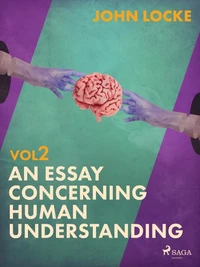
Unlock the Foundations of Knowledge with John Locke's "An Essay Concerning Human Understanding"Discover the groundbreaking exploration of human cognition and the nature of knowledge in John Locke's seminal work, "An Essay Concerning Human Understanding." This influential philosophical treatise delves into the origins and limits of human comprehension, challenging traditional notions of innate ideas and emphasizing the importance of experience and empirical evidence.
Locke systematically examines how the mind acquires ideas, processes information, and forms beliefs, laying the groundwork for modern empiricism and scientific inquiry. His insights into perception, language, and the development of ideas have profoundly shaped philosophy, psychology, and education. Whether you're a student of philosophy, a curious reader, or a scholar seeking a comprehensive understanding of human cognition, this book offers invaluable perspectives that continue to influence thought today.
With clear, accessible language, Locke guides readers through complex concepts, making this a timeless resource for anyone interested in the nature of the mind and knowledge. About the author: John Locke (1632-1704) was a renowned English philosopher and physician, widely regarded as one of the most influential Enlightenment thinkers. His work laid the foundation for modern liberalism and empiricism, emphasizing the importance of reason, individual rights, and scientific methodology.
Locke's writings on government, education, and human understanding have left a lasting legacy, shaping Western intellectual history and inspiring generations of thinkers and reformers.
Unlock the Foundations of Knowledge with John Locke's "An Essay Concerning Human Understanding"Discover the groundbreaking exploration of human cognition and the nature of knowledge in John Locke's seminal work, "An Essay Concerning Human Understanding." This influential philosophical treatise delves into the origins and limits of human comprehension, challenging traditional notions of innate ideas and emphasizing the importance of experience and empirical evidence.
Locke systematically examines how the mind acquires ideas, processes information, and forms beliefs, laying the groundwork for modern empiricism and scientific inquiry. His insights into perception, language, and the development of ideas have profoundly shaped philosophy, psychology, and education. Whether you're a student of philosophy, a curious reader, or a scholar seeking a comprehensive understanding of human cognition, this book offers invaluable perspectives that continue to influence thought today.
With clear, accessible language, Locke guides readers through complex concepts, making this a timeless resource for anyone interested in the nature of the mind and knowledge. About the author: John Locke (1632-1704) was a renowned English philosopher and physician, widely regarded as one of the most influential Enlightenment thinkers. His work laid the foundation for modern liberalism and empiricism, emphasizing the importance of reason, individual rights, and scientific methodology.
Locke's writings on government, education, and human understanding have left a lasting legacy, shaping Western intellectual history and inspiring generations of thinkers and reformers.


 , qui est-ce ?