


John Locke, born on August 29, 1632, in Wrington, England, is a towering figure in the history of Western philosophy. Known as the "Father of Liberalism, " Locke's contributions to political theory, epistemology, and education have left an indelible mark on modern thought.
Educated at Christ Church, Oxford, Locke initially pursued a career in medicine, but his interests soon turned to philosophy and politics.
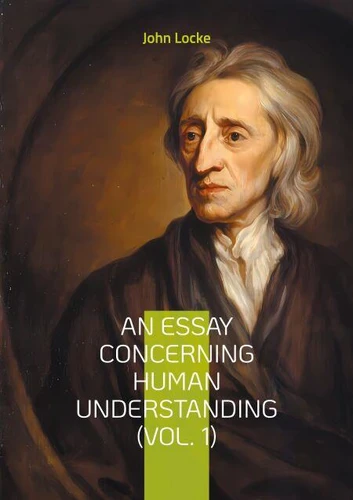
His seminal work, An Essay Concerning Human Understanding, published in 1689, revolutionized the concept of knowledge by advocating empiricism and rejecting innate ideas. Locke's philosophy of mind, centered on the idea of the mind as a "tabula rasa, " laid the foundation for modern psychology and cognitive science. His political writings, particularly Two Treatises of Government, championed the principles of natural rights and government by consent, influencing the development of democratic societies.
Locke's ideas were pivotal during the Enlightenment, shaping the thoughts of later philosophers such as Voltaire and Rousseau. John Locke passed away on October 28, 1704, in High Laver, Essex, leaving a legacy that continues to resonate in the fields of Philosophy, Political Theory, and Enlightenment Studies.
His seminal work, An Essay Concerning Human Understanding, published in 1689, revolutionized the concept of knowledge by advocating empiricism and rejecting innate ideas. Locke's philosophy of mind, centered on the idea of the mind as a "tabula rasa, " laid the foundation for modern psychology and cognitive science. His political writings, particularly Two Treatises of Government, championed the principles of natural rights and government by consent, influencing the development of democratic societies.
Locke's ideas were pivotal during the Enlightenment, shaping the thoughts of later philosophers such as Voltaire and Rousseau. John Locke passed away on October 28, 1704, in High Laver, Essex, leaving a legacy that continues to resonate in the fields of Philosophy, Political Theory, and Enlightenment Studies.