Nouveauté
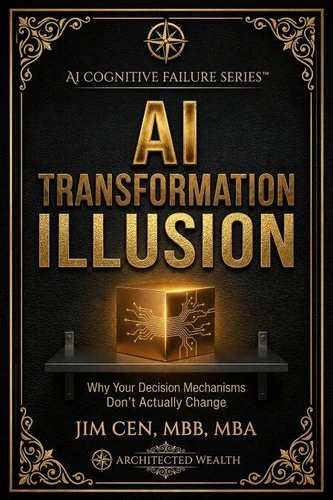
AI Transformation Illusion:Why Your Decision Mechanisms Don't Actually Change. AI Cognitive Failure Series™, #3
Par :Formats :
Disponible dans votre compte client Decitre ou Furet du Nord dès validation de votre commande. Le format ePub est :
- Compatible avec une lecture sur My Vivlio (smartphone, tablette, ordinateur)
- Compatible avec une lecture sur liseuses Vivlio
- Pour les liseuses autres que Vivlio, vous devez utiliser le logiciel Adobe Digital Edition. Non compatible avec la lecture sur les liseuses Kindle, Remarkable et Sony
 , qui est-ce ?
Notre partenaire de plateforme de lecture numérique où vous retrouverez l'ensemble de vos ebooks gratuitement
Pour en savoir plus sur nos ebooks, consultez notre aide en ligne ici
C'est si simple ! Lisez votre ebook avec l'app Vivlio sur votre tablette, mobile ou ordinateur :

- FormatePub
- ISBN8235413573
- EAN9798235413573
- Date de parution17/06/2026
- Protection num.pas de protection
- Infos supplémentairesepub
- ÉditeurIoakim Ioakim
Résumé
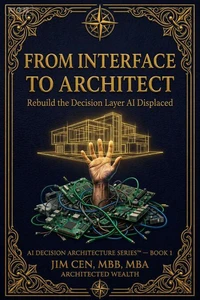
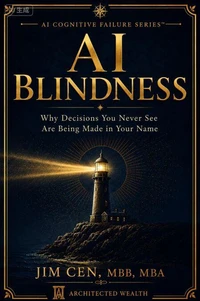
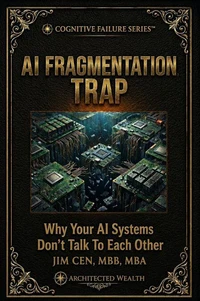
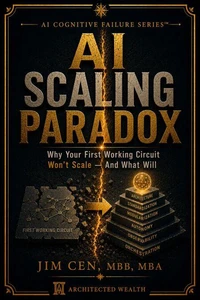
Two Series, One System Written for executives who approved the AI budget and practitioners who bridge the gap between AI output and organizational goals. The AI Cognitive Failure SeriesT: Seven Ways Decision Architecture Fails This book belongs to the AI Cognitive Failure SeriesT, which diagnoses the seven specific ways AI practice fails - not because the technology is weak, but because the decision architecture behind it is weaker. Book 1: AI Human Interface Trap - Route AI through your operations, not through your people Book 2: AI Dashboard Delusion - Why your AI dashboard isn't running your operation Book 3: AI Transformation Illusion - Why your decision mechanisms don't actually change Book 4: AI Scaling Paradox - Why Your First Working Circuit Won't Scale Book 5: AI Circuit Decay - Why your maintenance rituals are hiding the rot Book 6: AI Blindness - Why decisions you never see are being made in your name Book 7: AI Fragmentation Trap - Why your AI systems don't talk to each other Together, they reveal one pattern: AI automates execution; it redistributes decision rights. The AI Decision Architecture SeriesT: Eight Ways to Build What Works B1: From Interface to Architect - Rebuild the decision layer AI displaced B2: From Dashboard to Decision Point - Rebuild the data layer that reaches your decision B3: From Label to Logic - Rewire the decision architecture, your transformation forget B4: From Pilot to Operating System - Scale through a unified decision architecture B5: From Decay to Resilience - Build Feedback Systems That Outlast the Honeymoon B6: From Blindness to Governance - Govern high-speed autonomous systems B7: From Launch to Lifecycle - Keep AI systems productive for 18+ months B8: From Automation to Economics - Value the outcome of every AI decision Pairing a Diagnosis book with a Build book forms a complete diagnosis-build cycle. What this book diagnoses: Your organization says it transformed.
The slides say it. The org chart says it. The press release says it. But the decision mechanisms - who decides, how they decide, when they decide - didn't change. The label changed. The logic didn't. What patterns it identifies: The Label-Logic Gap - transformation declared without a decision architecture change. The Pilot-as-Proof Fallacy - one working circuit treated as evidence of systemic change.
The Change Theater - new tools, same decisions, same bottlenecks. What tools does it provide: The Transformation Authenticity Self-Check and the Change-vs-Quality Assessment. The tools listed are part of the Advanced Toolkit, not included in this edition. Your next step: If your transformation has a name but your decisions still follow the old pattern, start with the Transformation Authenticity Self-Check.
If your first working circuit works but won't scale, that's another book in the same series: AI Scaling Paradox. If you want the methodology to rewire the decision architecture your transformation forgot, that's another book in the other series: From Label to Logic. Start anywhere. Each book diagnoses one failure. Read the Build pair for the methodology and tools. Most organizations have three or more failure modes simultaneously. AI Cognitive Failure SeriesT + AI Decision Architecture SeriesT - Know the failure.
Build what works. Jim Cen, MBB, MBA | Architected Wealth
The slides say it. The org chart says it. The press release says it. But the decision mechanisms - who decides, how they decide, when they decide - didn't change. The label changed. The logic didn't. What patterns it identifies: The Label-Logic Gap - transformation declared without a decision architecture change. The Pilot-as-Proof Fallacy - one working circuit treated as evidence of systemic change.
The Change Theater - new tools, same decisions, same bottlenecks. What tools does it provide: The Transformation Authenticity Self-Check and the Change-vs-Quality Assessment. The tools listed are part of the Advanced Toolkit, not included in this edition. Your next step: If your transformation has a name but your decisions still follow the old pattern, start with the Transformation Authenticity Self-Check.
If your first working circuit works but won't scale, that's another book in the same series: AI Scaling Paradox. If you want the methodology to rewire the decision architecture your transformation forgot, that's another book in the other series: From Label to Logic. Start anywhere. Each book diagnoses one failure. Read the Build pair for the methodology and tools. Most organizations have three or more failure modes simultaneously. AI Cognitive Failure SeriesT + AI Decision Architecture SeriesT - Know the failure.
Build what works. Jim Cen, MBB, MBA | Architected Wealth