Nouveauté
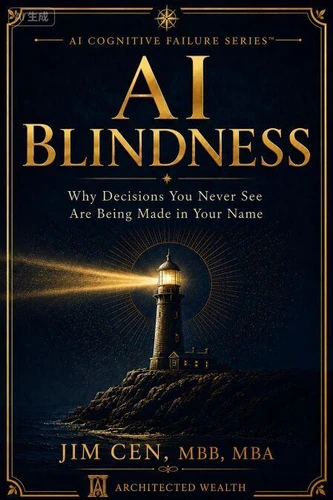
AI Blindness:Why Decisions You Never See Are Being Made in Your Name. AI Cognitive Failure Series™, #6
Par :Formats :
Disponible dans votre compte client Decitre ou Furet du Nord dès validation de votre commande. Le format ePub est :
- Compatible avec une lecture sur My Vivlio (smartphone, tablette, ordinateur)
- Compatible avec une lecture sur liseuses Vivlio
- Pour les liseuses autres que Vivlio, vous devez utiliser le logiciel Adobe Digital Edition. Non compatible avec la lecture sur les liseuses Kindle, Remarkable et Sony
 , qui est-ce ?
Notre partenaire de plateforme de lecture numérique où vous retrouverez l'ensemble de vos ebooks gratuitement
Pour en savoir plus sur nos ebooks, consultez notre aide en ligne ici
C'est si simple ! Lisez votre ebook avec l'app Vivlio sur votre tablette, mobile ou ordinateur :

- FormatePub
- ISBN8232050184
- EAN9798232050184
- Date de parution18/06/2026
- Protection num.pas de protection
- Infos supplémentairesepub
- ÉditeurDraft2Digital
Résumé
SERIES INTRODUCTION: Two Series, One System Why You Picked Up This BookSomething in your AI practice isn't working. Maybe you deployed AI, and it didn't deliver. Maybe it worked at first and then quietly stopped. Maybe it's working right now, but you can't shake the feeling that something is off. You're not wrong. Something is off. And it's not your technology. The One Insight That Connects EverythingAI automates execution; it redistributes decision rights.
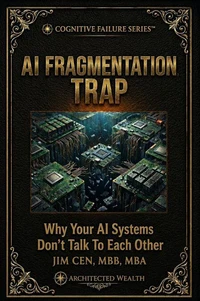
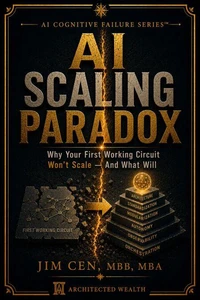
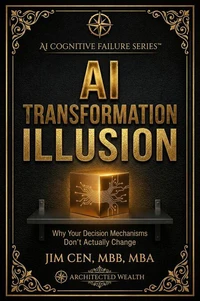
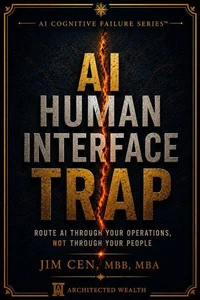
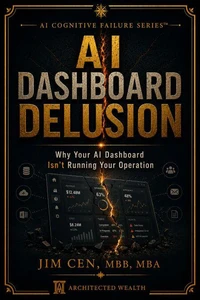
This is not a slogan. It is the structural reality behind every AI failure you've experienced - and every AI success you haven't been able to replicate. When AI takes over a task, it doesn't just do the work faster. It changes who decides, how fast decisions are made, and whether anyone can still see, question, or reverse those decisions. The technology did what it was supposed to do. Your decision architecture didn't keep up. The AI Cognitive Failure SeriesT: Seven Ways Decision Architecture FailsBook 1 - AI Human Interface Trap: Route AI through your operations, not through your peopleBook 2 - AI Dashboard Delusion: Why your AI dashboard isn't running your operationBook 3 - AI Transformation Illusion: Why your decision mechanisms don't actually changeBook 4 - AI Scaling Paradox: Why your decision chains can't expandBook 5 - AI Circuit Decay: Why your maintenance rituals are hiding the rotBook 6 - AI Blindness: Why decisions you never see are being made in your nameBook 7 - AI Fragmentation Trap: Why your AI systems don't talk to each other Each book stands alone.
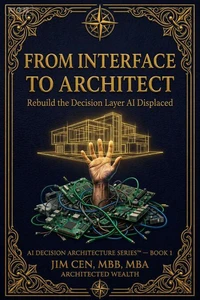
Together, they reveal one pattern: AI automates execution; it redistributes decision rights. The AI Decision Architecture SeriesT: Eight Ways to Build What WorksB1 - From Interface to Architect: Rebuild the decision layer AI displacedB2 - From Dashboard to Decision Point: Route data to the point of actionB3 - From Label to Logic: Engineer your organizational decision logicB4 - From Pilot to Operating System: Scale through a unified decision architectureB5 - From Decay to Resilience: Build anti-decay governance loopsB6 - From Blindness to Governance: Govern high-speed autonomous systemsB7 - From Launch to Lifecycle: Keep AI systems productive for 18+ monthsB8 - From Automation to Economics: Value the outcome of every AI decision What this book diagnoses: You are liable for AI decisions you can't see, can't explain, and can't audit.
The systems are making decisions faster than any human can review them, and the governance structures were designed for human-speed decision-making. You are legally responsible for decisions occurring in a space your organization can't observe. What patterns it identifies: The Observation Gap - AI making decisions at speeds exceeding governance review cycles. The Explanation Deficit - inability to explain how AI reached a specific decision when regulators or courts ask.
The Audit Void - no trail, no checkpoint, no mechanism for reconstructing decision paths. What tools it provides: The AI Governance Five-Layer Stack, the Third-Party AI Liability Assessment, and the Decision Velocity Dashboard. Your next step: If you're responsible for AI decisions you can't see or explain, start with the AI Governance Five-Layer Stack in the Appendix. Start anywhere. Each book diagnoses one failure.
Read the Build pair for the methodology and tools. Most organizations have three or more failure modes simultaneously. AI Cognitive Failure SeriesT + AI Decision Architecture SeriesT - Know the failure. Build what works. Jim Cen, MBB, MBA | Architected Wealth
This is not a slogan. It is the structural reality behind every AI failure you've experienced - and every AI success you haven't been able to replicate. When AI takes over a task, it doesn't just do the work faster. It changes who decides, how fast decisions are made, and whether anyone can still see, question, or reverse those decisions. The technology did what it was supposed to do. Your decision architecture didn't keep up. The AI Cognitive Failure SeriesT: Seven Ways Decision Architecture FailsBook 1 - AI Human Interface Trap: Route AI through your operations, not through your peopleBook 2 - AI Dashboard Delusion: Why your AI dashboard isn't running your operationBook 3 - AI Transformation Illusion: Why your decision mechanisms don't actually changeBook 4 - AI Scaling Paradox: Why your decision chains can't expandBook 5 - AI Circuit Decay: Why your maintenance rituals are hiding the rotBook 6 - AI Blindness: Why decisions you never see are being made in your nameBook 7 - AI Fragmentation Trap: Why your AI systems don't talk to each other Each book stands alone.
Together, they reveal one pattern: AI automates execution; it redistributes decision rights. The AI Decision Architecture SeriesT: Eight Ways to Build What WorksB1 - From Interface to Architect: Rebuild the decision layer AI displacedB2 - From Dashboard to Decision Point: Route data to the point of actionB3 - From Label to Logic: Engineer your organizational decision logicB4 - From Pilot to Operating System: Scale through a unified decision architectureB5 - From Decay to Resilience: Build anti-decay governance loopsB6 - From Blindness to Governance: Govern high-speed autonomous systemsB7 - From Launch to Lifecycle: Keep AI systems productive for 18+ monthsB8 - From Automation to Economics: Value the outcome of every AI decision What this book diagnoses: You are liable for AI decisions you can't see, can't explain, and can't audit.
The systems are making decisions faster than any human can review them, and the governance structures were designed for human-speed decision-making. You are legally responsible for decisions occurring in a space your organization can't observe. What patterns it identifies: The Observation Gap - AI making decisions at speeds exceeding governance review cycles. The Explanation Deficit - inability to explain how AI reached a specific decision when regulators or courts ask.
The Audit Void - no trail, no checkpoint, no mechanism for reconstructing decision paths. What tools it provides: The AI Governance Five-Layer Stack, the Third-Party AI Liability Assessment, and the Decision Velocity Dashboard. Your next step: If you're responsible for AI decisions you can't see or explain, start with the AI Governance Five-Layer Stack in the Appendix. Start anywhere. Each book diagnoses one failure.
Read the Build pair for the methodology and tools. Most organizations have three or more failure modes simultaneously. AI Cognitive Failure SeriesT + AI Decision Architecture SeriesT - Know the failure. Build what works. Jim Cen, MBB, MBA | Architected Wealth