SOLDES
Jusqu'à -70% sur une sélection d'articles*

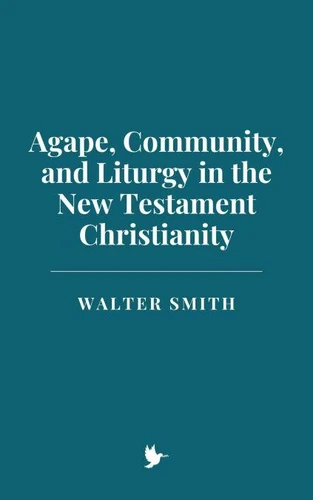
Agape, Community, and Liturgy in New Testament Christianity
Par :Formats :
Disponible dans votre compte client Decitre ou Furet du Nord dès validation de votre commande. Le format ePub est :
- Compatible avec une lecture sur My Vivlio (smartphone, tablette, ordinateur)
- Compatible avec une lecture sur liseuses Vivlio
- Pour les liseuses autres que Vivlio, vous devez utiliser le logiciel Adobe Digital Edition. Non compatible avec la lecture sur les liseuses Kindle, Remarkable et Sony
 , qui est-ce ?
Notre partenaire de plateforme de lecture numérique où vous retrouverez l'ensemble de vos ebooks gratuitement
Pour en savoir plus sur nos ebooks, consultez notre aide en ligne ici
C'est si simple ! Lisez votre ebook avec l'app Vivlio sur votre tablette, mobile ou ordinateur :

- FormatePub
- ISBN8230148104
- EAN9798230148104
- Date de parution12/01/2025
- Protection num.pas de protection
- Infos supplémentairesepub
- ÉditeurIndependently Published
Résumé
The intersection of agape, community, and liturgy in New Testament Christianity forms the bedrock of Christian identity, practice, and theology. To understand these interwoven concepts, one must delve into the historical, cultural, and theological contexts that shaped early Christian life. The New Testament is not merely a collection of sacred writings; it is a dynamic narrative of God's love (agape) revealed through Jesus Christ, expressed in the formation of a new community of believers, and embodied in communal worship practices (liturgy) that declared the story of redemption and hope.
The term agape-the Greek word for selfless, sacrificial love-appears prominently in New Testament writings, especially in the letters of Paul and John. However, agape as a concept predates its New Testament usage. It evolved within a broader Greco-Roman milieu, where various Greek words such as eros (romantic or desirous love), philia (brotherly love), and storge (familial affection) were commonly used.
Yet, agape distinguished itself by its unique emphasis on unconditional love that wills the good of the other, irrespective of reciprocity or personal gain. Jewish thought also contributed significantly to the understanding of love, particularly through the Hebrew term chesed, often translated as "steadfast love" or "loving-kindness, " which characterizes God's covenantal relationship with Israel.
This theological foundation laid the groundwork for the Christian understanding of agape as a divine imperative and transformative power.
The term agape-the Greek word for selfless, sacrificial love-appears prominently in New Testament writings, especially in the letters of Paul and John. However, agape as a concept predates its New Testament usage. It evolved within a broader Greco-Roman milieu, where various Greek words such as eros (romantic or desirous love), philia (brotherly love), and storge (familial affection) were commonly used.
Yet, agape distinguished itself by its unique emphasis on unconditional love that wills the good of the other, irrespective of reciprocity or personal gain. Jewish thought also contributed significantly to the understanding of love, particularly through the Hebrew term chesed, often translated as "steadfast love" or "loving-kindness, " which characterizes God's covenantal relationship with Israel.
This theological foundation laid the groundwork for the Christian understanding of agape as a divine imperative and transformative power.
A propos de Walter Smith


2,99 €


2,99 €

2,99 €


2,99 €

2,99 €

2,99 €

2,99 €



2,99 €


2,99 €


2,99 €