Author
Nouveauté
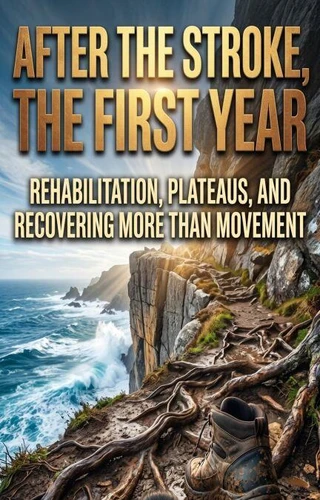
After the Stroke, the First Year. Rehabilitation, Plateaus, and Recovering More Than Movement
Par :Formats :
Disponible dans votre compte client Decitre ou Furet du Nord dès validation de votre commande. Le format ePub est :
- Compatible avec une lecture sur My Vivlio (smartphone, tablette, ordinateur)
- Compatible avec une lecture sur liseuses Vivlio
- Pour les liseuses autres que Vivlio, vous devez utiliser le logiciel Adobe Digital Edition. Non compatible avec la lecture sur les liseuses Kindle, Remarkable et Sony
 , qui est-ce ?
Notre partenaire de plateforme de lecture numérique où vous retrouverez l'ensemble de vos ebooks gratuitement
Pour en savoir plus sur nos ebooks, consultez notre aide en ligne ici
C'est si simple ! Lisez votre ebook avec l'app Vivlio sur votre tablette, mobile ou ordinateur :

- Nombre de pages186
- FormatePub
- ISBN978-3-565-59550-1
- EAN9783565595501
- Date de parution28/07/2026
- Protection num.pas de protection
- Taille911 Ko
- Infos supplémentairesepub
- ÉditeurEmphaloz Publishing House
Résumé
Every minute of an untreated ischemic stroke, approximately 1.9 million neurons die. For survivors, the initial medical emergency is only the beginning of a long, uncertain road. Conventional wisdom suggests that recovery hits a permanent plateau within the first year, leaving patients and families to accept a life of diminished function.
This book dismantles that myth. It journeys from the critical first hours, where clot-busting drugs like tPA race to save the brain's vulnerable "penumbra, " to the misunderstood chronic phase years later.
Drawing on the work of leading neurologists and researchers, it reveals the profound science of Experience-Dependent Neuroplasticity-the brain's incredible capacity to rewire itself in response to high-dose, targeted rehabilitation. By exploring the difference between true motor recovery and simple compensation, the book explains why standard therapy often fails and how intensive, high-repetition training can shatter perceived limits.
It provides a clear, evidence-based framework for understanding spasticity, cognitive fatigue, and the biological mechanisms that allow for continuous improvement long after the initial injury. Discover how the brain's map can be redrawn, and how survivors can reclaim more than just movement.
Drawing on the work of leading neurologists and researchers, it reveals the profound science of Experience-Dependent Neuroplasticity-the brain's incredible capacity to rewire itself in response to high-dose, targeted rehabilitation. By exploring the difference between true motor recovery and simple compensation, the book explains why standard therapy often fails and how intensive, high-repetition training can shatter perceived limits.
It provides a clear, evidence-based framework for understanding spasticity, cognitive fatigue, and the biological mechanisms that allow for continuous improvement long after the initial injury. Discover how the brain's map can be redrawn, and how survivors can reclaim more than just movement.