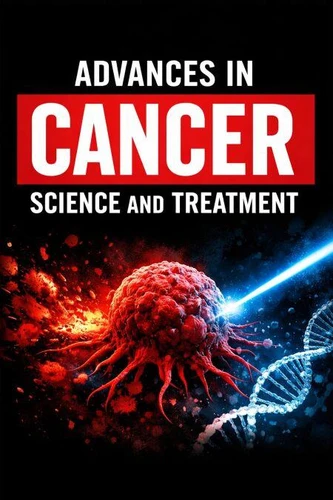
Advances in Cancer Science and Treatment is a rigorous exploration of how modern cancer biology is being translated into real-world therapeutic strategies-and why many promising treatments still fail. Moving beyond simplified models of cancer, this book reframes malignancy as a dynamic, adaptive system shaped by molecular logic, metabolic flexibility, immune pressure, and evolutionary selection. From tumor heterogeneity and microenvironmental signaling to precision genomics, immuno-oncology, and gene-edited therapies, each chapter connects foundational discoveries directly to clinical decision-making.
Rather than presenting cancer as a static enemy, this work examines it as a moving target-one that learns, resists, and exploits therapeutic pressure. Special attention is given to adaptive resistance, epigenetic plasticity, DNA damage response pathways, and the emerging role of systems biology in predicting treatment failure before it occurs. Written for readers who want more than surface-level explanations, Applied Cancer Science bridges laboratory insight and therapeutic execution.
It offers a forward-looking framework for anticipatory oncology-where data integration, strategic targeting, and biological foresight guide the next generation of cancer treatment. This is not a popular science overview. It is a strategic, translational roadmap for those determined to understand cancer well enough to outmaneuver it.
Advances in Cancer Science and Treatment is a rigorous exploration of how modern cancer biology is being translated into real-world therapeutic strategies-and why many promising treatments still fail. Moving beyond simplified models of cancer, this book reframes malignancy as a dynamic, adaptive system shaped by molecular logic, metabolic flexibility, immune pressure, and evolutionary selection. From tumor heterogeneity and microenvironmental signaling to precision genomics, immuno-oncology, and gene-edited therapies, each chapter connects foundational discoveries directly to clinical decision-making.
Rather than presenting cancer as a static enemy, this work examines it as a moving target-one that learns, resists, and exploits therapeutic pressure. Special attention is given to adaptive resistance, epigenetic plasticity, DNA damage response pathways, and the emerging role of systems biology in predicting treatment failure before it occurs. Written for readers who want more than surface-level explanations, Applied Cancer Science bridges laboratory insight and therapeutic execution.
It offers a forward-looking framework for anticipatory oncology-where data integration, strategic targeting, and biological foresight guide the next generation of cancer treatment. This is not a popular science overview. It is a strategic, translational roadmap for those determined to understand cancer well enough to outmaneuver it.

 , qui est-ce ?