A setback survivor who forged grit in repeated crises, providing self-help recovery plans, business rebound playbooks, and historical studies of resilience in economic depressions.
Nouveauté
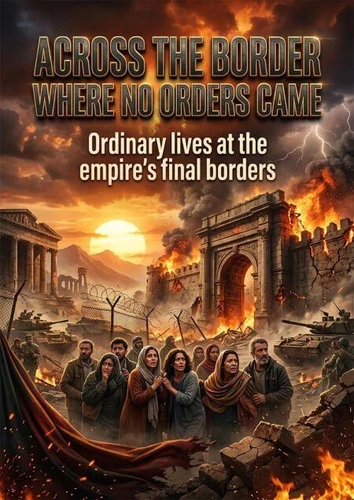
Across the border where no orders came. Ordinary lives at the empire's final borders
Par :Formats :
Disponible dans votre compte client Decitre ou Furet du Nord dès validation de votre commande. Le format ePub est :
- Compatible avec une lecture sur My Vivlio (smartphone, tablette, ordinateur)
- Compatible avec une lecture sur liseuses Vivlio
- Pour les liseuses autres que Vivlio, vous devez utiliser le logiciel Adobe Digital Edition. Non compatible avec la lecture sur les liseuses Kindle, Remarkable et Sony
 , qui est-ce ?
Notre partenaire de plateforme de lecture numérique où vous retrouverez l'ensemble de vos ebooks gratuitement
Pour en savoir plus sur nos ebooks, consultez notre aide en ligne ici
C'est si simple ! Lisez votre ebook avec l'app Vivlio sur votre tablette, mobile ou ordinateur :

- Nombre de pages188
- FormatePub
- ISBN978-3-565-59420-7
- EAN9783565594207
- Date de parution27/07/2026
- Protection num.pas de protection
- Taille1 Mo
- Infos supplémentairesepub
- ÉditeurEmphaloz Publishing House
Résumé
The Ottoman Empire did not die in Istanbul. It died in the mountains of Albania, the deserts of Arabia, the villages of Bulgaria, and the streets of Salonica. This book shifts the focus from sultans and viziers to the people who lived at the empire's margins and eventually tore it apart from within. Greek nationalists, Armenian merchants, Arab tribal leaders, Kurdish chieftains, and Balkan peasants each had their own reasons to resist, negotiate with, or abandon the imperial project.
What looked like a unified state from the centre was, from the edge, a patchwork of fragile loyalties and simmering resentments. The Young Turk Revolution of 1908 promised equality under a constitutional order, but instead accelerated the empire's fragmentation by centralising power in ways that alienated every region. The Balkan Wars of 1912-1913 stripped away almost all European territory, and with it went the empire's demographic and economic core.
By the time the First World War began, the Ottoman state was already hollowed out, held together by emergency measures and increasingly desperate violence. The Armenian genocide was not an aberration but a logical endpoint of a ruling class that had learned to see its own subjects as enemies. This book traces how empires die not with a bang in the capital, but with a thousand small breaks along every frontier.
What looked like a unified state from the centre was, from the edge, a patchwork of fragile loyalties and simmering resentments. The Young Turk Revolution of 1908 promised equality under a constitutional order, but instead accelerated the empire's fragmentation by centralising power in ways that alienated every region. The Balkan Wars of 1912-1913 stripped away almost all European territory, and with it went the empire's demographic and economic core.
By the time the First World War began, the Ottoman state was already hollowed out, held together by emergency measures and increasingly desperate violence. The Armenian genocide was not an aberration but a logical endpoint of a ruling class that had learned to see its own subjects as enemies. This book traces how empires die not with a bang in the capital, but with a thousand small breaks along every frontier.
A propos de Juniper Sloane










9,99 €