Nouveauté
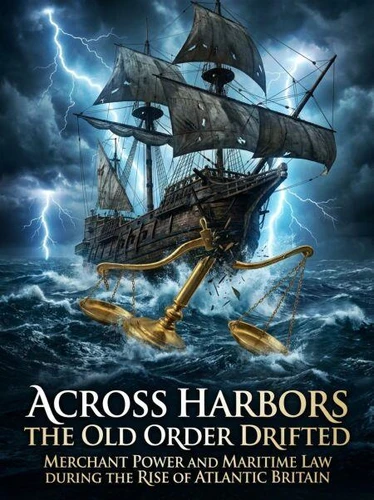
Across Harbors the Old Order Drifted. Merchant power and maritime law during the rise of Atlantic Britain
Par :Formats :
Disponible dans votre compte client Decitre ou Furet du Nord dès validation de votre commande. Le format ePub est :
- Compatible avec une lecture sur My Vivlio (smartphone, tablette, ordinateur)
- Compatible avec une lecture sur liseuses Vivlio
- Pour les liseuses autres que Vivlio, vous devez utiliser le logiciel Adobe Digital Edition. Non compatible avec la lecture sur les liseuses Kindle, Remarkable et Sony
 , qui est-ce ?
Notre partenaire de plateforme de lecture numérique où vous retrouverez l'ensemble de vos ebooks gratuitement
Pour en savoir plus sur nos ebooks, consultez notre aide en ligne ici
C'est si simple ! Lisez votre ebook avec l'app Vivlio sur votre tablette, mobile ou ordinateur :

- Nombre de pages203
- FormatePub
- ISBN978-3-565-47910-8
- EAN9783565479108
- Date de parution05/06/2026
- Protection num.pas de protection
- Taille1 Mo
- Infos supplémentairesepub
- ÉditeurEmphaloz Publishing House
Résumé
The Atlantic did more than connect continents. It reorganized English society from its docks outward. As overseas trade expanded during the Tudor era, traditional feudal influence faced growing pressure from merchants whose fortunes depended not on inherited land, but on ships, contracts, and oceanic risk.
Focusing on England's major port cities, this book examines how trans-Atlantic commerce reshaped urban life and political authority.
Tobacco, sugar, and American silver generated new markets that reached from crowded waterfront districts to aristocratic households. Merchant investors gained social leverage previously reserved for hereditary elites, accelerating the decline of older feudal structures tied to agricultural wealth. The expansion of overseas enterprise also demanded new forms of maritime regulation. Royal charters granted commercial monopolies while legitimizing aggressive privateering against foreign rivals.
Admiralty courts and naval policy evolved alongside imperial competition, creating legal frameworks that often merged trade with coercion. The boundary between licensed commerce and organized violence remained deliberately unstable. Seen through law, labor, and urban growth, Tudor Britain appears not as an isolated kingdom but as a society being remade by Atlantic circulation and the ambitions it unleashed.
Tobacco, sugar, and American silver generated new markets that reached from crowded waterfront districts to aristocratic households. Merchant investors gained social leverage previously reserved for hereditary elites, accelerating the decline of older feudal structures tied to agricultural wealth. The expansion of overseas enterprise also demanded new forms of maritime regulation. Royal charters granted commercial monopolies while legitimizing aggressive privateering against foreign rivals.
Admiralty courts and naval policy evolved alongside imperial competition, creating legal frameworks that often merged trade with coercion. The boundary between licensed commerce and organized violence remained deliberately unstable. Seen through law, labor, and urban growth, Tudor Britain appears not as an isolated kingdom but as a society being remade by Atlantic circulation and the ambitions it unleashed.