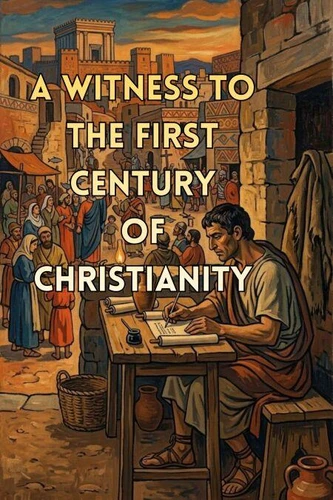
A Witness to the First Century of ChristianityThis historical novel unfolds through the eyes of an unnamed Roman scribe posted to the province of Judaea around AD 30 - the very year he records the execution of a Galilean rabbi named Jesus of Nazareth. What begins as a routine administrative report becomes the starting point of a forty-year journey of observation that the scribe cannot set aside. Moving across the breadth of the first century, the narrator watches from the margins of history as a small, frightened community of disciples transforms into a movement that spreads from Jerusalem to the heart of Rome itself.
He tracks the theological mind of Paul through letters that circulate faster than imperial edicts. He reads Mark's gospel and notices that the disciples are portrayed without flattery. He stands in the seven churches of Asia Minor and sees, in each, a different face of faith - fervent, weary, compromised, alive. Written in the spare, observational prose of a man trained to record facts rather than feelings, the novel asks what it means to witness something you cannot fully explain.
The scribe never declares himself a believer. Yet by the final page, the reader understands that forty years of watching has undone him in ways no official report could contain. A story not of doctrine but of transformation - told by the one man in the room who was supposed to remain unmoved.
A Witness to the First Century of ChristianityThis historical novel unfolds through the eyes of an unnamed Roman scribe posted to the province of Judaea around AD 30 - the very year he records the execution of a Galilean rabbi named Jesus of Nazareth. What begins as a routine administrative report becomes the starting point of a forty-year journey of observation that the scribe cannot set aside. Moving across the breadth of the first century, the narrator watches from the margins of history as a small, frightened community of disciples transforms into a movement that spreads from Jerusalem to the heart of Rome itself.
He tracks the theological mind of Paul through letters that circulate faster than imperial edicts. He reads Mark's gospel and notices that the disciples are portrayed without flattery. He stands in the seven churches of Asia Minor and sees, in each, a different face of faith - fervent, weary, compromised, alive. Written in the spare, observational prose of a man trained to record facts rather than feelings, the novel asks what it means to witness something you cannot fully explain.
The scribe never declares himself a believer. Yet by the final page, the reader understands that forty years of watching has undone him in ways no official report could contain. A story not of doctrine but of transformation - told by the one man in the room who was supposed to remain unmoved.

 , qui est-ce ?