SOLDES
Jusqu'à -70% sur une sélection d'articles*

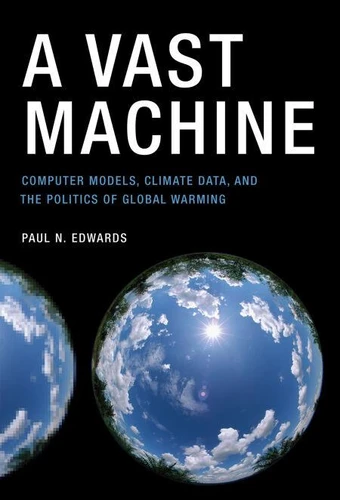
A Vast Machine. Computer Models, Climate Data, and the Politics of Global Warming
Par :Formats :
Disponible dans votre compte client Decitre ou Furet du Nord dès validation de votre commande. Le format ePub protégé est :
- Compatible avec une lecture sur My Vivlio (smartphone, tablette, ordinateur)
- Compatible avec une lecture sur liseuses Vivlio
- Pour les liseuses autres que Vivlio, vous devez utiliser le logiciel Adobe Digital Edition. Non compatible avec la lecture sur les liseuses Kindle, Remarkable et Sony
- Non compatible avec un achat hors France métropolitaine
 , qui est-ce ?
Notre partenaire de plateforme de lecture numérique où vous retrouverez l'ensemble de vos ebooks gratuitement
Pour en savoir plus sur nos ebooks, consultez notre aide en ligne ici
C'est si simple ! Lisez votre ebook avec l'app Vivlio sur votre tablette, mobile ou ordinateur :

- Nombre de pages552
- FormatePub
- ISBN978-0-262-29071-5
- EAN9780262290715
- Date de parution12/03/2010
- Protection num.Adobe DRM
- Taille9 Mo
- Infos supplémentairesepub
- ÉditeurThe MIT Press
Résumé
The science behind global warming, and its history: how scientists learned to understand the atmosphere, to measure it, to trace its past, and to model its future. Global warming skeptics often fall back on the argument that the scientific case for global warming is all model predictions, nothing but simulation; they warn us that we need to wait for real data, "sound science." In A Vast Machine Paul Edwards has news for these skeptics: without models, there are no data.
Today, no collection of signals or observations-even from satellites, which can "see" the whole planet with a single instrument-becomes global in time and space without passing through a series of data models. Everything we know about the world's climate we know through models. Edwards offers an engaging and innovative history of how scientists learned to understand the atmosphere-to measure it, trace its past, and model its future.
Today, no collection of signals or observations-even from satellites, which can "see" the whole planet with a single instrument-becomes global in time and space without passing through a series of data models. Everything we know about the world's climate we know through models. Edwards offers an engaging and innovative history of how scientists learned to understand the atmosphere-to measure it, trace its past, and model its future.