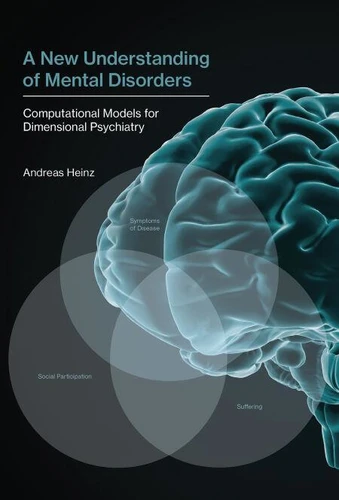
A New Understanding of Mental Disorders. Computational Models for Dimensional Psychiatry
Par :Formats :
Disponible dans votre compte client Decitre ou Furet du Nord dès validation de votre commande. Le format ePub protégé est :
- Compatible avec une lecture sur My Vivlio (smartphone, tablette, ordinateur)
- Compatible avec une lecture sur liseuses Vivlio
- Pour les liseuses autres que Vivlio, vous devez utiliser le logiciel Adobe Digital Edition. Non compatible avec la lecture sur les liseuses Kindle, Remarkable et Sony
- Non compatible avec un achat hors France métropolitaine
 , qui est-ce ?
Notre partenaire de plateforme de lecture numérique où vous retrouverez l'ensemble de vos ebooks gratuitement
Pour en savoir plus sur nos ebooks, consultez notre aide en ligne ici
C'est si simple ! Lisez votre ebook avec l'app Vivlio sur votre tablette, mobile ou ordinateur :

- Nombre de pages224
- FormatePub
- ISBN978-0-262-34285-8
- EAN9780262342858
- Date de parution20/10/2017
- Protection num.Adobe DRM
- Taille6 Mo
- Infos supplémentairesepub
- ÉditeurThe MIT Press
Résumé
A new computational and dimensional approach to understanding and classifying mental disorders: modeling key learning and decision-making mechanisms across different mental disorders. Even as researchers look for neurobiological correlates of mental disorders, many of these disorders are still classified solely according to the manifestation of clinical symptoms. Neurobiological findings rarely help diagnose a specific disease or predict its outcome.
Although current diagnostic categories are questionable (sometimes labeling common states of human suffering as disorders), traditional neuroimaging approaches are not sophisticated enough to capture the neurobiological markers of mental disorder. In this book, Andreas Heinz proposes a computational and dimensional approach to understanding and classifying mental disorders: modeling key learning and decision-making mechanisms across different mental disorders.
Such an approach focuses on the malleability and diversity of human behavior and its biological underpinnings. Heinz explains basic learning mechanisms and their effects on human behavior, focusing not on single disorders but on how such mechanisms work in a multitude of mental states. For example, he traces alterations in dopamine-reinforcement learning in psychotic, affective, and addictive disorders.
He investigates to what extent these basic dimensions of mental disorders can account for such syndromes as craving and loss of control in addiction, positive and negative mood states in affective disorders, and the altered experience of self and world associated with psychotic states. Finally, Heinz explores the clinical and therapeutic implications of such accounts. He argues that a focus on learning mechanisms, with its emphasis on human creativity and resilience, should help reduce the stigma of mental disorder.
Although current diagnostic categories are questionable (sometimes labeling common states of human suffering as disorders), traditional neuroimaging approaches are not sophisticated enough to capture the neurobiological markers of mental disorder. In this book, Andreas Heinz proposes a computational and dimensional approach to understanding and classifying mental disorders: modeling key learning and decision-making mechanisms across different mental disorders.
Such an approach focuses on the malleability and diversity of human behavior and its biological underpinnings. Heinz explains basic learning mechanisms and their effects on human behavior, focusing not on single disorders but on how such mechanisms work in a multitude of mental states. For example, he traces alterations in dopamine-reinforcement learning in psychotic, affective, and addictive disorders.
He investigates to what extent these basic dimensions of mental disorders can account for such syndromes as craving and loss of control in addiction, positive and negative mood states in affective disorders, and the altered experience of self and world associated with psychotic states. Finally, Heinz explores the clinical and therapeutic implications of such accounts. He argues that a focus on learning mechanisms, with its emphasis on human creativity and resilience, should help reduce the stigma of mental disorder.