

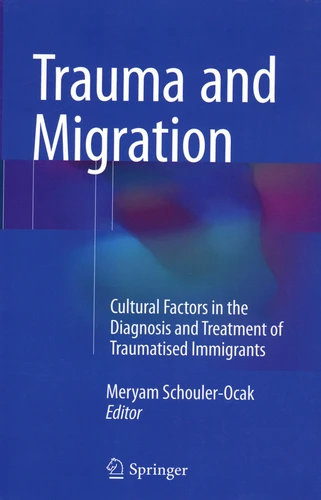
Trauma and Migration. Cultural Factors in the Diagnosis and Treatment of Traumatised Immigrants
Par :Formats :
- Nombre de pages372
- FormatGrand Format
- PrésentationBroché
- Poids0.37 kg
- Dimensions15,5 cm × 23,5 cm × 1,2 cm
- ISBN978-3-319-35010-3
- EAN9783319350103
- Date de parution01/01/2015
- ÉditeurSpringer Nature
- PréfacierAndreas Heinz
Résumé
This book provides an overview of recent trends in the management of trauma and post-traumatic stress disorders that may ensue from distressing experiences associated with the process of migration. Although the symptoms induced by trauma are common to all cultures, their specific meaning and the strategies used to deal with them may be culture-specific. Consequently, cultural factors can play an important role in the diagnosis and treatment of individuals with psychological reactions to extreme stress.
This role is examined in detail, with an emphasis on the need for therapists to bear in mind that different cultures often have different concepts of health and disease and that cross-cultural communication - assisted by a professionally trained and certified interpreter if necessary - is therefore essential in ensuring effective care of immigrant patients. The therapist's own intercultural skills are highlighted as being an important factor in the success of any treatment, and specific care contexts and the global perspective are also discussed.
This role is examined in detail, with an emphasis on the need for therapists to bear in mind that different cultures often have different concepts of health and disease and that cross-cultural communication - assisted by a professionally trained and certified interpreter if necessary - is therefore essential in ensuring effective care of immigrant patients. The therapist's own intercultural skills are highlighted as being an important factor in the success of any treatment, and specific care contexts and the global perspective are also discussed.