Michel Bock est professeur agrégé au Département d'histoire de l'Université d'Ottawa et titulaire de la Chaire de recherche sur l'histoire de la francophonie canadienne.
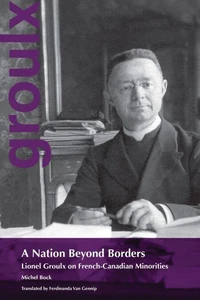
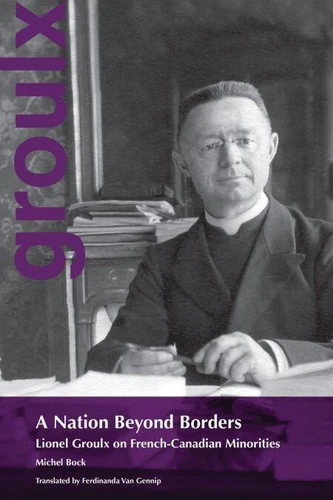
A Nation Beyond Borders. Lionel Groulx on French-Canadian Minorities
Par : ,Formats :
Disponible dans votre compte client Decitre ou Furet du Nord dès validation de votre commande. Le format ePub est :
- Compatible avec une lecture sur My Vivlio (smartphone, tablette, ordinateur)
- Compatible avec une lecture sur liseuses Vivlio
- Pour les liseuses autres que Vivlio, vous devez utiliser le logiciel Adobe Digital Edition. Non compatible avec la lecture sur les liseuses Kindle, Remarkable et Sony
 , qui est-ce ?
Notre partenaire de plateforme de lecture numérique où vous retrouverez l'ensemble de vos ebooks gratuitement
Pour en savoir plus sur nos ebooks, consultez notre aide en ligne ici
C'est si simple ! Lisez votre ebook avec l'app Vivlio sur votre tablette, mobile ou ordinateur :

- Nombre de pages282
- FormatePub
- ISBN978-0-7766-2156-2
- EAN9780776621562
- Date de parution29/04/2014
- Protection num.pas de protection
- Taille6 Mo
- Infos supplémentairesepub
- ÉditeurUniversity of Ottawa Press
Résumé
French Canada can no longer be considered a geographical expression defined by the borders of Québec, " wrote priest, historian and intellectual leader Lionel Groulx in 1935. Groulx became one of the chief advocates of solidarity between Québec and the French minorities well beyond the borders of la vieille province. This book, first published as Quand la nation débordait les frontières (Hurtubise HMH, 2004), is considered the most comprehensive analysis of Lionel Groulx's work and vision as an intellectual leader of a nationalist school that extended well beyond the borders of Québec.
Recipient of the 2005 Governor General's Literary Award in non-fiction, the original French edition also won the Michel-Brunet Award (Institut d'histoire de l'Amérique française), the Prix Champlain (Conseil de la vie française en Amérique), and a medal awarded by the Québec National Assembly. It was also shortlisted for the Jean-Charles-Falardeau Award (Fédération canadienne des sciences humaines du Canada) and the City of Ottawa Book Award.
For over five decades, historians and intellectuals have defined the nationalist discourse primarily in territorial terms. In this regard, Groulx has been portrayed-more often than not-as the architect of Québécois nationalism. Translated by Ferdinanda Van Gennip, A Nation Beyond Borders will continue to spark debate on Groulx's description of the parameters of the French-Canadian nation. Highlighting the often neglected role of French-Canadian minorities in his thought, this book presents the Canon as an uncompromising advocate of solidarity between all French-Canadian communities.
Published in English.
Recipient of the 2005 Governor General's Literary Award in non-fiction, the original French edition also won the Michel-Brunet Award (Institut d'histoire de l'Amérique française), the Prix Champlain (Conseil de la vie française en Amérique), and a medal awarded by the Québec National Assembly. It was also shortlisted for the Jean-Charles-Falardeau Award (Fédération canadienne des sciences humaines du Canada) and the City of Ottawa Book Award.
For over five decades, historians and intellectuals have defined the nationalist discourse primarily in territorial terms. In this regard, Groulx has been portrayed-more often than not-as the architect of Québécois nationalism. Translated by Ferdinanda Van Gennip, A Nation Beyond Borders will continue to spark debate on Groulx's description of the parameters of the French-Canadian nation. Highlighting the often neglected role of French-Canadian minorities in his thought, this book presents the Canon as an uncompromising advocate of solidarity between all French-Canadian communities.
Published in English.
A propos de Michel Bock


21,99 €

15,99 €


16,99 €