Richard Vinen is a lecturer in history at King's College, London.
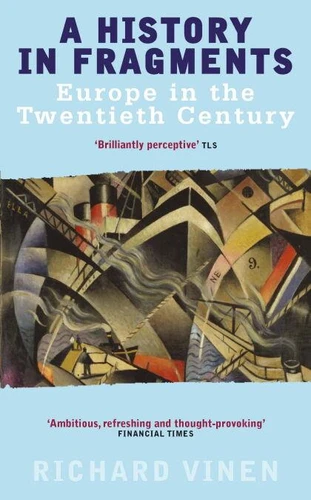
A History In Fragments. Europe in the Twentieth Century
Par :Formats :
Disponible dans votre compte client Decitre ou Furet du Nord dès validation de votre commande. Le format ePub protégé est :
- Compatible avec une lecture sur My Vivlio (smartphone, tablette, ordinateur)
- Compatible avec une lecture sur liseuses Vivlio
- Pour les liseuses autres que Vivlio, vous devez utiliser le logiciel Adobe Digital Edition. Non compatible avec la lecture sur les liseuses Kindle, Remarkable et Sony
- Non compatible avec un achat hors France métropolitaine
 , qui est-ce ?
Notre partenaire de plateforme de lecture numérique où vous retrouverez l'ensemble de vos ebooks gratuitement
Pour en savoir plus sur nos ebooks, consultez notre aide en ligne ici
C'est si simple ! Lisez votre ebook avec l'app Vivlio sur votre tablette, mobile ou ordinateur :

- Nombre de pages736
- FormatePub
- ISBN978-0-7481-2344-5
- EAN9780748123445
- Date de parution03/11/2010
- Protection num.Adobe DRM
- Infos supplémentairesepub
- ÉditeurAbacus
Résumé
The problem with the history of twentieth-century Europe is that everyone thinks they know it. The great stories of the century - the two world wars, the rise and fall of Nazism and communism, female emancipation - seem self-evidently important. But behind the grand narratives, the politics and the ideologies, lies another history: the history of forces that shaped the lives of individual Europeans.
That is the thrust of Richard Vinen's magisterial survey of this uniquely destructive and creative century. It argues that there is no single history that encompasses the experience of all Europeans, but rather a multiplicity of different, partially interlocking, histories. Some of these histories are told here in a book which seeks to root the generalisations of large-scale analysis in the concrete - and sometimes incongruous - details of individual lives.
Challenging, informing and revealing, this is history writing at its finest.
That is the thrust of Richard Vinen's magisterial survey of this uniquely destructive and creative century. It argues that there is no single history that encompasses the experience of all Europeans, but rather a multiplicity of different, partially interlocking, histories. Some of these histories are told here in a book which seeks to root the generalisations of large-scale analysis in the concrete - and sometimes incongruous - details of individual lives.
Challenging, informing and revealing, this is history writing at its finest.