SOLDES
Jusqu'à -70% sur une sélection d'articles*

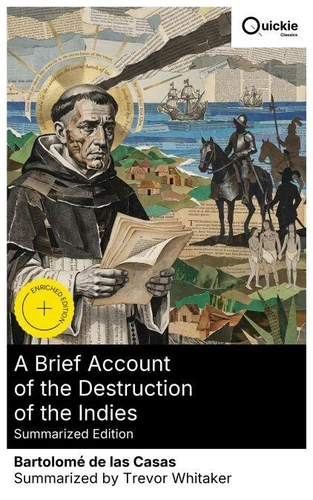
A Brief Account of the Destruction of the Indies (Summarized Edition). Enriched edition. A Firsthand Indictment of Spanish Colonization, Indigenous Rights, and the Atrocities of European Empire
Par : , ,Formats :
Disponible dans votre compte client Decitre ou Furet du Nord dès validation de votre commande. Le format ePub est :
- Compatible avec une lecture sur My Vivlio (smartphone, tablette, ordinateur)
- Compatible avec une lecture sur liseuses Vivlio
- Pour les liseuses autres que Vivlio, vous devez utiliser le logiciel Adobe Digital Edition. Non compatible avec la lecture sur les liseuses Kindle, Remarkable et Sony
 , qui est-ce ?
Notre partenaire de plateforme de lecture numérique où vous retrouverez l'ensemble de vos ebooks gratuitement
Pour en savoir plus sur nos ebooks, consultez notre aide en ligne ici
C'est si simple ! Lisez votre ebook avec l'app Vivlio sur votre tablette, mobile ou ordinateur :

- Nombre de pages62
- FormatePub
- ISBN859-65--4788233-6
- EAN8596547882336
- Date de parution10/01/2026
- Protection num.Digital Watermarking
- Taille973 Ko
- Infos supplémentairesepub
- ÉditeurQUICKIE CLASSICS
Résumé
Bartolomé de las Casas's A Brief Account of the Destruction of the Indies (1552) is a juridical-pastoral indictment of Spain's conquest, addressed to the future Philip II. In terse, province-by-province vignettes-from Hispaniola and Cuba to New Spain and Peru-it catalogs massacres, enslavement, and the depopulating logic of encomienda. Apocalyptic yet forensic, it wields exempla, mortality estimates, and scriptural appeals to demand royal remedy.
Situated in early modern debates on conquest and natural law, it later fed Europe's Black Legend. Seville-born and once an encomendero, Las Casas experienced the conquest firsthand before a 1514 conversion of conscience led him to renounce his grant and join the Dominicans. Trained in scholastic theology and canon law, later bishop of Chiapas, he pressed the Crown for reform, helped inspire the New Laws of 1542, and confronted Sepúlveda at Valladolid.
This text distills decades of witnessing, pastoral labor, and legal argument. Students of colonial history, ethics, and political theology will find this brief indispensable. Read it critically-alert to polemical compression and occasional hyperbole-yet attentively, as a foundational plea for Indigenous rights and a bracing meditation on power, empire, and responsibility. Quickie Classics summarizes timeless works with precision, preserving the author's voice and keeping the prose clear, fast, and readable-distilled, never diluted.
Enriched Edition extras: Introduction · Synopsis · Historical Context · Author Biography · Brief Analysis · 4 Reflection Q&As · Editorial Footnotes.
Situated in early modern debates on conquest and natural law, it later fed Europe's Black Legend. Seville-born and once an encomendero, Las Casas experienced the conquest firsthand before a 1514 conversion of conscience led him to renounce his grant and join the Dominicans. Trained in scholastic theology and canon law, later bishop of Chiapas, he pressed the Crown for reform, helped inspire the New Laws of 1542, and confronted Sepúlveda at Valladolid.
This text distills decades of witnessing, pastoral labor, and legal argument. Students of colonial history, ethics, and political theology will find this brief indispensable. Read it critically-alert to polemical compression and occasional hyperbole-yet attentively, as a foundational plea for Indigenous rights and a bracing meditation on power, empire, and responsibility. Quickie Classics summarizes timeless works with precision, preserving the author's voice and keeping the prose clear, fast, and readable-distilled, never diluted.
Enriched Edition extras: Introduction · Synopsis · Historical Context · Author Biography · Brief Analysis · 4 Reflection Q&As · Editorial Footnotes.
A propos de Bartolomé de las Casas

1,99 €