OFFRE LISEUSES
Une liseuse achetée = une housse offerte* jusqu'au 21 juin
- Accueil /
- Joseph Kessel

Joseph Kessel
Biographie de
Joseph Kessel
Né en Argentine en 1898 de parents russes ayant fui les persécutions antisémites, Joseph Kessel passe son enfance entre lOural et le Lot-et-Garonne, où son père sest installé comme médecin. Ces origines cosmopolites lui vaudront un goût immodéré pour les pérégrinations à travers le monde. Après des études de lettres classiques, Kessel se destine à une carrière artistique lorsquéclate la Première Guerre mondiale. Engagé volontaire dans lartillerie puis dans laviation, il tirera de son expérience son premier grand succès, Léquipage. A la fin des hostilités, il entame une double carrière de grand reporter et de romancier, puisant dans ses nombreux voyages la matière de ses oeuvres. Cest en témoin de son temps que Kessel parcourt lentre-deux-guerres. Parfois lécrivain délaisse la fiction pour lexercice de mémoire, Mermoz (1938), à la fois biographie et recueil de souvenirs sur laviateur héroïque qui fut son ami, mais le versant romanesque de son oeuvre exprime tout autant une volonté journalistique : La passante du Sans-Souci (1936) témoigne en filigrane de la montée inexorable du nazisme. Après la Seconde Guerre mondiale, durant laquelle il joue un rôle actif dans la Résistance, Joseph Kessel renoue avec ses activités de journaliste et décrivain, publiant entre autres Le tour du malheur (1950) et son grand succès Le lion (1958). Il entre à lAcadémie française en 1963 et meurt en 1979.

Dernière sortie
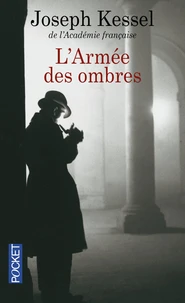
Army of Shadows
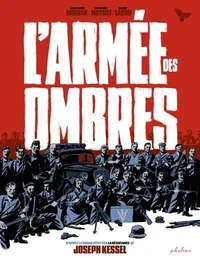
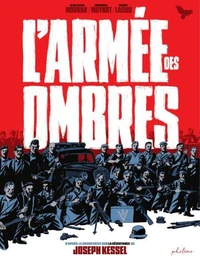
''Army of Shadows'' (L'Armée des ombres) is a gripping, partially fictionalized account of the French Resistance during World War II, written in 1943 by Joseph Kessel. Kessel, a member of the Resistance himself, created a bleak, hyper-realistic tribute to the ordinary men and women-messengers, saboteurs, and doctors-who fought in the shadows.
The narrative explores the terrifying, everyday reality of surviving under Nazi occupation and the Vichy regime.
Key themes include: The staggering costs of survival: the book focuses on a small group of underground fighters led by the stoic Philippe Gerbier. They constantly evade the Gestapo, operate from safe houses, and are forced to execute informers and traitors among their own ranks. A bleak, un-glamorous view: unlike traditional war stories that romanticize combat, the book presents the Resistance as a grueling, terrifying, and paranoid existence where capture often means brutal torture and execution.
The novel was famously adapted into a critically acclaimed 1969 film of the same name by director Jean-Pierre Melville, who also fought in the Resistance.
Key themes include: The staggering costs of survival: the book focuses on a small group of underground fighters led by the stoic Philippe Gerbier. They constantly evade the Gestapo, operate from safe houses, and are forced to execute informers and traitors among their own ranks. A bleak, un-glamorous view: unlike traditional war stories that romanticize combat, the book presents the Resistance as a grueling, terrifying, and paranoid existence where capture often means brutal torture and execution.
The novel was famously adapted into a critically acclaimed 1969 film of the same name by director Jean-Pierre Melville, who also fought in the Resistance.
''Army of Shadows'' (L'Armée des ombres) is a gripping, partially fictionalized account of the French Resistance during World War II, written in 1943 by Joseph Kessel. Kessel, a member of the Resistance himself, created a bleak, hyper-realistic tribute to the ordinary men and women-messengers, saboteurs, and doctors-who fought in the shadows.
The narrative explores the terrifying, everyday reality of surviving under Nazi occupation and the Vichy regime.
Key themes include: The staggering costs of survival: the book focuses on a small group of underground fighters led by the stoic Philippe Gerbier. They constantly evade the Gestapo, operate from safe houses, and are forced to execute informers and traitors among their own ranks. A bleak, un-glamorous view: unlike traditional war stories that romanticize combat, the book presents the Resistance as a grueling, terrifying, and paranoid existence where capture often means brutal torture and execution.
The novel was famously adapted into a critically acclaimed 1969 film of the same name by director Jean-Pierre Melville, who also fought in the Resistance.
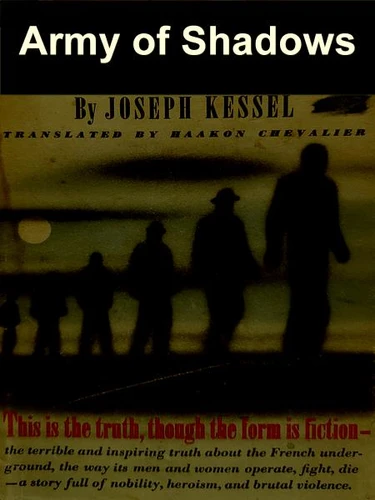
Key themes include: The staggering costs of survival: the book focuses on a small group of underground fighters led by the stoic Philippe Gerbier. They constantly evade the Gestapo, operate from safe houses, and are forced to execute informers and traitors among their own ranks. A bleak, un-glamorous view: unlike traditional war stories that romanticize combat, the book presents the Resistance as a grueling, terrifying, and paranoid existence where capture often means brutal torture and execution.
The novel was famously adapted into a critically acclaimed 1969 film of the same name by director Jean-Pierre Melville, who also fought in the Resistance.
Les livres de Joseph Kessel

5/5
4.2/5
5,90 €

5/5
4.2/5
8,49 €

5/5
4.6/5
6,40 €

5/5
4.6/5
7,99 €

5/5
4.2/5
8,60 €

5/5
4.7/5
12,00 €

5/5
4.7/5
11,99 €

Au pied du sapin. Contes de Noël de Pirandello, Andersen, Maupassant...
Joseph Kessel, Guy de Maupassant, Alphonse Daudet, Hans Christian Andersen
Poche
3,00 €

2,99 €

3,00 €

3,00 €

3.9/5
6,49 €

3.9/5
6,60 €

16,99 €

25,00 €

22,90 €

9,99 €

7,00 €