- Accueil /
- Mohamed Al-Awn
Mohamed Al-Awn

Dernière sortie
Mawlana
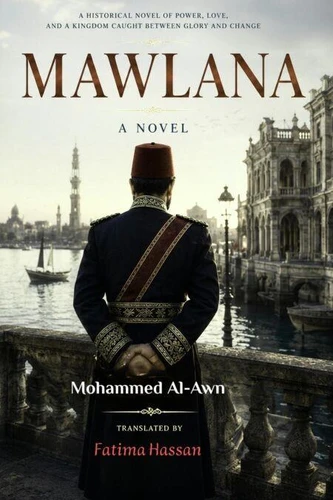
Behind the gilded facade of supreme majesty and the echo of twenty-one-gun salutes lies a hauntingly quiet truth: absolute power isolates far more than it elevates. In Mawlana, acclaimed Egyptian novelist Mohamed Al-Awn delivers a tour-de-force psychological portrait of authority, decline, and human vulnerability. Rather than presenting a dry historical reconstruction of the twilight days of the Egyptian monarchy before the 1952 revolution, this intimate narrative steps past the threshold of the palace to explore the anatomy of sovereignty itself.
The protagonist-never once named, addressed only as Mawlana ("Our Lord") by courtiers, whisperers, and guards-is a tragic enigma. He is caught between the looming shadow of an autocratic father, the scandalous legacy of an untamed mother, and the quiet betrayal of his own body and court. Haunted by long, sleepless nights and seeking refuge in reckless card games, fast cars, and transient pleasures, he remains an unformed child trapped inside the armor of a falling king.
Seamlessly weaving the tense atmosphere of 1950s Cairo with deep historical reflections on the rise of modern Egypt, Mawlana is a masterclass in psychological realism and literary nuance. It stands not merely as a chronicle of a vanished world, but as an unforgettable, universal meditation on the solitary cage of power and the fragile cost of being human.
The protagonist-never once named, addressed only as Mawlana ("Our Lord") by courtiers, whisperers, and guards-is a tragic enigma. He is caught between the looming shadow of an autocratic father, the scandalous legacy of an untamed mother, and the quiet betrayal of his own body and court. Haunted by long, sleepless nights and seeking refuge in reckless card games, fast cars, and transient pleasures, he remains an unformed child trapped inside the armor of a falling king.
Seamlessly weaving the tense atmosphere of 1950s Cairo with deep historical reflections on the rise of modern Egypt, Mawlana is a masterclass in psychological realism and literary nuance. It stands not merely as a chronicle of a vanished world, but as an unforgettable, universal meditation on the solitary cage of power and the fragile cost of being human.
Behind the gilded facade of supreme majesty and the echo of twenty-one-gun salutes lies a hauntingly quiet truth: absolute power isolates far more than it elevates. In Mawlana, acclaimed Egyptian novelist Mohamed Al-Awn delivers a tour-de-force psychological portrait of authority, decline, and human vulnerability. Rather than presenting a dry historical reconstruction of the twilight days of the Egyptian monarchy before the 1952 revolution, this intimate narrative steps past the threshold of the palace to explore the anatomy of sovereignty itself.
The protagonist-never once named, addressed only as Mawlana ("Our Lord") by courtiers, whisperers, and guards-is a tragic enigma. He is caught between the looming shadow of an autocratic father, the scandalous legacy of an untamed mother, and the quiet betrayal of his own body and court. Haunted by long, sleepless nights and seeking refuge in reckless card games, fast cars, and transient pleasures, he remains an unformed child trapped inside the armor of a falling king.
Seamlessly weaving the tense atmosphere of 1950s Cairo with deep historical reflections on the rise of modern Egypt, Mawlana is a masterclass in psychological realism and literary nuance. It stands not merely as a chronicle of a vanished world, but as an unforgettable, universal meditation on the solitary cage of power and the fragile cost of being human.
The protagonist-never once named, addressed only as Mawlana ("Our Lord") by courtiers, whisperers, and guards-is a tragic enigma. He is caught between the looming shadow of an autocratic father, the scandalous legacy of an untamed mother, and the quiet betrayal of his own body and court. Haunted by long, sleepless nights and seeking refuge in reckless card games, fast cars, and transient pleasures, he remains an unformed child trapped inside the armor of a falling king.
Seamlessly weaving the tense atmosphere of 1950s Cairo with deep historical reflections on the rise of modern Egypt, Mawlana is a masterclass in psychological realism and literary nuance. It stands not merely as a chronicle of a vanished world, but as an unforgettable, universal meditation on the solitary cage of power and the fragile cost of being human.