Dernière sortie
A View From a Painting
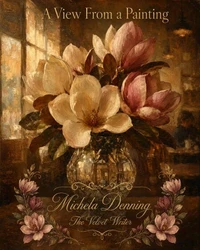
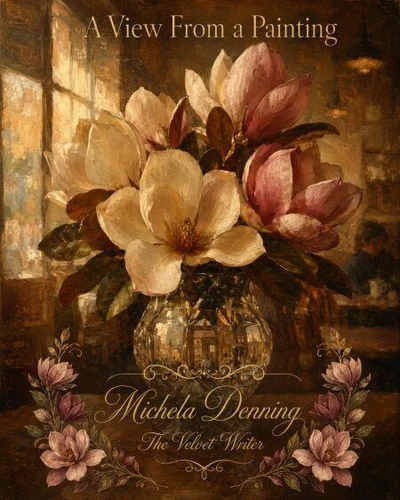
A painting cannot choose its wall. It can only hang there - through the ordinary miracle of a barista who spells a stranger's name right on the hardest kind of Tuesday, through a hospital waiting room where it becomes either comfort or nearly cruelty depending on what door a person is about to walk through, through a diner on Route 66 where hundreds of strangers pass beneath it and never look up twice, through a funeral parlor where every real flower in the room is chosen because it will wilt, and it never does.
A View From a Painting follows a single canvas - a crystal vase of magnolias that never fade - across nine rooms and however many years, witnessing newlyweds dancing on a bare floor before the furniture arrives, a child asking why the painted flowers never turn brown, a woman at an estate sale turning the frame over to check if the crystal is real. Through it all, one small imperfection persists: a single petal, hung three degrees off true since the day the painting was made, that no one has ever reached up to fix - and that becomes, by the collection's final poem, the whole of what the book has been quietly asking all along: which of the things we call broken were actually only ever true to their own shape.
Written in flowing, unpunctuated free verse that mirrors the patient, unhurried perspective of something that can only ever watch, this collection is spare, tender, and quietly devastating - an unusual meditation on impermanence and belonging told from the one vantage point that never gets to leave. It ends, fittingly, exactly where it began: the same coffee shop table, the same morning light, and a painting finally ready to say, without qualification, that it has found the wall it never wants to leave.
For readers of Ocean Vuong, Mary Oliver, and poetry collections built around a single sustained image that means something different every time you turn around and look at it again.
A View From a Painting follows a single canvas - a crystal vase of magnolias that never fade - across nine rooms and however many years, witnessing newlyweds dancing on a bare floor before the furniture arrives, a child asking why the painted flowers never turn brown, a woman at an estate sale turning the frame over to check if the crystal is real. Through it all, one small imperfection persists: a single petal, hung three degrees off true since the day the painting was made, that no one has ever reached up to fix - and that becomes, by the collection's final poem, the whole of what the book has been quietly asking all along: which of the things we call broken were actually only ever true to their own shape.
Written in flowing, unpunctuated free verse that mirrors the patient, unhurried perspective of something that can only ever watch, this collection is spare, tender, and quietly devastating - an unusual meditation on impermanence and belonging told from the one vantage point that never gets to leave. It ends, fittingly, exactly where it began: the same coffee shop table, the same morning light, and a painting finally ready to say, without qualification, that it has found the wall it never wants to leave.
For readers of Ocean Vuong, Mary Oliver, and poetry collections built around a single sustained image that means something different every time you turn around and look at it again.