SOLDES
Jusqu'à -70% sur une sélection d'articles*
- Accueil /
- FOG Group
FOG Group

Dernière sortie
State of the Global Pulp & paper Industry and its Future
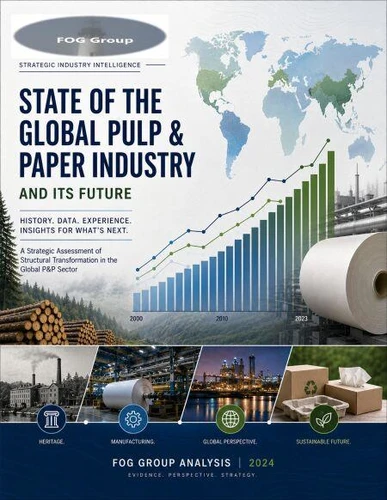
This comprehensive report from FOG Group analyzes the structural transformation of the global pulp and paper industry from 1965 through a projected 2050. It documents the permanent decline of graphic papers due to digital disruption while highlighting the robust growth of packaging, tissue, and specialty fiber products. The analysis emphasizes a geographic shift in power, noting that while Western markets are rationalizing, Asia and South America are rapidly expanding their production and consumption footprint.
A significant portion of the text focuses on the circular economy, tracing how recovered paper has evolved from manufacturing waste into a critical, globally traded raw material. Ultimately, the sources argue that the industry's survival depends on operational excellence, asset conversion, and the strategic management of fiber migration across a changing global landscape. E-commerce is a central catalyst for the "global fiber migration, " a structural shift where fiber demand is reallocated from declining graphic papers (like newsprint and office paper) to growing "growth grades, " specifically packaging.
As the sources note, "the fiber that once filled a newspaper now wraps an e-commerce shipment". E-commerce drives this migration through several key mechanisms
A significant portion of the text focuses on the circular economy, tracing how recovered paper has evolved from manufacturing waste into a critical, globally traded raw material. Ultimately, the sources argue that the industry's survival depends on operational excellence, asset conversion, and the strategic management of fiber migration across a changing global landscape. E-commerce is a central catalyst for the "global fiber migration, " a structural shift where fiber demand is reallocated from declining graphic papers (like newsprint and office paper) to growing "growth grades, " specifically packaging.
As the sources note, "the fiber that once filled a newspaper now wraps an e-commerce shipment". E-commerce drives this migration through several key mechanisms
This comprehensive report from FOG Group analyzes the structural transformation of the global pulp and paper industry from 1965 through a projected 2050. It documents the permanent decline of graphic papers due to digital disruption while highlighting the robust growth of packaging, tissue, and specialty fiber products. The analysis emphasizes a geographic shift in power, noting that while Western markets are rationalizing, Asia and South America are rapidly expanding their production and consumption footprint.
A significant portion of the text focuses on the circular economy, tracing how recovered paper has evolved from manufacturing waste into a critical, globally traded raw material. Ultimately, the sources argue that the industry's survival depends on operational excellence, asset conversion, and the strategic management of fiber migration across a changing global landscape. E-commerce is a central catalyst for the "global fiber migration, " a structural shift where fiber demand is reallocated from declining graphic papers (like newsprint and office paper) to growing "growth grades, " specifically packaging.
As the sources note, "the fiber that once filled a newspaper now wraps an e-commerce shipment". E-commerce drives this migration through several key mechanisms
A significant portion of the text focuses on the circular economy, tracing how recovered paper has evolved from manufacturing waste into a critical, globally traded raw material. Ultimately, the sources argue that the industry's survival depends on operational excellence, asset conversion, and the strategic management of fiber migration across a changing global landscape. E-commerce is a central catalyst for the "global fiber migration, " a structural shift where fiber demand is reallocated from declining graphic papers (like newsprint and office paper) to growing "growth grades, " specifically packaging.
As the sources note, "the fiber that once filled a newspaper now wraps an e-commerce shipment". E-commerce drives this migration through several key mechanisms
