OFFRE LISEUSES
Une liseuse achetée = une housse offerte* jusqu'au 21 juin
- Accueil /
- Ralph Charbonnier
Ralph Charbonnier

Dernière sortie
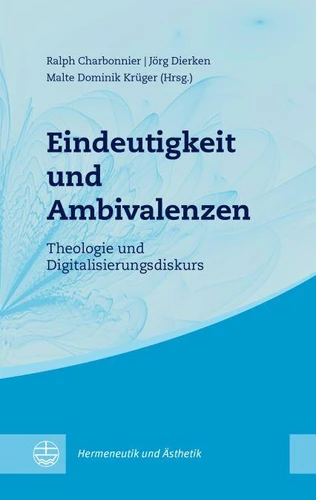
Eindeutigkeit und Ambivalenzen
Digitale Medien prägen die Kommunikationskultur. Ihr binärer Code verstärkt ein Denken in "ja - nein", "entweder - oder", "like - dislike". Dies trifft auf lebensweltliche Erfahrungen von Mehrdeutigkeit. Löst digitale Kommunikation diese Ambiguität auf? Oder kann sie hilfreich zu ihrer Wahrnehmung beitragen - und wenn ja, wie? Diese Fragen betreffen durch Verarbeitungs-Algorithmen weite Bereiche menschlichen Lebens.
Protestantische Theologie ruht selbst auf dualen Unterscheidungen von Un-/Heil, Leben/Tod, Gott/Mensch. Zugleich ist für sie die Logik des "sowohl - als auch" konstitutiv: Gott ist verborgen und offenbar, der Mensch Sünder und Gerechter. Der Band entfaltet protestantische Perspektiven im öffentlichen Digitalisierungsdiskurs: Wie kann eine menschengerechte, ambiguitätssensible Kommunikation in Zeiten der Digitalisierung aussehen? Und wie verändern Digitalisierungsprozesse ihrerseits religiöse Kommunikation? Mit Beiträgen von Christiane Axt-Piscalar, Ralph Charbonnier, Jörg Dierken, Martin Jockel, Michael Klessmann, Joachim Knape, Dietrich Korsch, Constantin Plaul, Jürgen Rink [Unambiguity and Ambivalences.
Theology and the Discourse on Digitalization] Digital media shape the culture of communication. Their binary code reinforces a thinking in "yes - no", "either - or", "like - dislike". This encounters life-world experiences of ambiguity. Does digital communication resolve this ambiguity? Or can it helpfully contribute to its perception - and if so, how? These questions affect through processing algorithms wide areas of human life.
Protestant theology itself is based on dual distinctions of non-/salvation, life/death, God/human being. At the same time, the logic of "as well as" is constitutive for it: God is hidden and revealed, the human person sinner and righteous.
Protestantische Theologie ruht selbst auf dualen Unterscheidungen von Un-/Heil, Leben/Tod, Gott/Mensch. Zugleich ist für sie die Logik des "sowohl - als auch" konstitutiv: Gott ist verborgen und offenbar, der Mensch Sünder und Gerechter. Der Band entfaltet protestantische Perspektiven im öffentlichen Digitalisierungsdiskurs: Wie kann eine menschengerechte, ambiguitätssensible Kommunikation in Zeiten der Digitalisierung aussehen? Und wie verändern Digitalisierungsprozesse ihrerseits religiöse Kommunikation? Mit Beiträgen von Christiane Axt-Piscalar, Ralph Charbonnier, Jörg Dierken, Martin Jockel, Michael Klessmann, Joachim Knape, Dietrich Korsch, Constantin Plaul, Jürgen Rink [Unambiguity and Ambivalences.
Theology and the Discourse on Digitalization] Digital media shape the culture of communication. Their binary code reinforces a thinking in "yes - no", "either - or", "like - dislike". This encounters life-world experiences of ambiguity. Does digital communication resolve this ambiguity? Or can it helpfully contribute to its perception - and if so, how? These questions affect through processing algorithms wide areas of human life.
Protestant theology itself is based on dual distinctions of non-/salvation, life/death, God/human being. At the same time, the logic of "as well as" is constitutive for it: God is hidden and revealed, the human person sinner and righteous.
Digitale Medien prägen die Kommunikationskultur. Ihr binärer Code verstärkt ein Denken in "ja - nein", "entweder - oder", "like - dislike". Dies trifft auf lebensweltliche Erfahrungen von Mehrdeutigkeit. Löst digitale Kommunikation diese Ambiguität auf? Oder kann sie hilfreich zu ihrer Wahrnehmung beitragen - und wenn ja, wie? Diese Fragen betreffen durch Verarbeitungs-Algorithmen weite Bereiche menschlichen Lebens.
Protestantische Theologie ruht selbst auf dualen Unterscheidungen von Un-/Heil, Leben/Tod, Gott/Mensch. Zugleich ist für sie die Logik des "sowohl - als auch" konstitutiv: Gott ist verborgen und offenbar, der Mensch Sünder und Gerechter. Der Band entfaltet protestantische Perspektiven im öffentlichen Digitalisierungsdiskurs: Wie kann eine menschengerechte, ambiguitätssensible Kommunikation in Zeiten der Digitalisierung aussehen? Und wie verändern Digitalisierungsprozesse ihrerseits religiöse Kommunikation? Mit Beiträgen von Christiane Axt-Piscalar, Ralph Charbonnier, Jörg Dierken, Martin Jockel, Michael Klessmann, Joachim Knape, Dietrich Korsch, Constantin Plaul, Jürgen Rink [Unambiguity and Ambivalences.
Theology and the Discourse on Digitalization] Digital media shape the culture of communication. Their binary code reinforces a thinking in "yes - no", "either - or", "like - dislike". This encounters life-world experiences of ambiguity. Does digital communication resolve this ambiguity? Or can it helpfully contribute to its perception - and if so, how? These questions affect through processing algorithms wide areas of human life.
Protestant theology itself is based on dual distinctions of non-/salvation, life/death, God/human being. At the same time, the logic of "as well as" is constitutive for it: God is hidden and revealed, the human person sinner and righteous.
Protestantische Theologie ruht selbst auf dualen Unterscheidungen von Un-/Heil, Leben/Tod, Gott/Mensch. Zugleich ist für sie die Logik des "sowohl - als auch" konstitutiv: Gott ist verborgen und offenbar, der Mensch Sünder und Gerechter. Der Band entfaltet protestantische Perspektiven im öffentlichen Digitalisierungsdiskurs: Wie kann eine menschengerechte, ambiguitätssensible Kommunikation in Zeiten der Digitalisierung aussehen? Und wie verändern Digitalisierungsprozesse ihrerseits religiöse Kommunikation? Mit Beiträgen von Christiane Axt-Piscalar, Ralph Charbonnier, Jörg Dierken, Martin Jockel, Michael Klessmann, Joachim Knape, Dietrich Korsch, Constantin Plaul, Jürgen Rink [Unambiguity and Ambivalences.
Theology and the Discourse on Digitalization] Digital media shape the culture of communication. Their binary code reinforces a thinking in "yes - no", "either - or", "like - dislike". This encounters life-world experiences of ambiguity. Does digital communication resolve this ambiguity? Or can it helpfully contribute to its perception - and if so, how? These questions affect through processing algorithms wide areas of human life.
Protestant theology itself is based on dual distinctions of non-/salvation, life/death, God/human being. At the same time, the logic of "as well as" is constitutive for it: God is hidden and revealed, the human person sinner and righteous.
