There are moments in life when the heart becomes tired. A person may have everything that the world considers valuable - achievements, relationships, possessions, recognition - yet still feel an unexplained emptiness within. Stress, anxiety, sadness, and emotional exhaustion have become common experiences of modern life. Many people continue their daily responsibilities while quietly carrying invisible wounds.
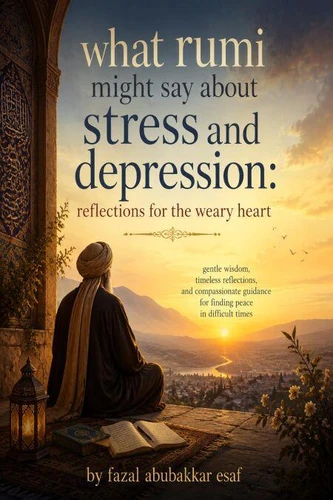
This book was written for those moments."What Rumi Might Say About Stress and Depression" is not a historical interpretation of Rumi's exact teachings, nor does it attempt to recreate his words. Instead, it is a creative spiritual reflection inspired by themes often connected with mystical thought: compassion, surrender, love, patience, and the search for inner light. The chapters invite readers to sit gently with their emotions rather than fight them.
They explore the possibility that pain can become a teacher, that tears can become a language of the heart, and that difficult seasons can sometimes reveal hidden strength. However, spirituality and mental health care serve different purposes. Depression is not simply sadness, weakness, or a lack of faith. It can be a serious condition involving emotional, psychological, and biological factors. Seeking professional support is an act of courage and wisdom.
These reflections are meant to walk beside healing - not replace it. May these pages offer a moment of stillness in a noisy world, a reminder of hope during difficult days, and a gentle invitation to return to the deepest parts of yourself.
There are moments in life when the heart becomes tired. A person may have everything that the world considers valuable - achievements, relationships, possessions, recognition - yet still feel an unexplained emptiness within. Stress, anxiety, sadness, and emotional exhaustion have become common experiences of modern life. Many people continue their daily responsibilities while quietly carrying invisible wounds.
This book was written for those moments."What Rumi Might Say About Stress and Depression" is not a historical interpretation of Rumi's exact teachings, nor does it attempt to recreate his words. Instead, it is a creative spiritual reflection inspired by themes often connected with mystical thought: compassion, surrender, love, patience, and the search for inner light. The chapters invite readers to sit gently with their emotions rather than fight them.
They explore the possibility that pain can become a teacher, that tears can become a language of the heart, and that difficult seasons can sometimes reveal hidden strength. However, spirituality and mental health care serve different purposes. Depression is not simply sadness, weakness, or a lack of faith. It can be a serious condition involving emotional, psychological, and biological factors. Seeking professional support is an act of courage and wisdom.
These reflections are meant to walk beside healing - not replace it. May these pages offer a moment of stillness in a noisy world, a reminder of hope during difficult days, and a gentle invitation to return to the deepest parts of yourself.