Michaël Roy is Associate Professor of American studies at Université Paris Nanterre.
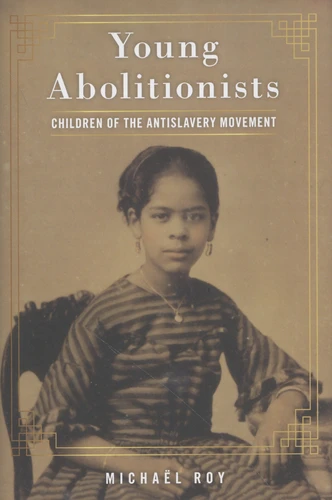
Young Abolitionists. Children of the Antislavery Movement
Par :Formats :
- Paiement en ligne :
- Livraison à domicile ou en point Mondial Relay estimée à partir du 29 septembreCet article sera commandé chez un fournisseur et vous sera envoyé 25 jours après la date de votre commande.
- Retrait Click and Collect en magasin gratuit
- Réservation en ligne avec paiement en magasin :
- Indisponible pour réserver et payer en magasin
- Nombre de pages251
- FormatGrand Format
- PrésentationRelié
- Poids0.55 kg
- Dimensions16,0 cm × 23,5 cm × 2,5 cm
- ISBN978-1-4798-3009-1
- EAN9781479830091
- Date de parution02/07/2024
- ÉditeurNew York University Press
Résumé
During the antebellum period, several abolitionist figures, including William Lloyd Garrison, the editor of the Liberator ; Susan Paul, an African American primary school teacher ; Henry Clarke Wright, a white reformer ; and Frederick Douglass, the internationally renowned activist, consistently appealed to the sympathies of children against slavery. In 1835, Garrison proclaimed, "If ... we desire to see our land delivered from the curse of PREJUDICE and SLAVERY, we must direct our efforts chiefly to the rising generation."This rallying cry found a receptive audience and ignited action.
Despite their limited scholarly exploration, children occupied a crucial position within the US abolition movement. Through a reexamination of archival materials including antislavery newspapers, correspondence, and autobiographies, Young Abolitionists is the first book to center children's participation in the campaign to eradicate slavery in the United States. Michael Roy uncovers how young advocates - Black and white alike - confidently delivered antislavery speeches within their schools, enrolled in juvenile antislavery societies, and contributed to the editorial process of antislavery newspapers.
They aided fugitive slaves, attended antislavery fairs, and engaged in activities commemorating John Brown's legacy. They even affixed their signatures to antislavery petitions, thus challenging the boundaries of their own citizenship. Abolitionists saw childhood as a force for social change. With the help of parents and teachers, children acted in concrete ways against slavery and made a meaningful contribution toward its demise.
Young Abolitionists honors their contributions and reminds us that children can - and must - be included in the fight for a better world.
Despite their limited scholarly exploration, children occupied a crucial position within the US abolition movement. Through a reexamination of archival materials including antislavery newspapers, correspondence, and autobiographies, Young Abolitionists is the first book to center children's participation in the campaign to eradicate slavery in the United States. Michael Roy uncovers how young advocates - Black and white alike - confidently delivered antislavery speeches within their schools, enrolled in juvenile antislavery societies, and contributed to the editorial process of antislavery newspapers.
They aided fugitive slaves, attended antislavery fairs, and engaged in activities commemorating John Brown's legacy. They even affixed their signatures to antislavery petitions, thus challenging the boundaries of their own citizenship. Abolitionists saw childhood as a force for social change. With the help of parents and teachers, children acted in concrete ways against slavery and made a meaningful contribution toward its demise.
Young Abolitionists honors their contributions and reminds us that children can - and must - be included in the fight for a better world.
A propos de Michaël Roy
18,00 €
21,00 €